Green infrastructure to be trialled across Melbourne streets
The Faculty of Architecture Building and Planning’s Retrofit Lab has launched a new two-year research project that will reveal how streets can be transformed to improve flood resilience, reduce heat and enhance livability across Melbourne’s suburbs.
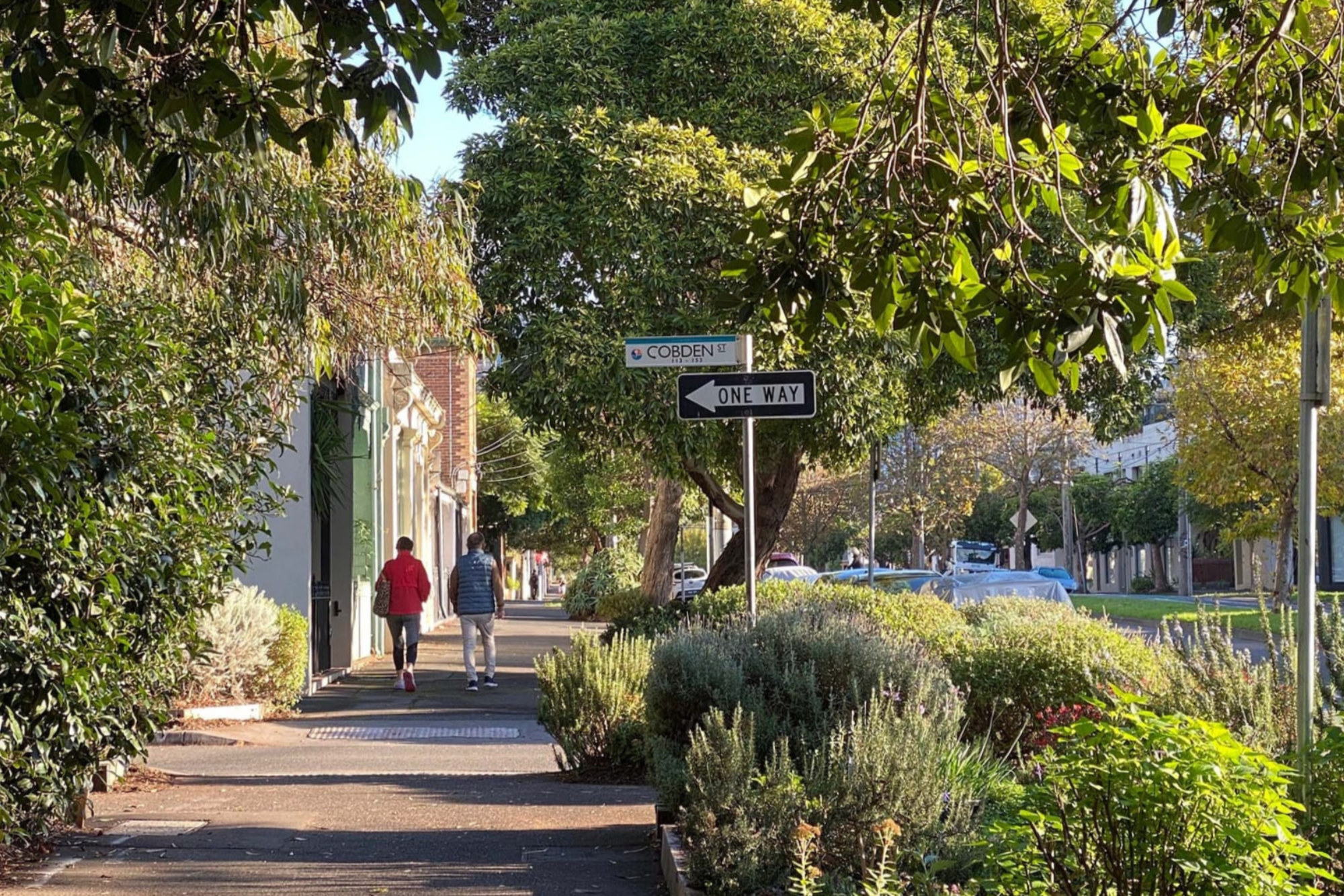
Researchers led by Professor Sarah Bell, will work in collaboration with residents and stakeholders to build case studies across three streets in Melbourne with the aim of delivering an easy ‘how to’ guide to help the local governments to address the climate crisis and meet their greening targets.
“More than half the buildings in Melbourne, over 1.5 million structures, are surrounded with land that’s at least a third concrete and asphalt,” Prof Sarah Bell said. “We hope that our research will provide councils and governments with clear steps they can use to increase vegetation and biodiversity, and improve peoples’ safety and health.”
Rather than gardens and parks, 80-90 per cent of public space is used for streets and on-street parking. This results in sparsely vegetated land and expanses of asphalt that contribute to flooding and extreme heat, with unshaded asphalt reaching up to 75 degrees during heatwaves.
Focusing on the holistic retrofitting of residential streets, the study will incorporate stormwater management, heat and drought mitigation, biodiversity, community health, and accessibility, to present governments and community groups with an actionable greening solution by 2026.