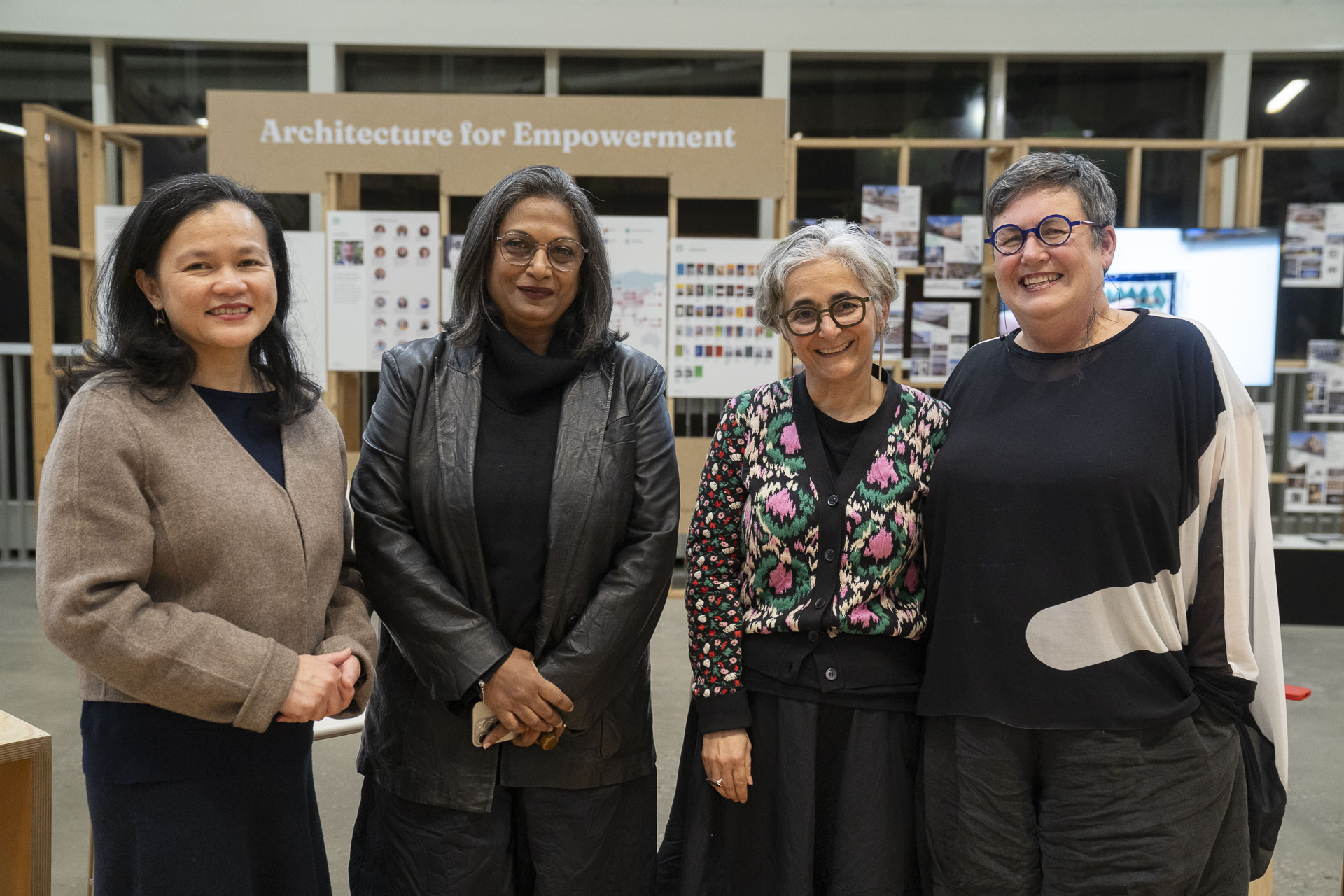
In collaboration with the Aga Khan Award for Architecture (AKAA), this exhibition showcases the shortlisted and winning projects from the 2023-2025 cycle, including the Khudi Bari in Bangladesh by Marina Tabassum Architects.
Representing diverse geographies, the winning projects explore architecture’s capacity to serve as a catalyst for pluralism, community resilience, social transformation, cultural dialogue and climate-responsive design.
Given every three years, the Award set new standards of excellence in architecture, planning practices, historic preservation, and landscape architecture.
The exhibition is supported by the Aga Khan Award for Architecture of the Aga Khan Development Network. The curatorial team is Prof Donald Bates, A/Prof Amanda Achmadi, Dr Secil Taskoparan, Francesco Stassi, Michael Mack, Isabel Solin, Zoe Feng and Junjie Zhang of the University of Melbourne.
Architecture is one of the very few disciplines that touches all levels of society. It has an impact on your daily life.Farrokh Derakhshani, Director of the Aga Khan Award for Architecture.
2025 Aga Khan Award for Architecture recipients
Bangladesh
- Khudi Bari, in various locations, by Marina Tabassum Architects – a replicable solution built with bamboo and steel for displaced communities affected by climatic and geographic changes. The Jury recognised the project’s deep ecological framing, contributing to the global advancement of bamboo as a material.
China
- West Wusutu Village Community Centre, in Hohhot, by Inner Mongolian Grand Architecture Design Co., Ltd – a centre built from reclaimed bricks that provides social and cultural spaces for residents and artists, while addressing the cultural needs of the local multi-ethnic community, including Hui Muslims. The Jury noted that the project generates a valuable shared and inclusive communal microcosm within a rural human macrocosm.
Egypt
- Revitalisation of Historic Esna, by Takween Integrated Community Development – a project that addresses cultural tourism challenges through physical interventions, socioeconomic initiatives and innovative urban strategies, transforming a neglected site into a prospering historic city. The Jury acknowledged the ways the project is stimulating a historic urban metabolism to cope with the contemporary challenge of improving human conditions.
Iran
- Majara Residence and Community Redevelopment, in Hormuz Island, by ZAV Architects – a colourful complex whose domes reflect the rainbow island's ochre-rich soils, providing sustainable accommodations for tourists who visit the unique landscape of Hormuz Island. The Jury described the project as a vibrant archipelago of varying programmes that serve to incrementally build an alternative tourism economy.
- Jahad Metro Plaza, in Tehran, by KA Architecture Studio – a once dilapidated station transformed into a vibrant urban node for pedestrians. The Jury highlighted the use of local handmade brick as strengthening the connection with Iran’s rich architectural heritage, while its warm subtle texture emphasises the station’s status as a new urban monument.
Pakistan
- Vision Pakistan, in Islamabad, by DB Studios – a multistorey facility boasting joyful facades inspired by Pakistani and Arab craft, while housing a charity that aims to empower disadvantaged youth through vocational training. The Jury noted that the building not only contains a new type of education, but is full of light, spatially interesting and economically efficient.
Palestine
- Wonder Cabinet, in Bethlehem, by AAU Anastas – a multipurpose, non-profit exhibition and production space built with the input of local artisans and contractors, to become a key hub for craft, design, innovation and learning. The Jury found that the building provides a model for an architecture of connection, rooted in contemporary expressions of national identity, and asserts the importance of cultural production as a means of resistance.