People
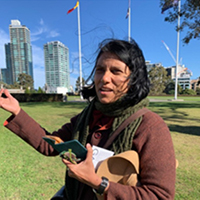
Professor Anoma Pieris, University of Melbourne
Anoma Pieris has published internationally on the nexus between architecture, citizenship and postcolonial politics including histories of migration and construction labour. She works comparatively across multiple geographies and advocates for the agency of subaltern subjects and their histories. Her anthology titled Architecture on the Borderline: Boundary Politics and Built Space (Routledge: Architext series 2019) explores refugee camp environments and cross-border mobilities globally, building on her interest in human displacement. This project builds on findings in her ARC Future Fellowship (2015-2018) on World War II internment and military camps that were repurposed for migrant camps. Anoma has a strong publication record with multiple research monographs and is co-author with Lynne Horiuchi of the forthcoming book The Architecture of Confinement: incarceration camps of the Pacific War (Cambridge University Press), Anoma assumes overall responsibility for leading the project, team management, communication and planning and leads the case study on the Snowy Scheme for which she has undertaken preliminary research. She co-edited a theme issue on Immigration, Architecture and Industry for the journal Fabrications with Mirjana.

Associate Professor Mirjana Lozanovska, Deakin University
Mirjana Lozanovska has international and national recognition as a leading scholar on migration and architecture with numerous publications on migrant housing and a definitive anthology titled Ethno-Architecture and the Politics of Migration (Routledge 2016). Her monograph, Migrant Housing: Architecture, Dwelling, Migration (Routledge 2019) consolidates key theoretical frameworks for studying immigrant architecture, including a socio-architectural trans-national approach and methodology. Mirjana led the symposium Aesthetic Anxiety or Performative Subjectivity: National Narratives Encountering Migrant Architecture in Australia (Nov. 2017), and #Vacant Geelong, a research project investigating Geelong’s vacant industrial sites and immigrant heritage provides strong research base on industry/migration relevant to this project. Mirjana will play a leading role in the theoretical framing and historiography for the project. She is responsible for the case study on Port Kembla, working with Alexandra to gather primary ethnographic material. She will lead the Creative Research Project on Immigration Networks with Dave and has coedited the journal theme issue with Anoma.
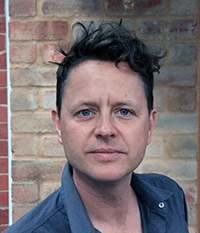
Associate Professor Andrew Saniga, University of Melbourne
Andrew Saniga has established his expertise on the landscape architecture profession in Australia and its role in nation-building, through his book Making Landscape Architecture in Australia (2012) and has published previously on Woomera in collaboration Anoma. In 2014 he visited a key research institute, the Centre for Land Use Interpretation in Los Angeles, and interviewed founder M. Coolidge regarding USA Cold War infrastructure comparable to Woomera. Andrew will frame Australia’s incipient Cold War relations after WWII, leading the case study on Woomera, a topic on which he has conducted preliminary writing and research. He will strengthen the overall landscape-centred approach adopted for broader rural and urban contexts of the case studies, through his expertise on the profession of Australian landscape architecture post war and a range of landscape projects that were constructed with immigrant labour (Saniga, 2012, pp. 1-4; 62-66; 128-143). He will examine the careers of government architects and landscape architects engaged in designs for specific built works to articulate links between the profession, industry and immigrant labour. He has undertaken research on immigrant communities and migrant gardens in Melbourne.
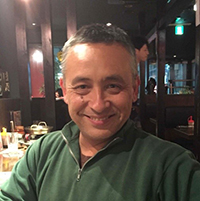
Associate Professor David Beynon, University of Tasmania
David Beynon has written extensively on the institutional architecture of Asian immigrants in Australia, the subject of his PhD thesis, Hybrid representations: the public architecture of migrant communities in Melbourne (2002) and has strong community linkages and is able to work across Asian Studies and Asian-Australian topics. Dave will historicise the end of the White Australia Policy and the entry of Asians into Australia. He is an active member of the international Society of Architectural and Urban Historians of Asia, founded and led Anoma. He is responsible for the case study on the dispersal of Vietnamese immigrants from migrant hostels into suburban Melbourne, involving ethnographic work in the community. He was a collaborator on Vacant Geelong with Mirjana and will co-convene the Creative Research Project Immigration Networks with her.

Dr. Alexandra Dellios, Australian National University.
Alexandra Dellios has published the definitive book on the Bonegilla migrant centre titled, Histories of Controversy: Bonegilla Migrant Centre (2017) the subject of her PhD thesis (Constructing public history, framing collective memories: Bonegilla Migrant Reception and Training Centre, 2014) and brings her knowledge of archival resources and oral interview methods to this project. She leads the study of migrant camps and hostels tracking the links between specific camp environments and the industries selected as case studies. A recently published ECR in this area, Alexandra brings expert knowledge of the archival resources and departmental records pertinent to the topic. Her archival access is further aided by her location in Canberra. She contributes her expertise in social history and memory work to gather oral histories on specific sites, providing the necessary complement to the architectural case studies. She works with the team members in documenting the physical facilities as conveyed through historical records and social memories.

Renee Miller-Yeaman. PhD candidate, The University of Melbourne.
Renee Miller-Yeaman's research looks at government and private institutions and housing. Her PhD focuses on migration histories and government-sponsored housing in the second half of the 20th Century. The project contends that ideological and physical conceptions of home influence the political narratives surrounding historical and current temporary housing options for refugees. Her work drawing from interdisciplinary approaches, investigates the intersections between government discourse, social histories and design. She graduated with a Masters of Architecture from the University of Melbourne in 2013. Renee has taught at the graduate and undergraduate level in the Faculty of Architecture, Building and Planning, University of Melbourne.