Catherine Loke obtained her Bachelor of Planning and Design from the University of Melbourne in 1989, followed by a Bachelor of Architecture (Hons) in 1992. Now based in Singapore, Catherine is globally respected for her sustainability leadership and passion for permaculture. We sat down with Loke to talk climate action, economics and little gardens.
Loke grew up in Malaysia. As a child, she was fascinated by buildings. One that she remembers fondly was the Subang Airport in Selangor.
“At that time, it was totally naturally ventilated,” she said. “The columns were sort of a diamond shape, which went up into the roof in one sweeping arc, like there was no junction or separation between the column and the roof. And then the whole thing was modular. It was just beautiful."
This curiosity followed Loke through to adulthood, and her architectural studies provided a turning point in her thinking when she took a sustainability elective in fourth year.
“About that time, I really made the connection between the built environment, sustainability and the responsibility of the architect. For the elective, we spent quite a lot of time talking about economics. I wondered what has economics got to do with this? Why are we talking about Adam Smith? But it actually introduced me to economics and its role in sustainability. That was another seminal moment in my studies.”
Soon after she graduated, Loke moved to live and work in Singapore. Since 1999, she has been a partner with her husband, Ian Lander, in their firm, Lander Loke Architects. Her contributions to the built environment have been acknowledged through numerous awards and professional achievements, including her role as Adjunct Associate Professor at the National University of Singapore, which she has held since 2017. Along the way, Loke never lost sight of her goal to challenge the economic system within a sustainable mindset.
This thinking led to the beginnings of The Circle for Human Sustainability (TCHS), which she founded together with ten other like-minded people in 2021. A transdisciplinary society, TCHS brings together scientists, sociologists, economists and built environment professionals to look at sustainability holistically, and to work towards a balanced economic system which enables ecologically responsible behaviour.
“Our vision is to promote a human society which is in harmony with nature, where humans can flourish, enabled by a built environment that contributes to their wellbeing.”
I believe that the profession will become more and more important, because when we enter a period of instability and transition to a different system, we need people who can think out of the box.
Loke believes that if architects really want to be relevant and make a difference in sustainability, they cannot just talk amongst themselves, they need to talk to people of different disciplines and understand the world holistically.
“We need to be asking the right kinds of questions and trying to figure out what we can do to actually steer things in the right direction,” she said.
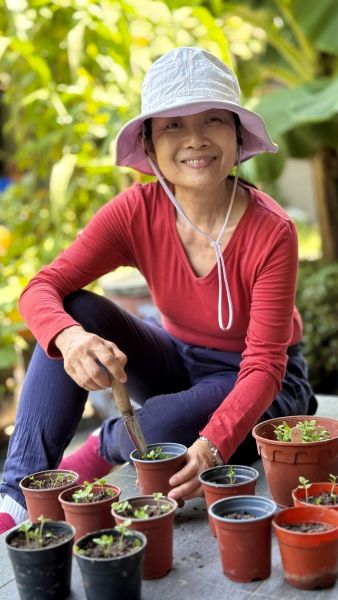
One of TCHS’s key programs, initiated by Loke, is Little Farms Everywhere. It uses permaculture methods as a simple but powerful approach not only to provide food security but also as the foundation for social cohesion and to promote a balanced economic system.
Currently, TCHS is supporting three Little Farms and one rooftop farm, literally preparing the ground for empowerment of communities to build resilience themselves.
“There’s a certain happiness that flows into you when you see plants grow and when you feel and touch them. It does something to you,” says Loke.
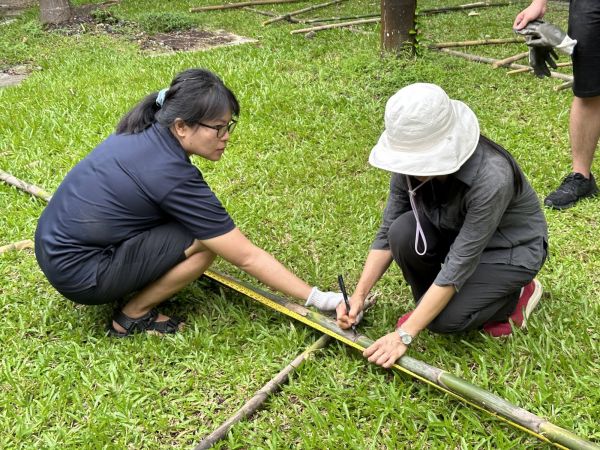
More broadly, Loke believes we need to adjust the system so that earning money is not the only option and people can supplement their livelihood with something else that brings them joy and allows them to socialise with other people. So given this very strong belief in finding a more sustainable way into the future, how has it shaped her philosophy towards architecture?
“We need people who don’t just follow model answers, and can look at a situation and go, hmm, how can I come up with something that works here or works there?”
Architects, she believes, need not worry about being relevant in the future. “I always think architecture is a physical manifestation of human values. We will always be relevant as long as we are creative, as long as we look around us and look at what is needed, and then respond to it."
"I do believe that architects and architecture have to play a significant role. We need to question the status quo, and really look at how we can fundamentally deliver what society really needs. Nature is the best teacher. Architects need to be more observant so we can continue to be important enablers for human life long into the future.”