On the quiet edges of the Venice lagoon, something extraordinary is beginning to hum back to life. At the 19th International Architecture Exhibition of La Biennale di Venezia, a team of designers, ecologists, engineers and sound artists from across the University of Melbourne, together with Italian entomologists, is orchestrating a comeback – not for a grand piece of architecture designed for humans but for a fundamental building block of nature, the cricket.
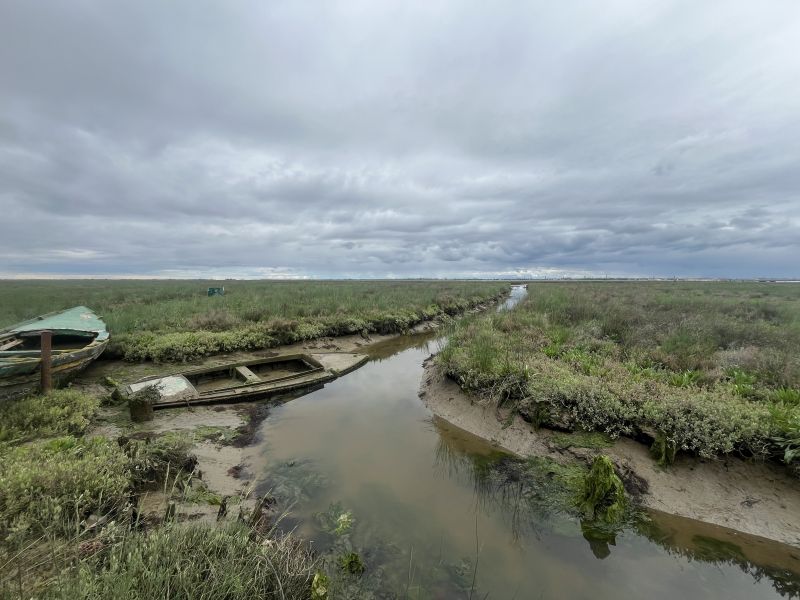
Song of the Cricket is both ecological initiative and living artwork. At its heart is the Adriatic Marbled Bush-Cricket, a once abundant but now critically endangered insect whose soft, rhythmic calls were formally a soundtrack to summer nights along the Adriatic coast. Its loss, driven by habitat degradation over the past century, has left more than silence. It has undone part of the ecological fabric that sustained this unique urban lagoon.
A unique team
Led by landscape architect and ecologist Professor Alex Felson from the Faculty of Architecture, Building and Planning, the Song of the Cricket combines floating, mobile habitats with a sound installation developed by Associate Professor Miriama Young from the Faculty of Fine Arts and Music. Together they hope to bring the cricket’s lost song back to Venice. However, the exhibit is far more than a piece of commentary.
The genesis of Song of the Cricket can be traced to the work of School of BioScience’s Professor Michael Kearney and Professor Ary Hoffmann, who trialled small scale reintroductions of grasshoppers at Royal Park in Melbourne. Professor Theresa Jones, also from the School, worked with Felson and his team on transferring the learnings from the Royal Park trial into a Venetian context.
“Studies such as the Song of the Cricket provide a unique opportunity to showcase a potentially endangered species within the habitat it needs to survive,” Jones says. “People have probably ‘heard’ crickets before, but this allows them to immerse themselves in the sounds, the sights and, if they get close enough, the smells. This is so important because it takes a village to solve the monumental problem of biodiversity loss and these deeper immersive connections are what we need to ensure everyone does their bit.”
The Faculty of Engineering and Technology (FEIT), together with industry partner ARUP, led the development of a cutting-edge geospatial study to support the translocation of the endangered cricket.
This research revealed critical patterns of land use and climate change affecting cricket habitats, enabling the identification of promising restoration zones.
“This project shows the power of true interdisciplinary collaboration. Engineers, artists, ecologists, and bioscientists working side by side to achieve outcomes none of us could have delivered alone,” says Associate Professor Jagannath Aryal, who specialises in Earth observation and spatial information.
Associate Professor Alice Kesminas, who also worked on FEIT’s contribution to the project, agrees. “It reminded us that data tells a more complete story when interpreted through multiple lenses – it’s a model for how we should approach complex challenges.”
Foundations of a food web
The Adriatic Marbled Bush-Cricket is f lightless, tiny, and seldom seen. According to a study by the International Union for Conservation of Nature, its habitat has shrunk to a mere 0.57 km². The cricket lives for only a few months, never moving more than 10 metres from where it hatches.
“This is a reintroduction strategy,” explains Felson. “We’re not just working to save one species; we’re rebuilding the base of a food web. Crickets are food for birds, reptiles, amphibians and small mammals. Without them, the associated food webs are fragmented.”
Graduate landscape architect and research assistant on Song of the Cricket, Harrison Baxter explains how the cricket plays a key role in a fragile ecosystem under enormous pressure.
“Because they don’t travel far, they’re extremely susceptible to disruption,” says Baxter. “Something as routine as mowing reeds where they’ve laid eggs can wipe out an entire population.”
Yet it’s precisely this fragility that makes the cricket such a potent symbol for the wider ecological health of the lagoon. In fact, Felson’s research into urban food webs has revealed this species plays a vital role in supporting biodiversity.
It’s not just about crickets... It’s about the kind of cities we want to live in and whether we can continue to support the wildlife that calls them home.
A living experiment
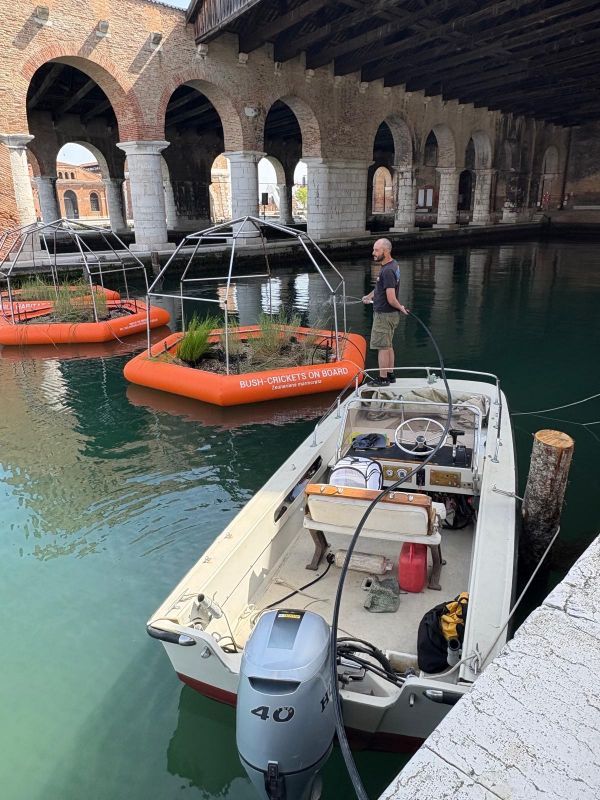
Song of the Cricket is a designed experiment – an approach pioneered by Felson to embed research into public-facing urban interventions. Six cricket enclosures and three mobile habitats, each with different levels of vegetation diversity, will test which environment is best for rearing crickets. The goal is not just to protect, but to learn how to scale habitat rehabilitation.
“These aren’t static displays, they’re experiments with consequences,” says Baxter.
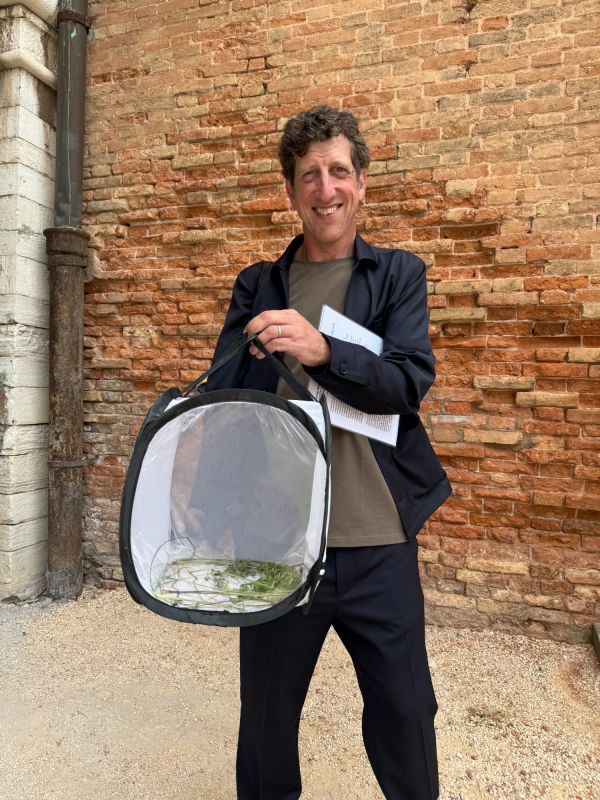
The crickets were collected from an area near the Venice lagoon and will be housed temporarily in containers at the Biennale where visitors can see and hear them. Researchers hope the crickets will breed and that their eggs can then be relocated to sites within the lagoon, building toward self-sustaining populations.
The floating islands themselves are mobile, designed to be transported by boat to suitable reintroduction sites within the lagoon. Their compact design demonstrates how even modest interventions can support real ecological restoration.
This idea sits squarely within the emerging field of action science and species translocations to support food web rehabilitation. Intentional food web construction in conservation zones around cities is still rare but growing. Their vision encourages “learning-by-doing” design prototypes, exactly the ethos behind Song of the Cricket.
Poetic ecology
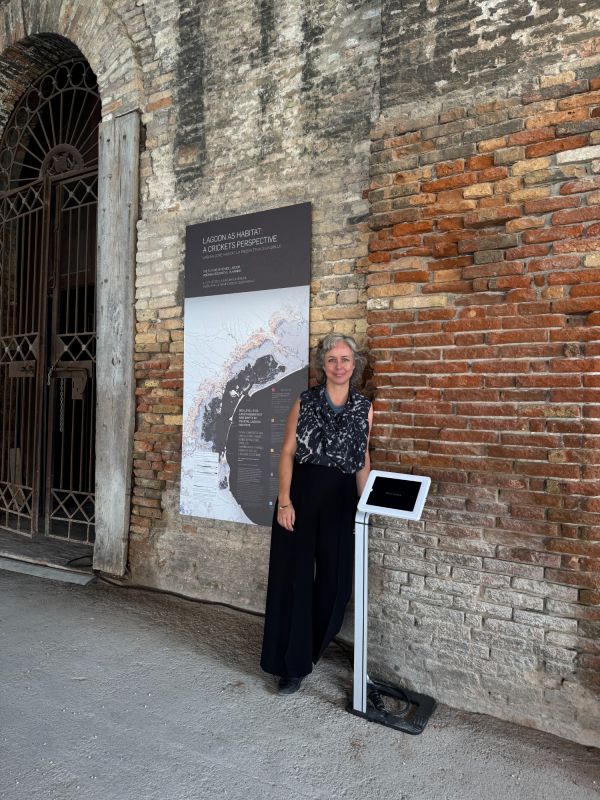
Inherently multi-disciplinary, the exhibit combines science with the architecture of sound. Young’s team uses a blend of natural, interactive, and synthesised elements to bring the cricket’s song to life.
“Antonio Vivaldi’s Venice was once alive with the sounds of nature. This project re-imagines a healthy bioacoustic environment, and develops synergies in ecological art practice through architectures of sound and sustainability,” Young says.
As cities around the world grapple with climate change, habitat loss, and biodiversity decline, Song of the Cricket offers a hopeful alternative: one that combines aesthetics, ecology, and local community in a shared project of repair.
From Melbourne to Venice and back again
While the project is deeply embedded in the Venetian context, its implications reach far beyond. “We’re already applying the same thinking in Melbourne,” says Baxter. “There’s a great pollinator corridor down in Port Phillip and Bayside that’s using similar microhabitats to support insect life. If we want birds in our cities, we need to start with bugs.”
Felson believes the modular, reproducible nature of the mobile cricket habitats opens possibilities for broader adoption. “Could these life rafts serve as a reminder that humans have the capacity to repair our fragmented ecosystems? Could these artistic designs educate people around conservation and habitat rehabilitation in the face of climate change? Absolutely. That’s the dream – when ecological repair becomes part of everyday life.”