The Lake Boort region is considered a nationally significant Aboriginal cultural site. With over 400 scar trees, mounds, ceremonial spaces and extensive artefacts, this ephemeral landscape offers visitors a unique immersive experience of Dja Dja Wurrung Country. On the eastern edge of Lake Boort is Paul Haw’s farm which houses an informal keeping place for Dja Dja Wurrung. But this is only a temporary measure. Dja Dja Wurrung dream of a permanent space for their growing collection of artefacts and cultural items.
Final year thesis studios from architecture and landscape architecture came together to explore the possibilities. Guided by Dja Dja Wurrung elder Garry Murray and his son Djaran Murray-Jackson, the group headed to Boort to meet Paul Haw, visit the temporary keeping place and experience the complex cultural and ecological landscape. On our return, rather than force a collaboration between the two disciplines, we kept the studios separate but with some points of common discussion. We hoped that this dialogue and growing familiarity between students would encourage students to choose to work together. Over half of all projects developed as a cross-disciplinary collaboration. As is demonstrated in the following two examples, collaboration between the landscape architecture and architecture students produced more refined and ambitious projects.

Working at the regional scale, Maisie Mathews’ Between Boort’s Walk proposes a three-day walk conceived as a strategic catalyst for new land management strategies beneficial for farmers and Dja Dja Wurrung. Rather than experiencing a ‘pristine’ landscape, walkers gain insight into the ecological reality of regional landscapes and sustainable practices for Caring for Country. Along manipulated watercourses in the Cobram Estate olive groves, walkers experience new endemic plantings linking fragmented remnants into biodiversity corridors to improve soil, water quality, and farm productivity. At Lake Boort and Lake Lyndger, they camp among the re-established River Red Gums and are exposed to the cultural burning practices which restore nutrients and manage invasive species. Located within these lake landscapes, and in the town of Boort itself are decentralised keeping places designed by architecture student Nethuni Sumanaweera. These structures display cultural artefacts and offer utilitarian infrastructures for rest. Imagined as a staged project that grows over time, Nethuni’s ’s keeping places respond to the landscape through small yet dynamic interventions that can move and shift with hydrological cycles.
Landscape architect Kyi Min Tun worked closely with architect Sulochana Khatri to develop his Returning to Country project. The Yung Balug Clan wish to repatriate their ancestors to Lake Boort to reestablish their spiritual connection, revive cultural practices, and to once again be buried on Country. Currently, the clan owns no property making this return to Country difficult. This design strategically uses a neglected transport zone along the lunette (a small dune) holds deep cultural significance for the clan, as it contains the ancestral burial grounds of their people. Sulochana, through her project titled A living cultural centre designed a Keeping Place housing the djarra tree, with spaces for accommodation, artefacts and interactive exhibits.
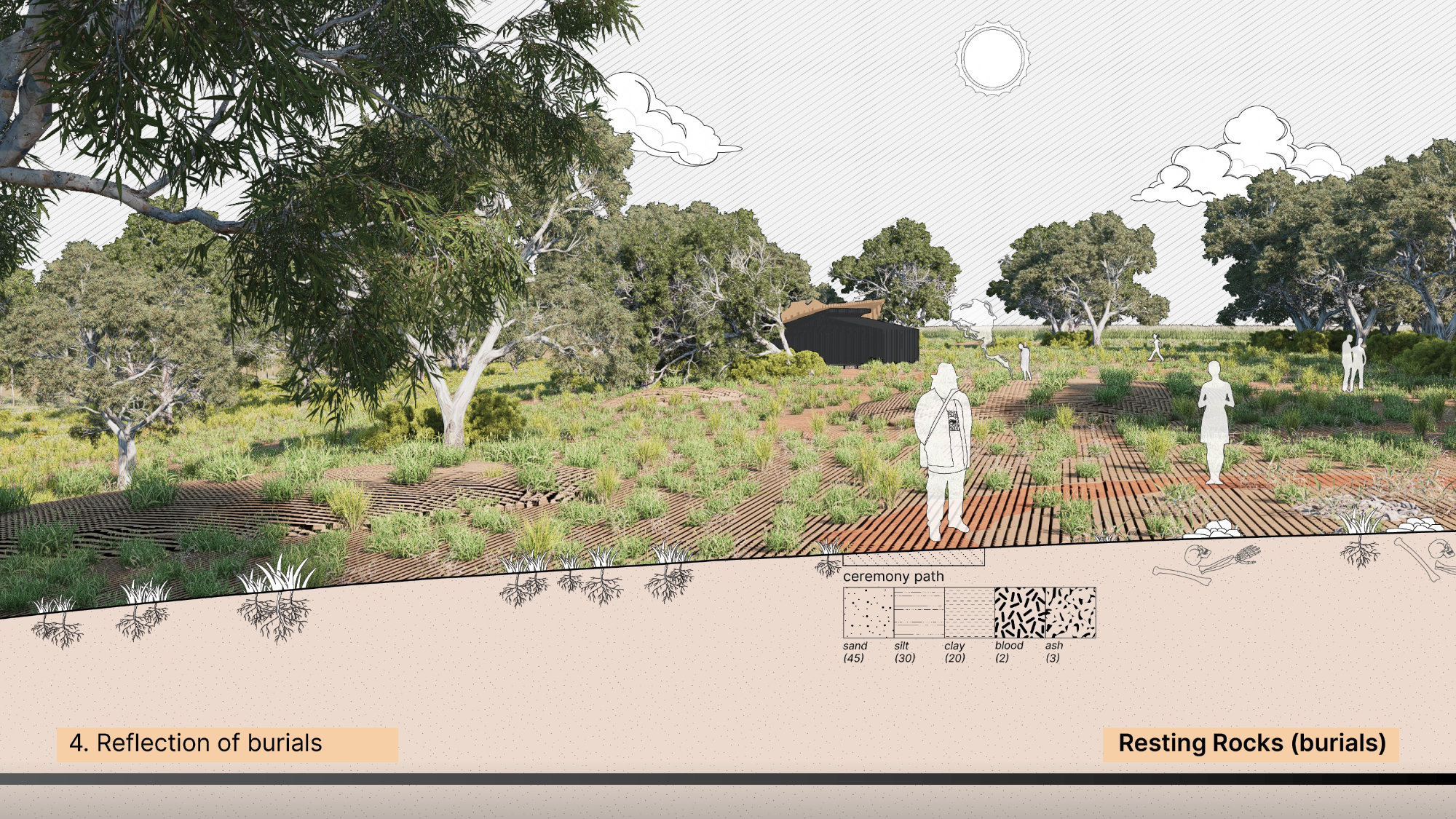
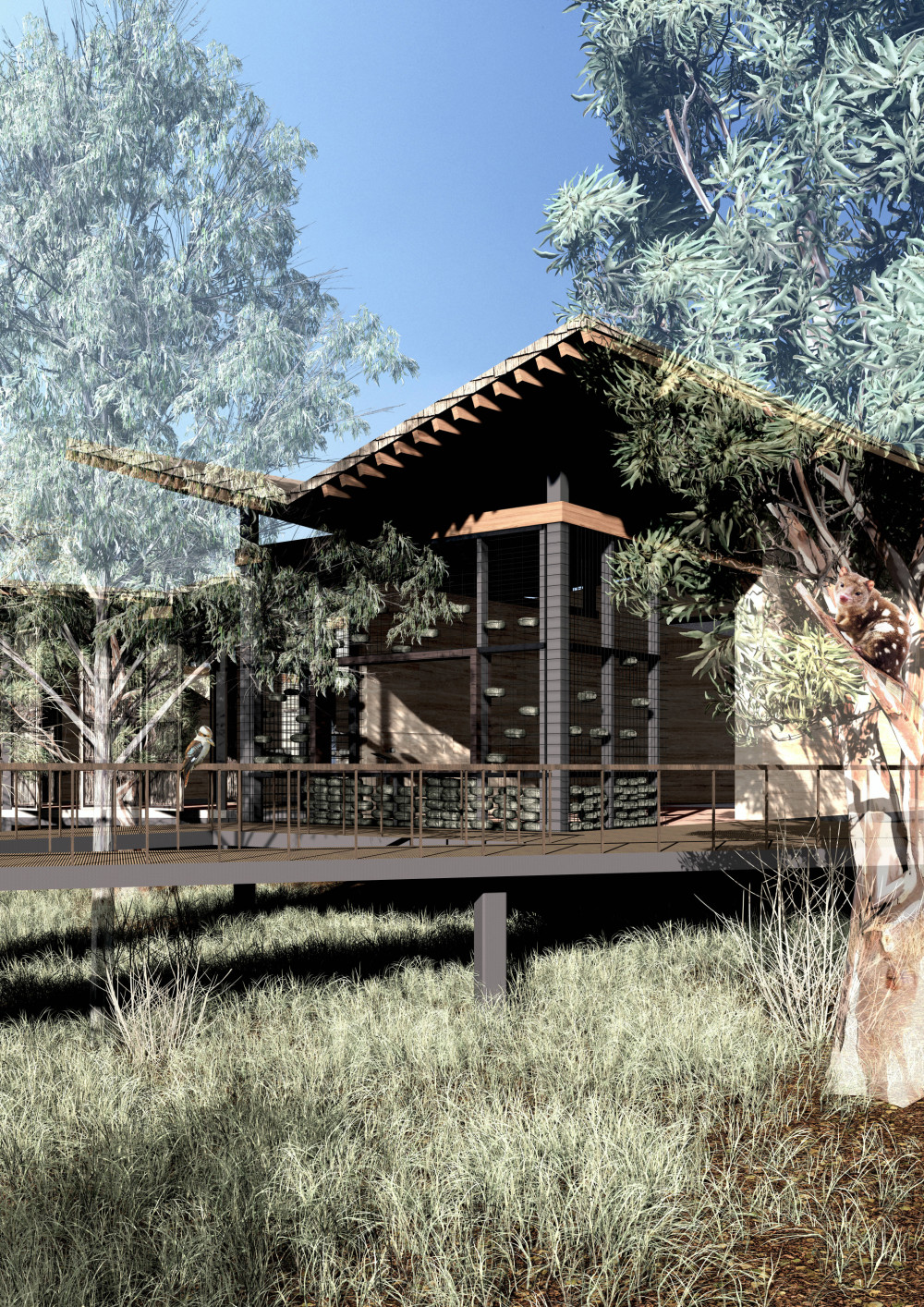
The Keeping Place acts as the public threshold, while beyond is a reimagined sacred landscape. Inspired by the patterns of the Spotted Quoll, a series of elliptical mounds, bowls, and vegetated flats, produces a landscape of concealment and revelation. A serpentine loam path weaves through this space, only accessible to guests under the guidance of the Yung Balug Clan. The subtle topographical variation within the flat landscape, heightened by vegetation offers privacy for the Yung Balug Clan to practice cultural traditions (including burial) and continue caring for their Country and ancestral resting places.
In just 14 weeks, these final year students were tasked with, and succeeded in, building an understanding of a complex cultural and ecological landscape, interpreting the ambitions of the Yung Balug Clan and learning to work together as landscape architects and architects.
Students instinctively foregrounded key stakeholder consultation and collaboration which paved the way for a smooth flow of work and ideas between spaces of architecture and landscape architecture, sustainability, ecology and the history and requirements of the Dja Dja Wurrung.
The studios concluded, serendipitously, on the same day the Treaty was signed between representatives of Victoria’s First Peoples’ Assembly and the State Government in a private ceremony.
This was a coincidence that lent the occasion both gravity and joy. As students shared their projects before Uncle Garry and Djaran who returned to see their final presentations, the moment became one of celebration and reflection, marking a step toward listening, learning, and designing on Country with renewed energy, respect and reciprocity.