Tactics for Subject Coordination
Guidance and tactics for creating subject experiences that are structured, cohesive and clear—based on student feedback and staff practice.
Coordination
Overview
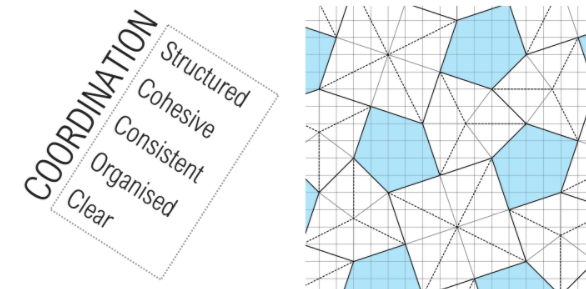
Based on student feedback and a series of conversations with ABP subject coordinators, BEL+T has produced a set of Tactics for Coordination. The objective of this process was to identify the characteristics that students attribute to “well-coordinated” subjects to inform teaching practices. In addition to student commentary, the following guidance includes tactics used by subject coordinators as well as things to consider for their application.
Well-coordinated subjects are...
- Structured - To students, the design of subject content/activities follows a structure that is logical, predictable and reasonable.
- Cohesive - Students recognise alignment across lecture, assignment and tutorial content/activities.
- Consistent - When it comes to subject expectations and objectives, students are receiving consistent messages across staff members.
- Organised - Logistical planning of student activities enables a smooth learning experience.
- Clear - Subject documentation is straightforward and transparent in terms of information and expectations of students.
Structured
It is crucial for students that the design of subject content and activities follows a logical, predictable, and reasonable structure. A well-structured approach to course coordination can enhance the learning experience and help students better manage their workload and expectations.
1. Signposting at the Beginning and/or End of Lectures and Tutorials
Signposting helps students understand the context and connections between different topics and activities throughout the semester. This can be achieved through:
- Consistent Visual Aids: At the beginning of every lecture, display a consistent slide or visual aid that communicates the timeline, major milestones, and the current week's content within the broader subject structure. This contextualises the material and reinforces the overall progression in a structured manner.
- Structured Online Synopses: Provide structured written synopses or summaries on the learning management system (e.g., Canvas) that explicitly link the current week's content to the preceding and subsequent topics or modules. These structured synopses serve as a narrative thread, helping students understand how concepts build upon each other in a logical sequence.
- Structured Continuous Conversation: Present the subject content as a structured, ongoing conversation throughout the semester, frequently referencing previous topics, concepts, or activities, and foreshadowing upcoming material. This approach fosters a more holistic understanding of the subject matter and its structured progression.
However, it's important to consider factors such as potential monotony from repetitive visuals, the suitability of linear structures for different subjects, the impact of cohort size on communication modes, and the need for multiple signposting techniques to cater to diverse learning styles in a structured manner.
2. Structured Pacing of Student Workload and Communicating "Crunch Times"
Effective and structured workload management and communication about peak periods can help students plan and prioritise their tasks more effectively. Structured strategies include:
- Weekly Updates: Provide structured "Welcome to the Week" videos or emails to communicate applicable strategies for managing and planning the upcoming workload in a structured manner.
- Workload Tracking: Before the start of the semester, create a structured spreadsheet or calendar that outlines the weekly content and expected student workload. Update this structured resource based on student feedback throughout the term to ensure a reasonable and predictable workload.
- Curriculum Coordination: Consider concurrent subjects in the curriculum by populating a structured, shared calendar with key dates from other subject coordinators. This helps identify potential overlaps or "crunch times" for students in a structured and predictable way.
- Activity Tracking: Use structured applications or tools to track how much time students spend completing online quizzes, assignments, or specific questions. This structured data can inform more accurate workload estimates and help maintain a reasonable pace.
However, be mindful of potential changes in subject content or cohort composition that may require adjustments to structured workload management messages, the risk of overestimating or underestimating student workloads, and the fact that some cohorts may comprise students taking different concurrent subjects, leading to misaligned "crunch times."
3. Structured Allocation of Weighting for Assessment Tasks
Aligning the weighting of assessment tasks with the anticipated effort required in a structured manner can help students better manage their time and workload. Consider the following structured strategies:
- Synthesising Opportunities: For tasks with significant weight (e.g., 50% or more), design them as a structured aggregation of content or skills acquired over the semester. Communicate these as structured opportunities for students to synthesise their learning in a logical and predictable manner.
- Framing of Effort Discrepancies: When students claim to have put more effort into a task than it was allocated, respond carefully. Frame the discrepancy between time spent and time allocated as a structured issue of freedom and responsibility, rather than a mismatch in expectations.
However, be aware that the effort required for any given task can vary dramatically from student to student, and anticipating the time required for creative tasks can be particularly challenging. Manage these variations in a structured and transparent manner.
By implementing these structured coordination tactics and considering the associated examples and considerations, educators can create a more cohesive, well-paced, and engaging learning experience for their students, fostering a supportive and aligned learning environment that follows a logical, predictable, and reasonable structure.
-
- “The assignments were well organised in terms of the time they were due in semester. It was much better to have the more time consuming/difficult assignment at the beginning of semester when people weren't as under the pump from other subjects.”
- “All the tasks were so clear and there was a very clear progression from one task to the next.”
- “Even as little as ten minutes at the beginning of the lecture allocated to concisely explaining the deliverables and clarifying the assignment would suffice.”
- “The course structure overall is confusing and there should be more structure in place.”
- “The subject seemed to jump around too much, it was hard to follow understand if there was actually a chronological order for learning things or if they were just thrown in wherever.”
-
- Design & Teach a Course. Carnegie Mellon University's Eberly Center for Teaching Excellence & Educational Innovation.
Cohesive
When content is aligned across lectures, assignments, and tutorials, students perceive this as evidence that the subject is well-coordinated. Designing each session to directly support learning aims follows the principle of "constructive alignment" and can address the challenge of cohesion.
1. Aligning Weekly Content and Learning Activities to Explicitly Support Learning Aims
Clearly communicating the connections between weekly topics, activities, and the overall learning objectives can help students understand the relevance and purpose of each component. This can be achieved through:
- Explicit References: In weekly presentations and documentation, make explicit references to the current assessment task and associated learning aims. Highlight how the content and activities directly support the development of specific skills or knowledge.
- Subject Calendar: Present a subject calendar or roadmap that clearly communicates the alignment across subject content, learning activities, and assessments. This visual aid can help students see the bigger picture and understand how different components fit together.
However, it's important to consider the following:
- Cultural or academic backgrounds may impact students' expectations and understanding of constructive alignment. Be mindful of potential differences in perspectives and provide clear explanations.
- Evaluate whether every lecture and tutorial needs to be explicitly tied to specific subject learning aims. In some cases, a more flexible or exploratory approach may be appropriate.
2. Designing Tutorials to Reinforce Deeper/Applied Comprehension
Tutorials can be an excellent opportunity to reinforce and apply the concepts introduced in lectures, fostering a deeper understanding of the week's focus. Strategies include:
- Justifying Alignment: Explain to students the rationale for when alignment between lectures, tutorials, and assessments is intentional, and when it may not be as explicit. Remind them of this justification as needed throughout the course.
- Encouraging Critical Thinking: Communicate to students that drawing connections between different subject activities is part of their responsibility as critical, independent thinkers. Encourage them to actively seek and make these connections.
Consider the following:
- Involve students in a conversation about how explicit the connections between different subject components need to be. Their input can inform the level of guidance or structure provided.
- In some subjects, tutors may attend lectures to better understand the connections between lecture content and tutorials, allowing them to accentuate these links more effectively.
- The level of structure and guidance provided to tutors may depend on factors such as the nature of the subject, the size of the teaching team, and the level of experience among tutors.
3. Curating Guest Lecture Content to Align with Current Assessment Tasks and Content
Guest lectures can provide valuable perspectives and expertise, but it's important to ensure their content aligns with the current assessment tasks and subject material. Strategies include:
- Collaborative Planning: Discuss with each guest lecturer how their content fits into the subject structure and how signposting might help emphasise this alignment to students.
- Interactive Dialogue: Engage the guest lecturer (or a panel of them) in a dialogue during the session, purposely relating the material to other subject activities. Allow students to participate in this dialogue as well.
- Communicating Value: Communicate to students the value that guest lecturers bring to the subject, such as their specialised expertise or unique perspectives that fall outside the coordinator's own area of expertise or worldview.
However, keep in mind the following considerations:
- Framing guest lecture content often requires communicating expectations to speakers well in advance, allowing them to incorporate alignment into their presentation.
- Not all guest lecturers may be receptive to having their content framed or contextualised by the course coordinator, whether done in advance or during the live session.
- Always confirm with each guest lecturer whether they approve posting their slides or materials to the learning management system (LMS). In some cases, amendments may be required before posting.
By implementing these strategies and considering the associated examples and considerations, educators can create a more cohesive and aligned learning experience, where students can clearly understand the connections between different course components and their relevance to the overall learning objectives.
-
- “The content was interesting and the tutorials provided an excellent place to discuss and deepen knowledge and understanding of the lecture content. The assignments were also great, they facilitated better application of skill and knowledge, all-around excellent course planning and delivery of information.”
- “The best aspect of the subject was how the lecture content directly related to the [project]. This way we were able to apply our knowledge directly to the [project] while simultaneously getting clarification through the tutorials.”
- “The general organisation of the subject felt really messy, and often the timing of lectures, workshops and tutorials did not seem to be carefully thought out of how best to interact with each other.”
- “Guest lectures could be improved. There have been a few where they were overly general, or some that have repeated previous content.”
- “Guest lecturers were all over the shop at times and often failed to link back to the content, ended up just giving their life story/experiences and seemed irrelevant to our learning.”
-
- Aligned Course Design. University of Minnesota's Center for Educational Innovation.
- Constructive Alignment. Charlies Sturt University's Division of Learning and Teaching.
Consistent
Many subjects in the Advanced Breadth Program (ABP) are comprised of teaching teams. A key challenge is to ensure that students receive consistent messages across staff members, as students interpret this as evidence of a well-coordinated subject.
1. Communicating Regularly with Teaching Colleagues to Develop a Consistent Team Approach
Regular communication and collaboration among the teaching team are essential for maintaining consistency in messaging and approach. Strategies include:
- Coordination Meetings: Schedule teaching coordination meetings at several points during the semester to discuss challenges and strategies related to communicating with students.
- Establishing Protocols: Meet with tutors in Week 0 to decide on communication protocols and ensure everyone is aligned.
- Group Communication Tools: Use group communication tools (e.g., Zoom, WhatsApp) to share communication strategies and announcements among the teaching team.
However, it's important to consider the following:
- Account for the costs and logistics of coordination meetings, and budget accordingly.
- Consider using a limited number of communication platforms and adapt to whatever works best for the tutors.
- New tutors may require guidance for communicating with students in a way that remains consistent with other tutors.
- Some students may strategically ask the same question to multiple staff members to see if they receive different answers.
2. Sharing Documents with Tutors to Provide Structure and Objectives for Tutorials
Providing tutors with structured documents and resources can help ensure consistency in tutorial delivery and objectives. Strategies include:
- Weekly Outlines: Share weekly outlines with tutors, detailing tutorial tasks and objectives.
- Rotating Activity Design: Rotate responsibility for designing weekly learning activities among the teaching team, and use these as a basis for the following year.
- Assessment Task Videos/Podcasts: Record a video or podcast to be played by tutors in tutorials at the launch of each assessment task.
- Tutorial Slides: Provide tutors with slides to use as visual references or talking points to encourage and structure tutorial discussions.
However, keep in mind the following considerations:
- Not everything requires consistency across tutorials (e.g., teaching style), but consider what students expect to be consistent and what requires explanation or justification.
- Be aware of "rogue" tutors adjusting expectations and deliverables or giving mini-lectures during tutorial sessions.
- Beware of tutors getting competitive with one another and using student outputs as a proxy for their own self-worth.
3. Observing at Least One of Each Tutor's Sessions per Semester
Observing tutors in action can provide valuable insights into maintaining consistency across tutorial sessions. Strategies include:
- Tutorial Visits: Schedule visits to each tutorial by the end of the third week, followed by one-on-one debriefs with tutors about what you observed. A group discussion with the team may also be useful.
- Spatial Arrangements: When visiting, draw an annotated diagram of spatial arrangements, including students and tutors, and discuss with the teaching team.
- Tutor Rotation: Rotate tutors around tutorial groupings to reduce discrepancies.
- Student Feedback: Collect feedback from students midway through the semester specifically regarding the level of consistency between tutorials.
However, consider the following:
- Scheduling visits may be challenging if a coordinator has a concurrent tutorial; in this case, consider rotating instead.
- Evaluate the pros and cons of making active contributions during the visit.
- Consider the dynamic between tutor and students, which can be affected by student demographics or background/level.
- Students may feel disadvantaged being assigned to particular tutors; consider "talking up" each tutor in the first lecture as a way of reducing this perceived discrepancy.
By implementing these strategies and considering the associated examples and considerations, educators can foster consistency in team-taught subjects, ensuring that students receive a cohesive and well-coordinated learning experience.
-
- “There wasn't always a clear set of expectations. They differed between tutor groups, and some tutors either weren't able to clarify them, or would be giving incorrect information to the class, seemingly due to a lack of consistent information between all tutors and coordinators.”
- “Different students had different requirements because of different tutors and I feel that this should be improved…There should be more consistency between the different tutors in terms of objectives.”
- “Tutors and lecturers were not consistent in how they explained the modules and the requirements they were expecting in final submissions. This made assessment completion confusing and stressful.” “There seemed to be a serious lack of communication to the tutors as to what was expected from each submission.”
- “I do understand that tutors might have different opinions from one another, but the workload requirement should be consistent across the subject.”
-
- Lefoe, G. E., Parrish, D. R., Keevers, L. M., Ryan, Y., McKenzie, J., & Malfroy, J. (2013). A CLASS Act: The teaching team approach to subject coordination. Journal of University Teaching & Learning Practice 10(3).
- Click the link for more information on the Coordinators Leading Advancement of Sessional Staff (CLASS) project, funded by the Australian Learning and Teaching Council (ALTC).
Organised
The degree to which a subject appears to have been logistically planned directly contributes to its perceived degree of coordination. Effective organisation and planning can enhance the overall learning experience for students.
1. Scheduling and Organising Student Access to Learning Spaces, Equipment, and Off-Site Opportunities
Ensuring that students have access to the necessary resources and facilities is crucial for a well-organised learning experience. Strategies include:
- Scheduling Inductions: Schedule groups of students to complete any necessary inductions (e.g., FabLab) during timetabled sessions, ensuring all required forms (e.g., medical) are completed.
- Testing Facilities: Before using any learning space, visit the room and test the audio/video/IT systems to confirm they are suitable and functional.
- Coordinating Off-Site Access: If students are likely to be accessing any sites on or off campus, communicate with site/facility managers as necessary to discuss challenges regarding accessibility. Complete risk assessment forms as required.
However, it's important to consider the following:
- Avoid scheduling opportunities outside timetabled sessions, as students will have other commitments.
- Confirm student access, even to facilities within your institution, especially if your timetabled sessions fall outside regular working hours.
- Be aware that last-minute increases in student enrolment can lead to significant logistical conflicts; anticipate and develop a contingency plan.
2. Setting Major Deadlines Carefully
Thoughtful planning and coordination of major deadlines can help students manage their workload effectively. Strategies include:
- Avoiding Conflicts: Avoid conflicts with other commitments and deadlines shared across the student cohort, working with other subject coordinators as needed.
- Minimising Deadline Changes: Avoid shifting deadlines once the semester is underway. If absolutely necessary due to unforeseen circumstances, communicate your reasoning for these changes to students.
However, keep in mind the following considerations:
- Coordinating across subjects may only be feasible for subjects with cohorts of shared pathways or degree courses.
- For deadline setting, flexibility is somewhat limited by the suggested number of assessments per semester.
3. Using Canvas or Other Online Systems Effectively
Leveraging online systems and learning management systems (LMS) can enhance the student experience and facilitate effective organisation. Strategies include:
- Familiarity and Consistency: When it comes to LMS user experience, use templates and tools that students are likely familiar with (discuss with other subject coordinators as necessary). Design the LMS site to be interactive rather than just a repository.
- Incorporating Online Learning: Periodically incorporate online learning as a topic for lecture/tutorial discussions.
- Thoughtful Design: Use migration as an opportunity to rethink the LMS experience. Work with the structure and interface of the LMS (e.g., Canvas), not against it.
- Predictability and Consistency: Regarding the LMS strategy, be predictable and consistent throughout the semester.
However, consider the following:
- When developing a strategy for providing material on the LMS (e.g., everything at the beginning or a sequential roll-out), be careful not to overload students, while still providing sufficient information for those who like to plan ahead.
By implementing these strategies and considering the associated examples and considerations, educators can foster an organised and well-planned learning experience, contributing to the perceived degree of coordination and enhancing the overall student experience.
-
- “The co–ordination with [a related subject] was really appreciated. Having them due on the same week would have been very bad for both subjects.”
- “There was adequate time in labs and tutes to work on and review work.”
- “I understand as a subject you are encouraged to incorporate MSD facilities into your assignments…However, forcing [all] students to only use [certain tools] was never going to practically work. [MSD facilities do not] have the capacity to complete jobs for [this many] students within that small [of a] time frame.”
- “Some forewarning about site visits requiring and needing adequate timing to get to and from locations would have been nice earlier on in the enrolment process. I couldn't make it to some of the site visits because the tutorial times didn't fit with my timetable. Knowing this when enrolling meant I could've rearranged the time table.”
- “The subject reader and the prescribed text were unavailable at the co–op bookstore. This impacted on the first few weeks of learning negatively and was quite frustrating.”
-
From the BEL+T website:
Clear
Students highlight the value of a clear set of written policies, information, and expectations they can use to guide their learning as part of a discussion of 'good coordination'.
1. Being Predictable Regarding Timeframes and Deliverables
Providing clear and consistent information about deadlines and expectations can help students plan and manage their workload effectively. Strategies include:
- Upfront Submission Details: Provide all submission details to students at Week 0, rather than distributing them over the course of the semester.
- Late Submission Policies: Clarify procedures and rules for late submissions.
- Assessment Checklists: Provide a checklist of deliverables for each assessment task, aligning it with the assessment rubric to clarify various levels of expectations and minimum standards.
However, it's important to consider the following:
- Be clear about what cannot, in fact, be prescriptive or linear (e.g., the design process or a particular order of operations).
- Be aware of scheduling conflicts that lie outside of your control (e.g., holidays, major events, concurrent deadlines) to limit the chance that any major changes will need to occur once the semester is underway.
2. Communicating Clearly to Students the Structure of the Subject
Providing a clear understanding of the subject structure and flow can help students navigate the learning experience more effectively. Strategies include:
- Subject Schedule: Align the subject structure to submissions, and use a subject schedule to emphasise key dates.
- Emotional Map: Present a typical "emotional map" of the learning experience, including moments of frustration, panic, or anxiety, to clarify to students that these should be anticipated but that they will survive.
- Reiteration and Multiple Modes: Refer directly to subject documentation as needed and in the context of particular concerns or issues. Reiterate the subject structure using a variety of communication modes (e.g., face-to-face, LMS announcements, documentation).
However, consider the following:
- Students prefer receiving structure and key dates in Week 0 for planning purposes.
- Consider ways of encouraging students to read subject documentation and communications by employing good design, formatting, and including engaging content.
3. Connecting Subject Documentation to the University and ABP Faculty Context
Situating subject documentation within the broader institutional and program context can help students understand the relevance and alignment of policies and expectations. Strategies include:
- Shared Language and Policies: Include language shared across curricular pathways or courses on student expectations, as well as policy links for themes like academic integrity, accessibility, and inclusion.
- ABP-wide Topics: Other ABP-wide topics might include policies or links for off-site learning, health and safety, printing, academic support, etc.
- Alignment with University Resources: Ensure that the current content in the subject handbook entry aligns with the subject guide.
However, keep in mind the following considerations:
- Be aware of the "too long, didn't read" (TLDR) reaction, and consider disseminating subject documentation in parts as well as the whole document in advance to accommodate different student approaches to receiving such information.
- Consider that the learning management system (e.g., Canvas) may have built-in functions for linking to course-wide information within individual subject modules.
- Consider including a glossary of discipline-specific terms frequently encountered across the course or pathway.
By implementing these strategies and considering the associated examples and considerations, educators can foster clarity through effective communication and documentation, enhancing the overall learning experience for students.
-
- “The subject guide was clear and concise, and the checklists for each task made sure that requirements were met and nothing was missed.”
- “[The teaching team] managed to communicate very clearly the expectations of assignments, and the LMS content (including the videos, emails, announcements) [was] greatly appreciated, and very clear.”
- “The assignments in general were well organised and the subject guide/s were clear, concise and easy to follow.” “I have found it difficult to understand assignment instructions. I would appreciate clearer instructions as I kept finding myself confused on what I should be doing.”
- “Assignments brief are not explained clearly in either lectures or tutorials; the criteria and deliverable are very confusing.” “The subject guide does not help, and is formatted poorly, so it's hard to navigate.”
-
Riviere, J., Picard, D., & Coble, R. (2014). Syllabus Design. Vanderbilt University Center for Teaching.
Gannon, K. How to Create a Syllabus. The Chronicle of Higher Education.