Charlotte Wessel
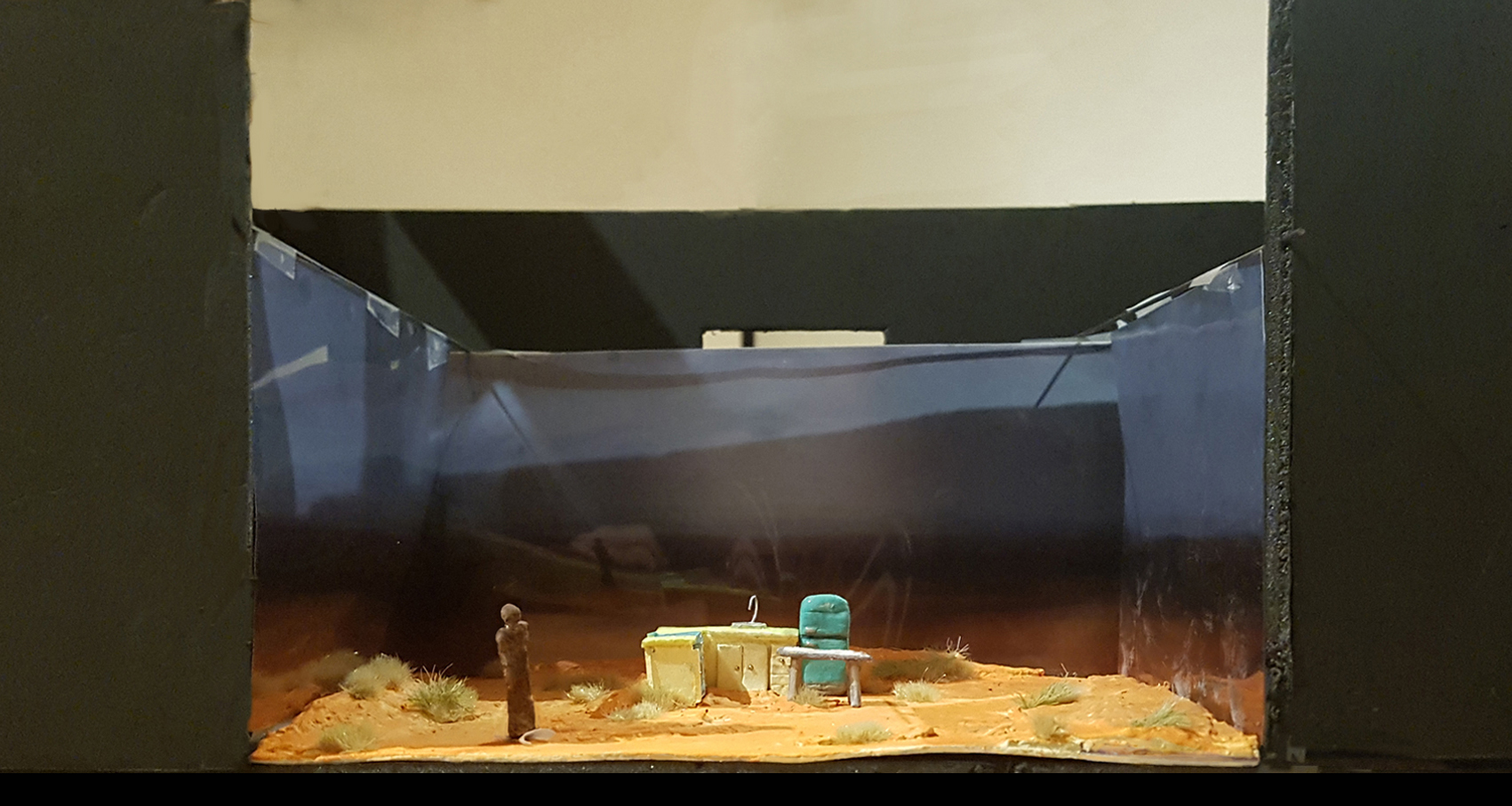
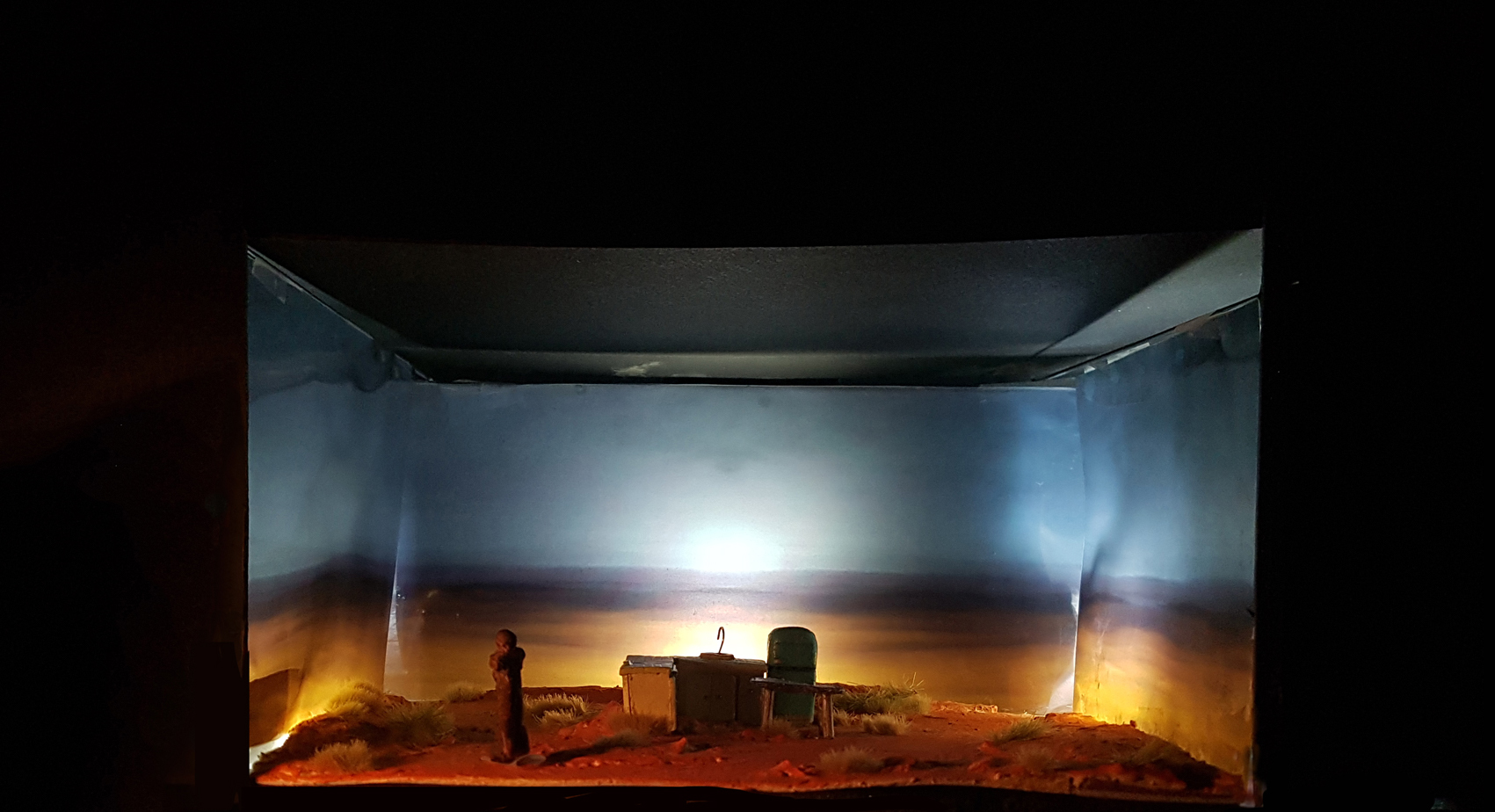
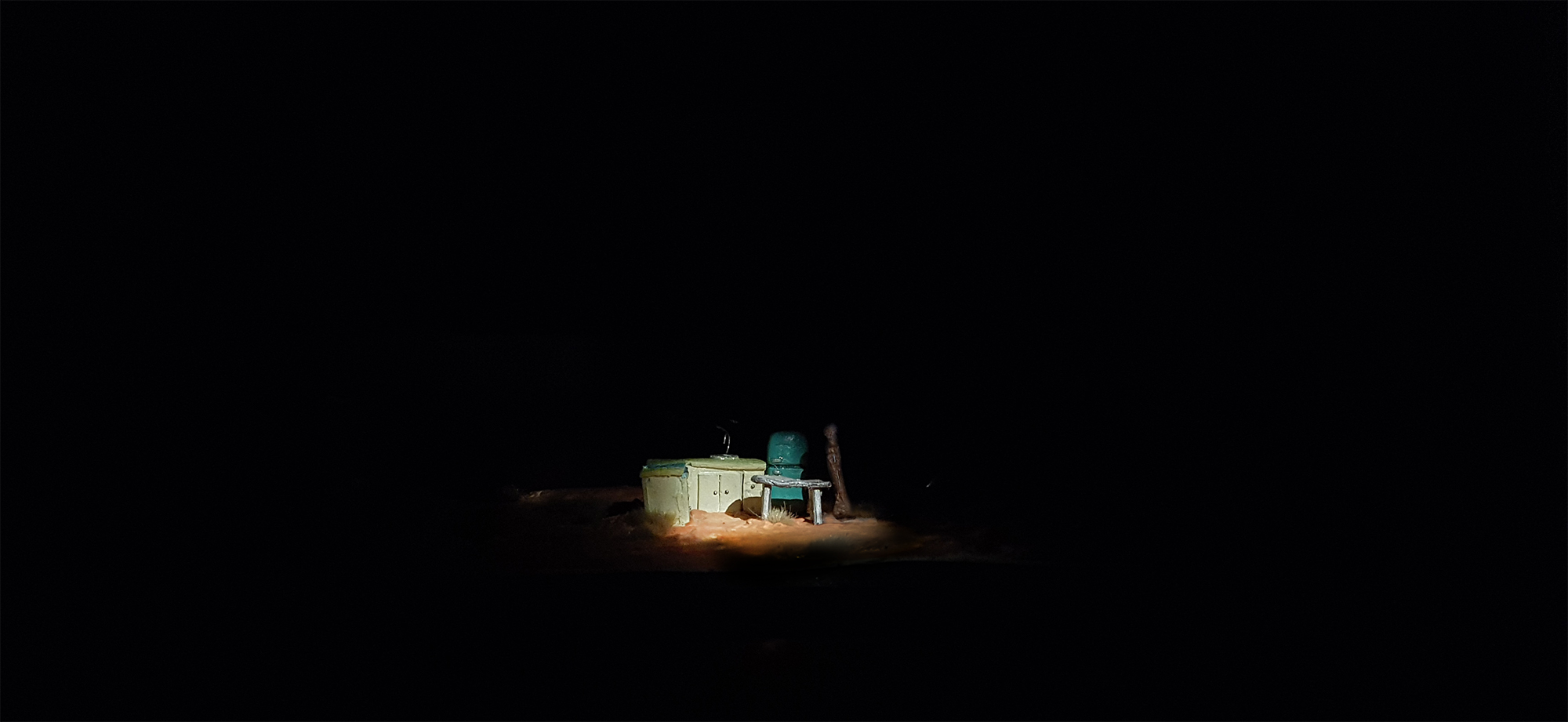
This scenic design is emblematic of one of the driving forces in the play, namely the tension between Medea’s ambitions of a wealthy coastal life and the immutable connection she has with her ancestral home.
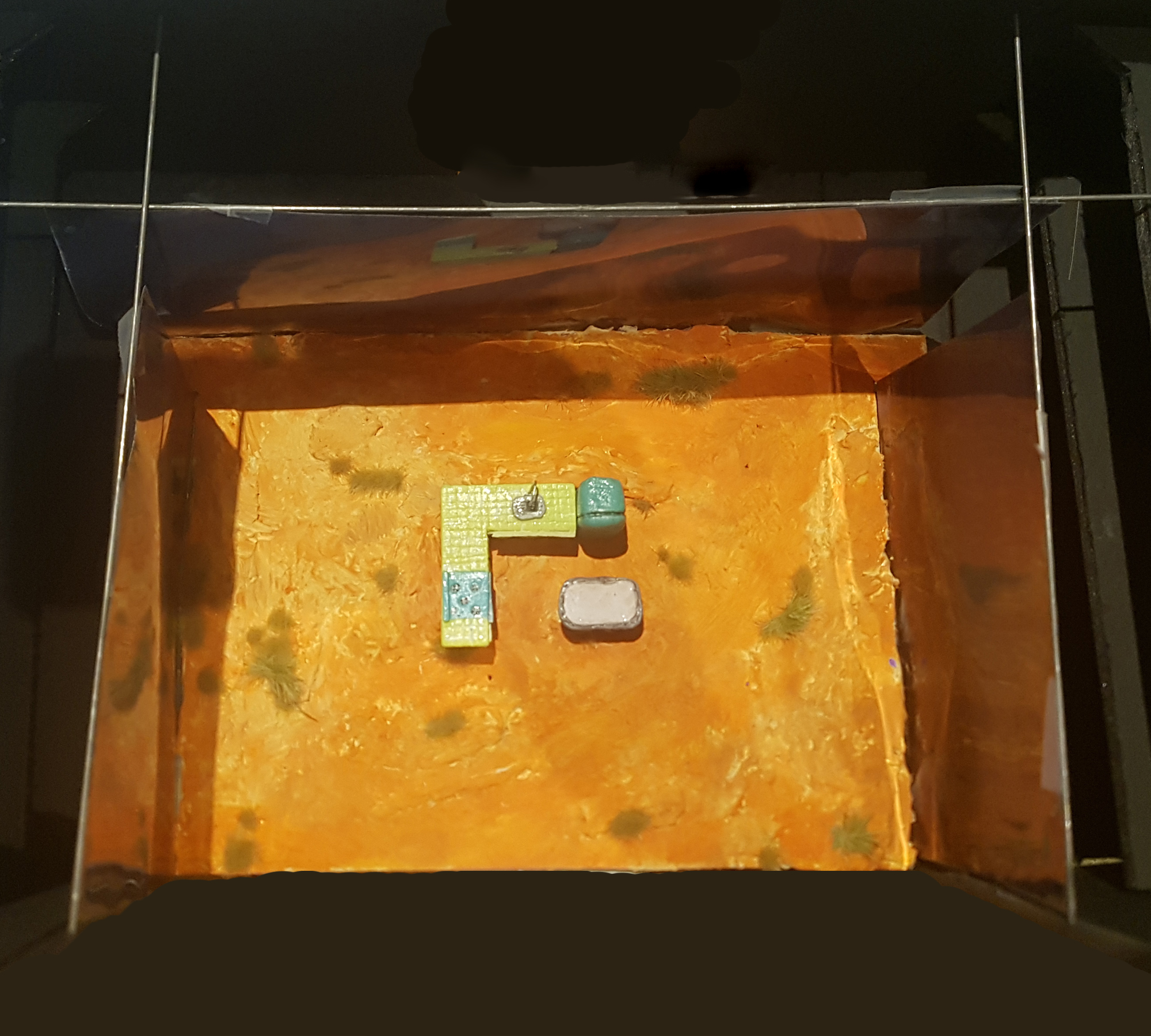
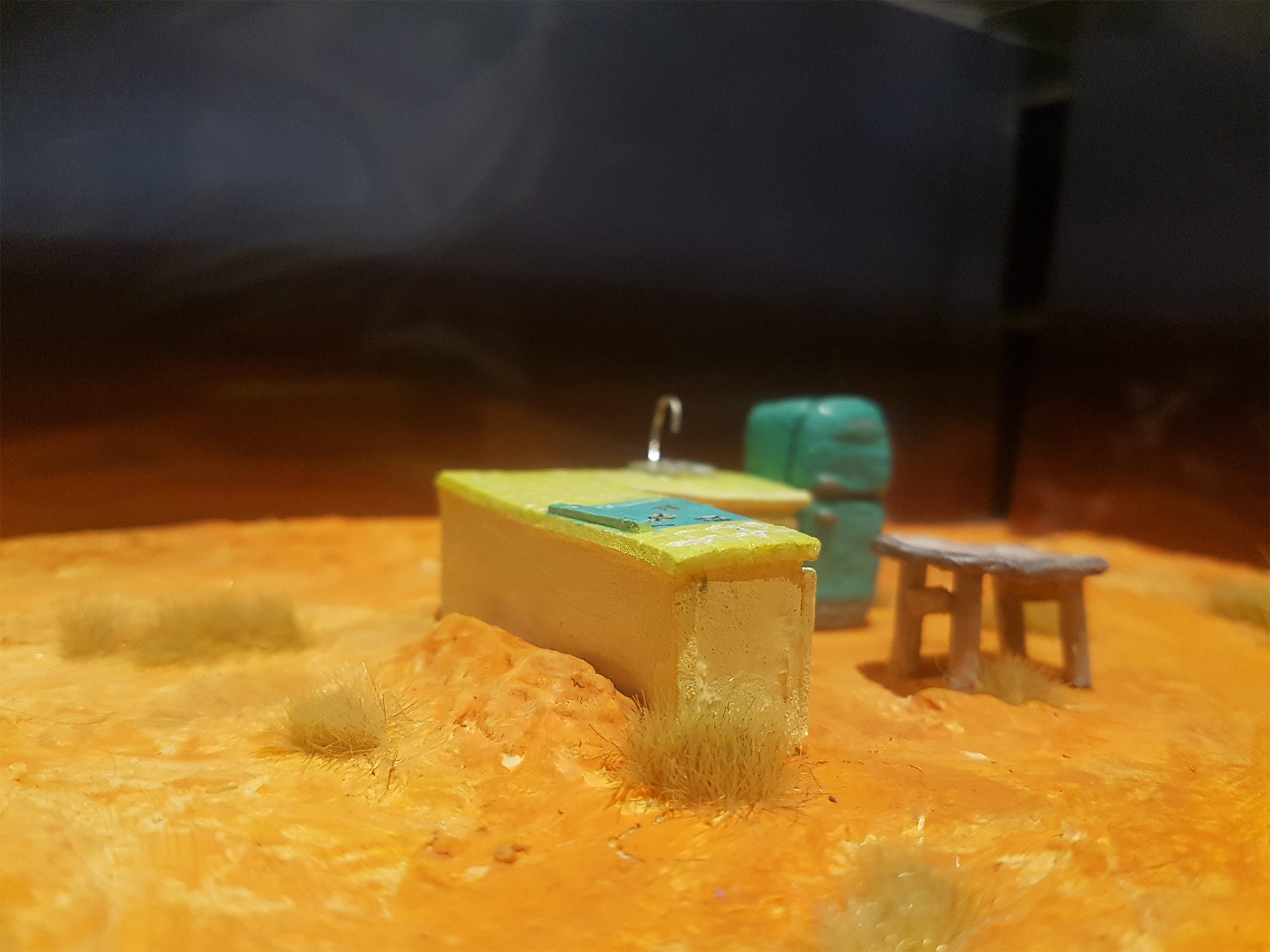
Historically, the kitchen is the focal point of the house, as it has been both the site of the hearth and the primary space of the housewife. It is therefore uniquely appropriate to act as a distillation of the home, or Medea’s “big house”. This “big house” draws its character from the enduring image of domestic bliss: the 1950s nuclear family. This glimmering ideal is in stark contrast with the desert of Medea’s country. It encroaches on the kitchen, with sand creeping up the side of the counter and piling under the table. The broader landscape is created through screens that surround the playing space with a blurry, endless horizon.
While the small kitchen is disconnected from its context, the terrain is located within its original landscape. This creates a hierarchy between the two elements, with the desert being the stronger, more stable, of the two. Ultimately, just as the landscape overwhelms the kitchen, Medea’s culture prevails.