Yi Wang
Research Question
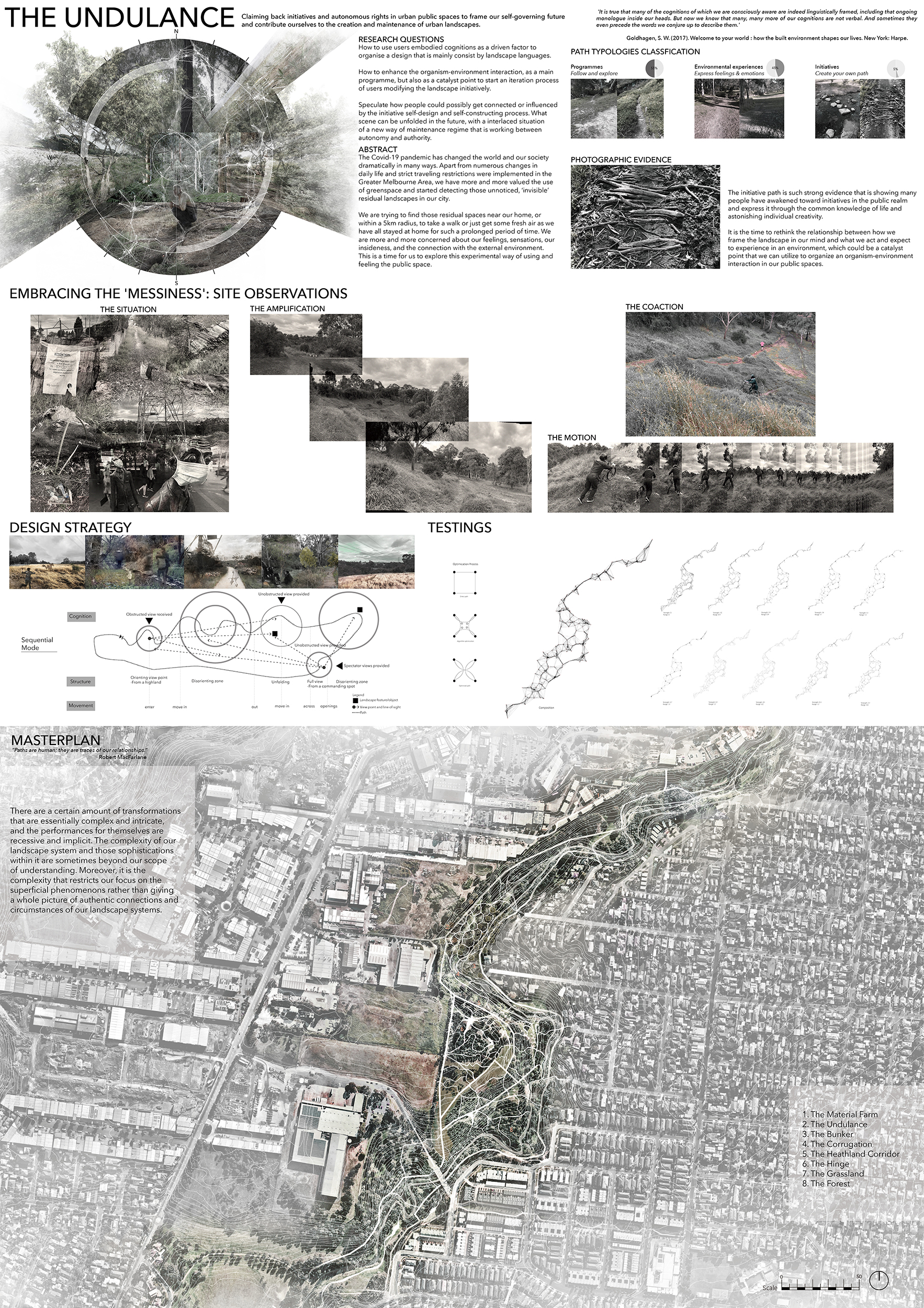
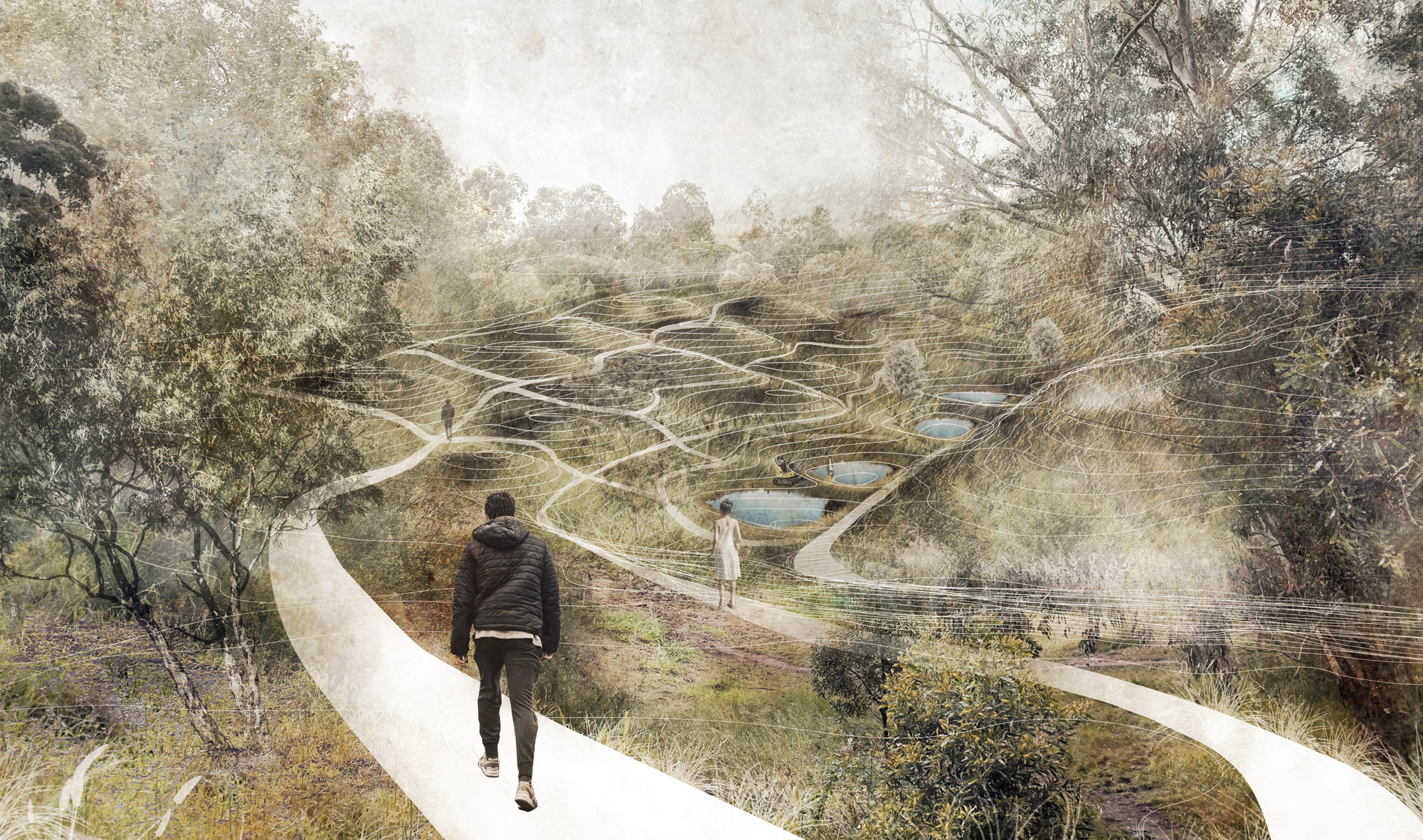
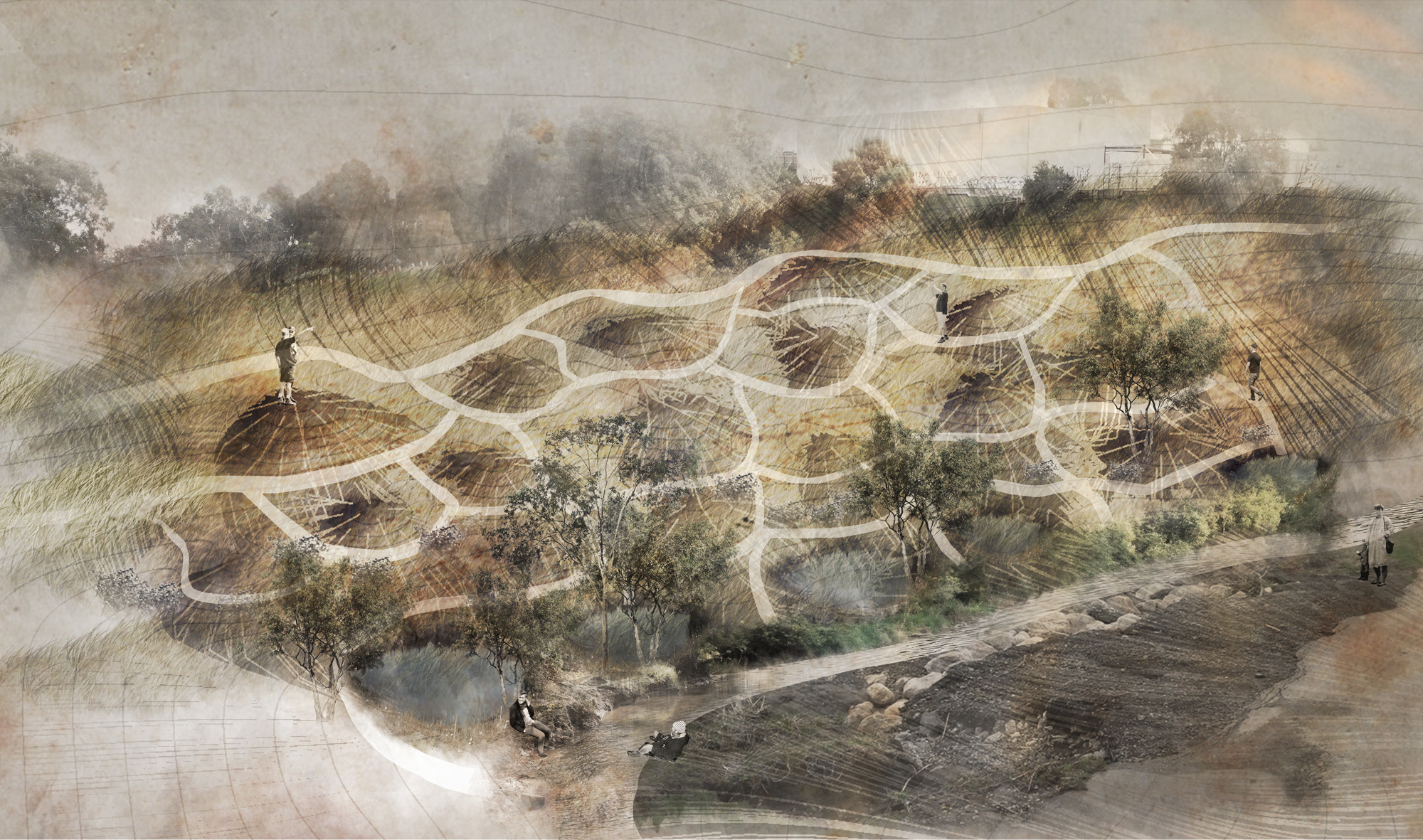
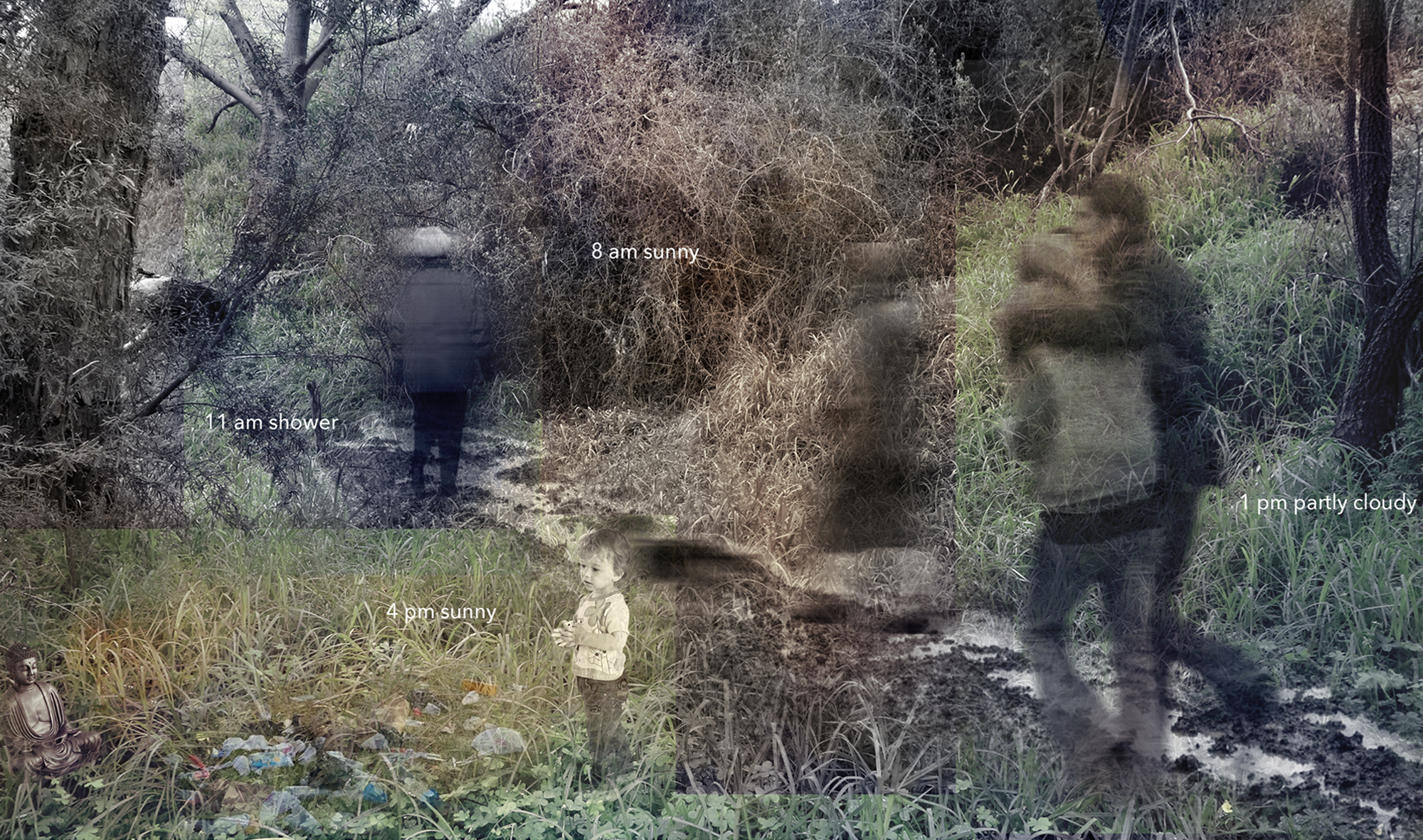
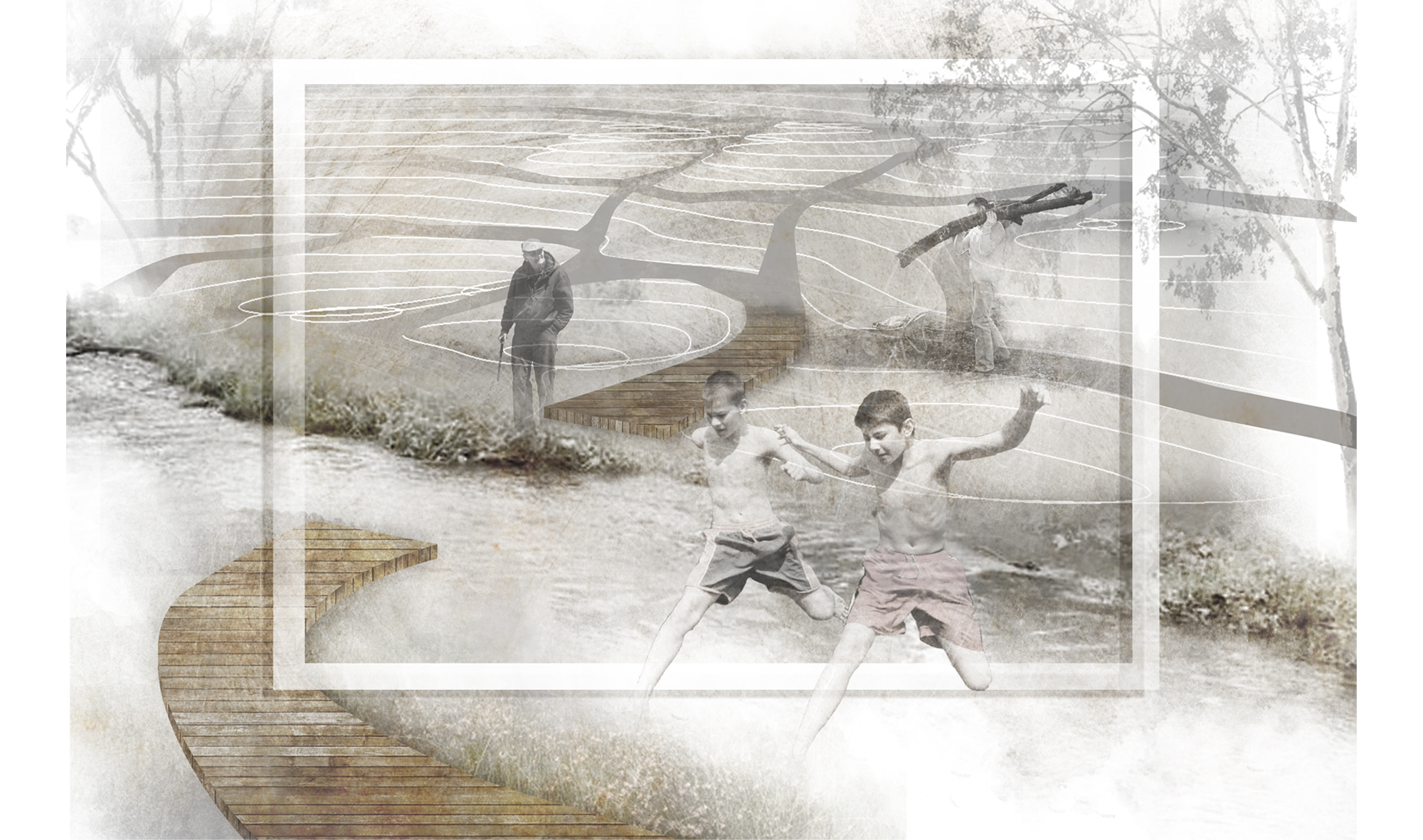
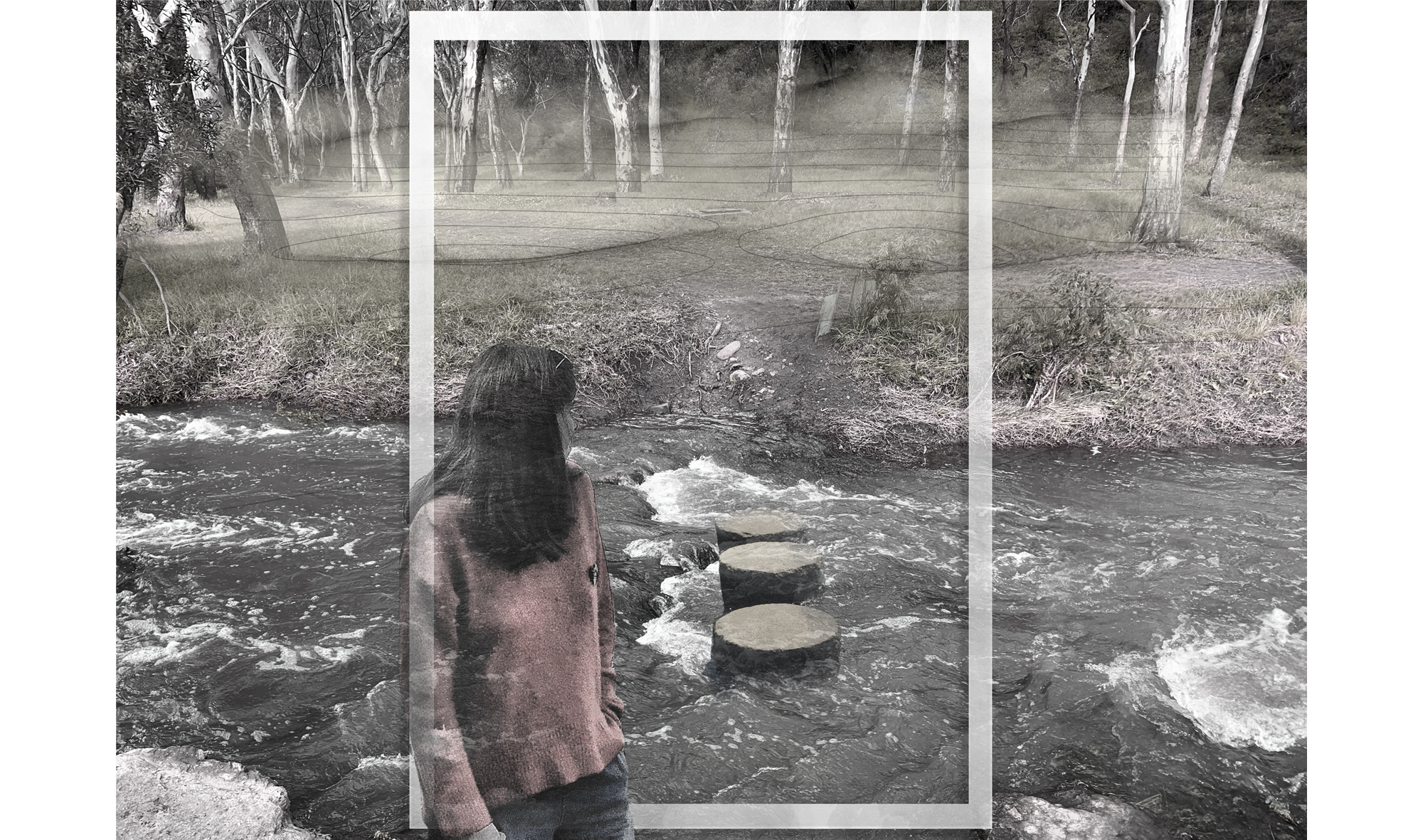
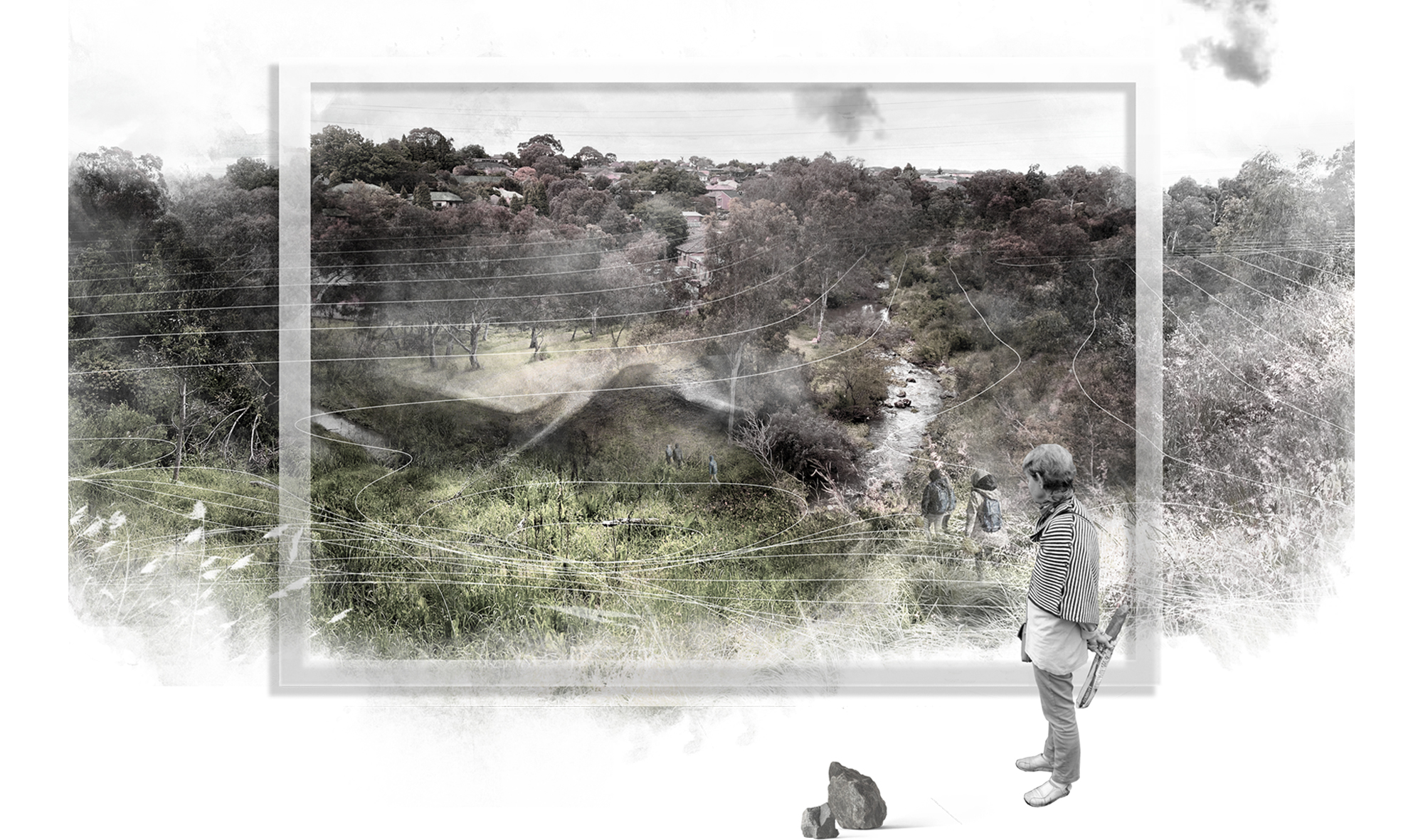
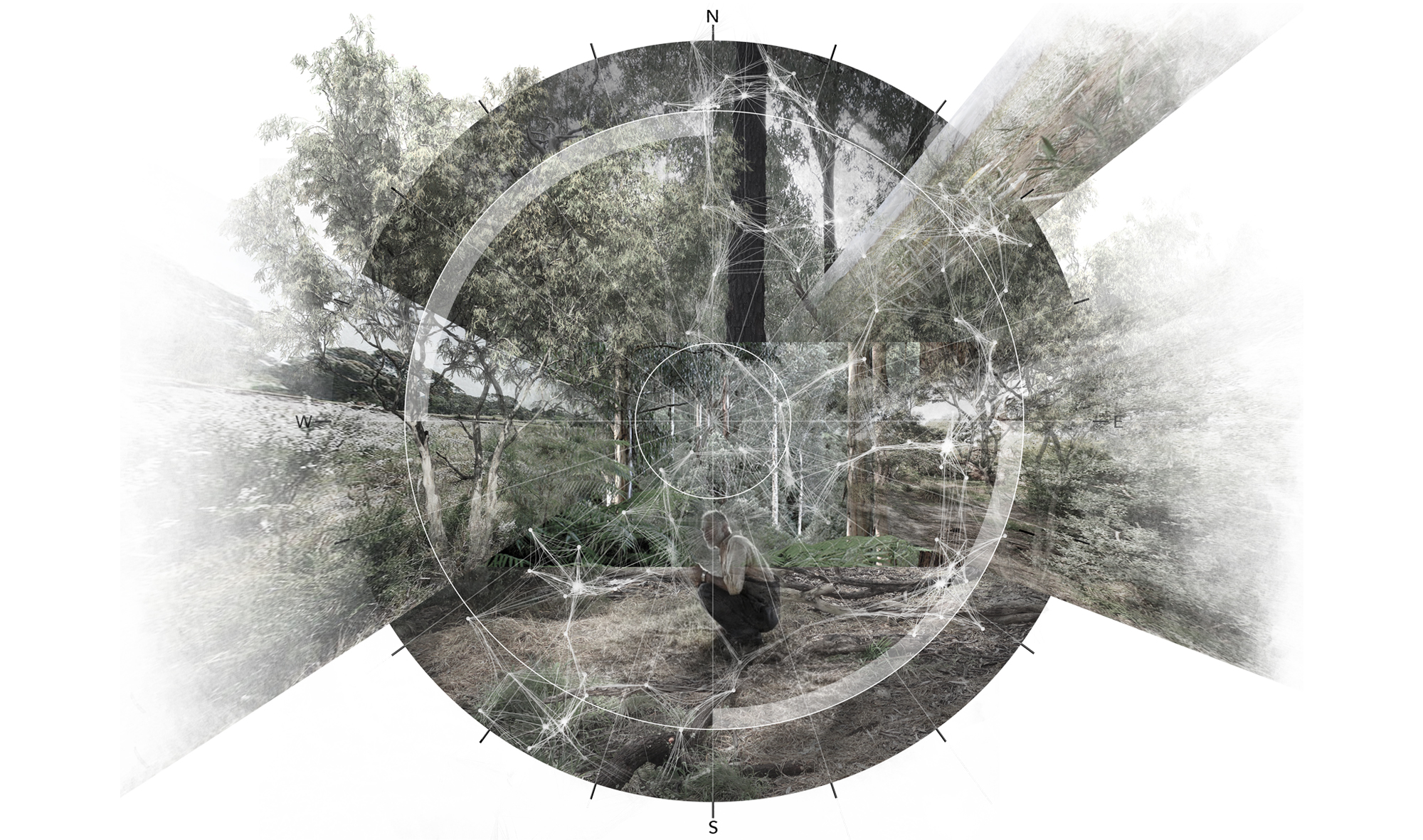
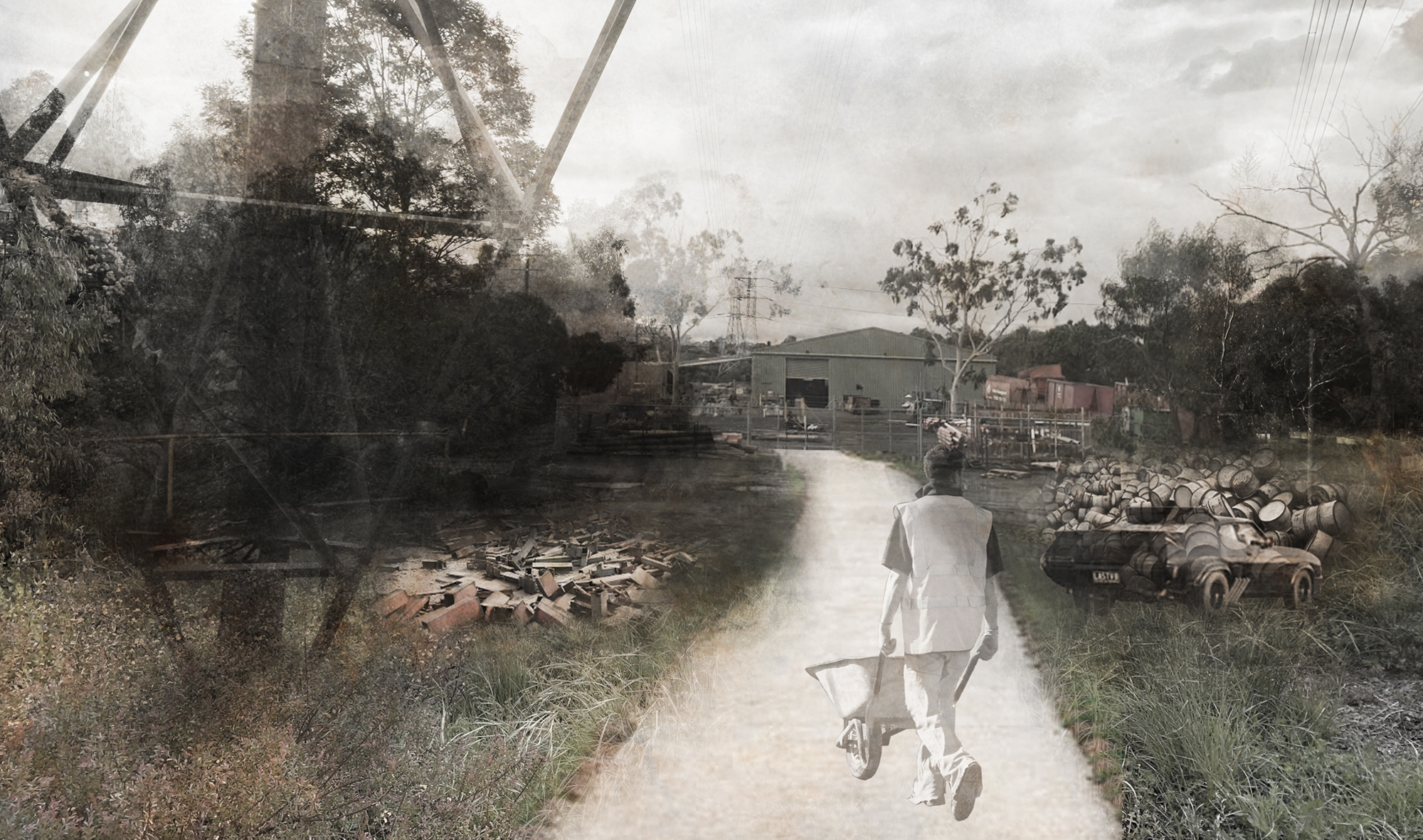
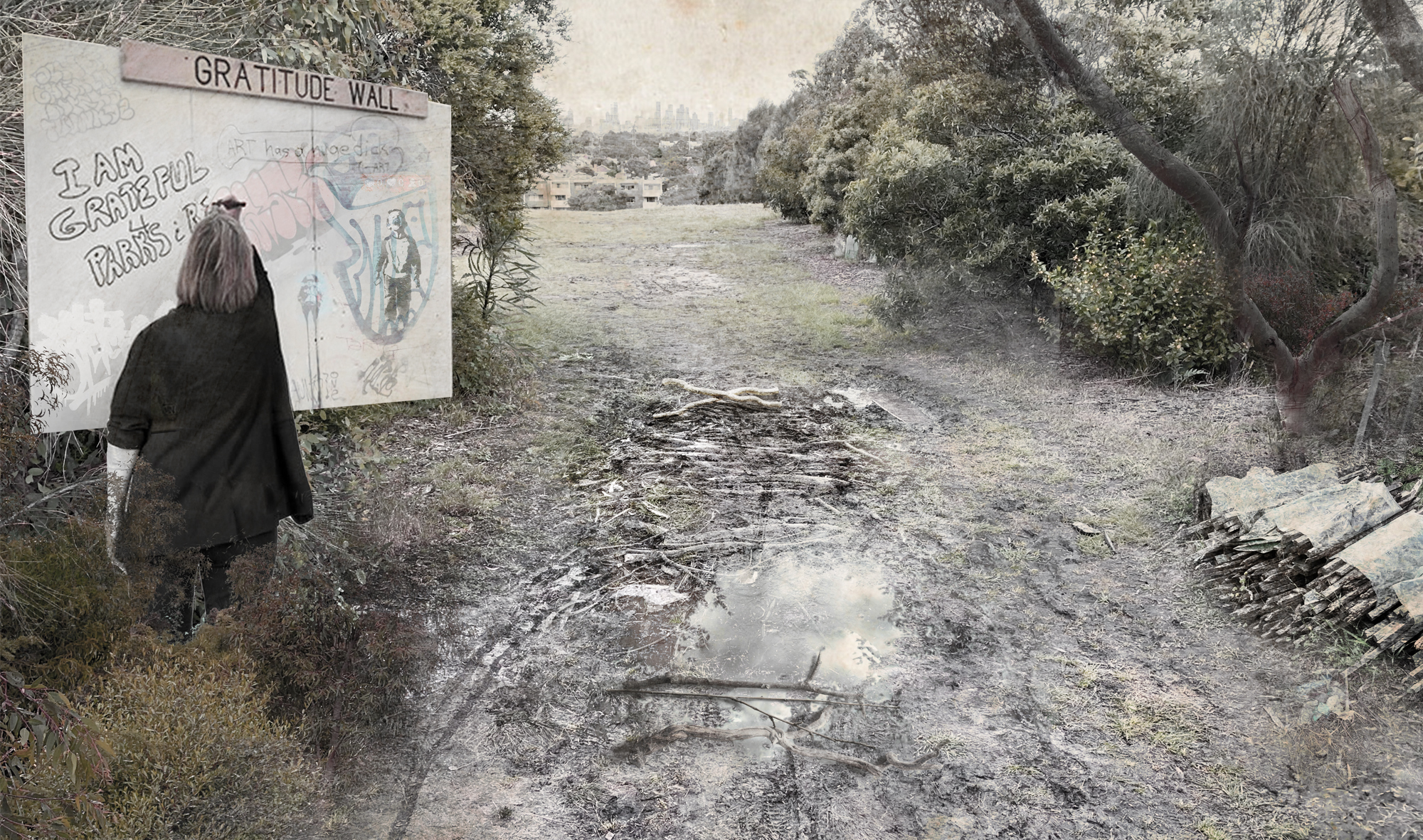
How to use the idea of ‘embodied cognition’ as a primary driver and landscape languages as elements for an intervention at Edgars Creek?
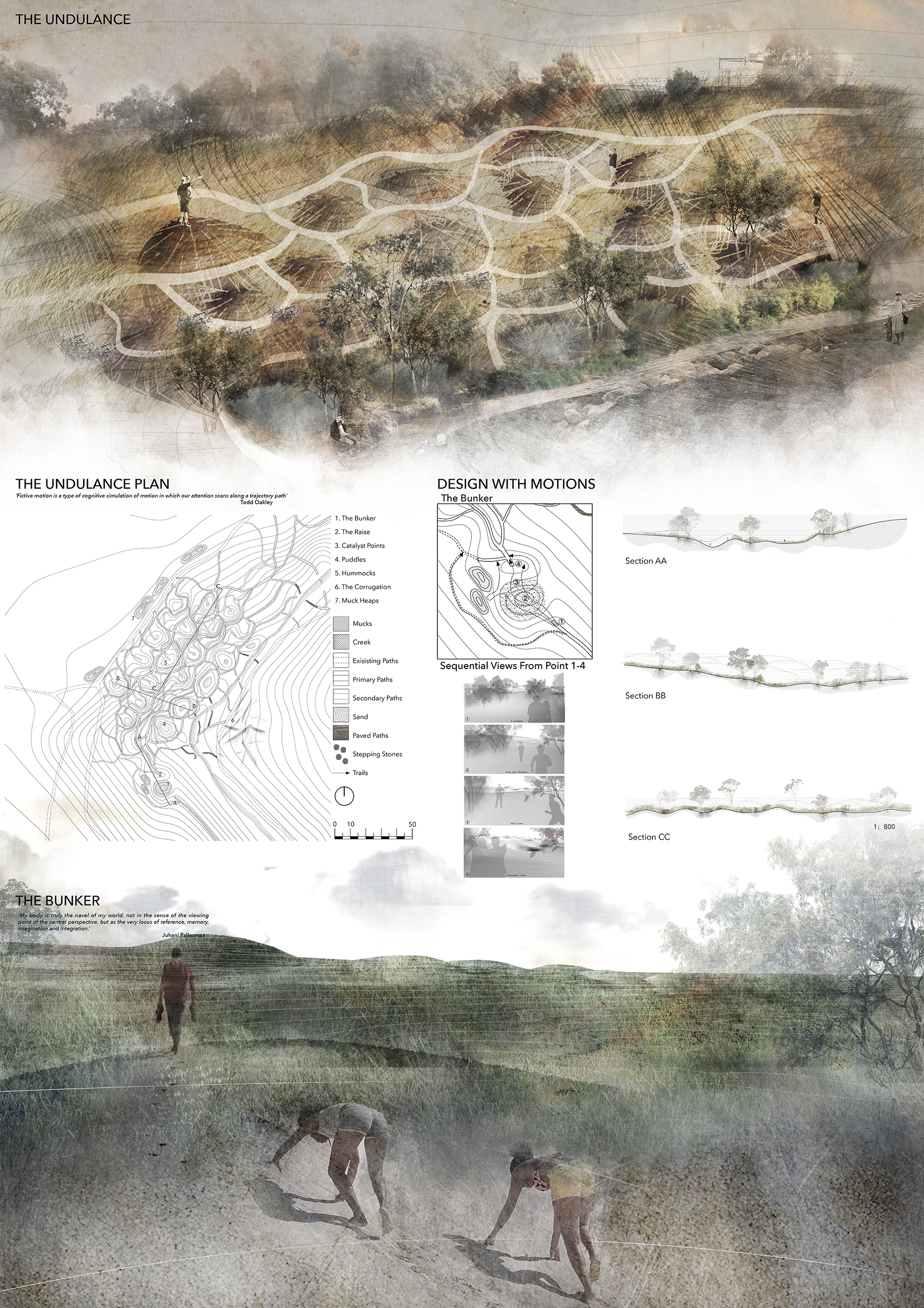
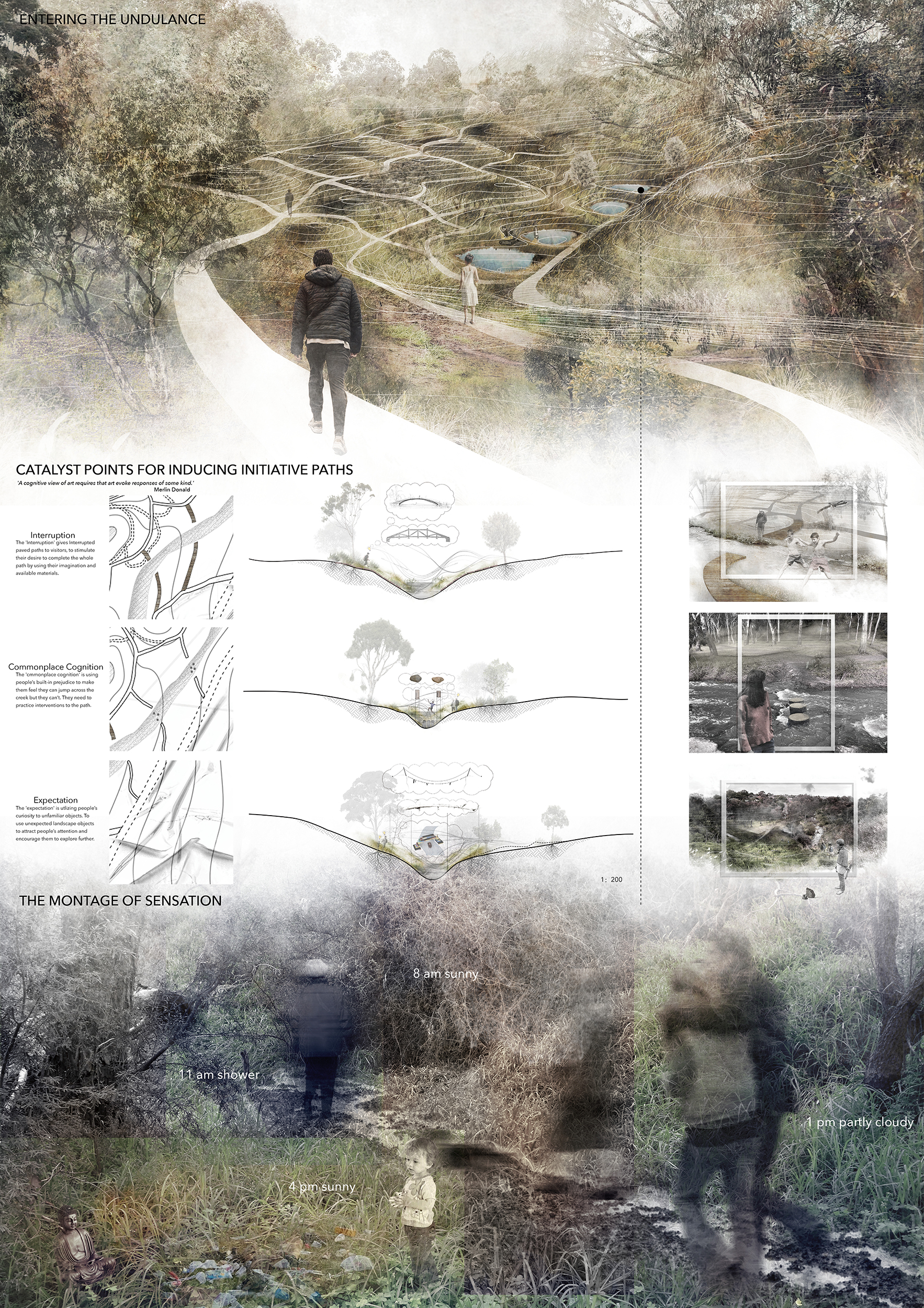
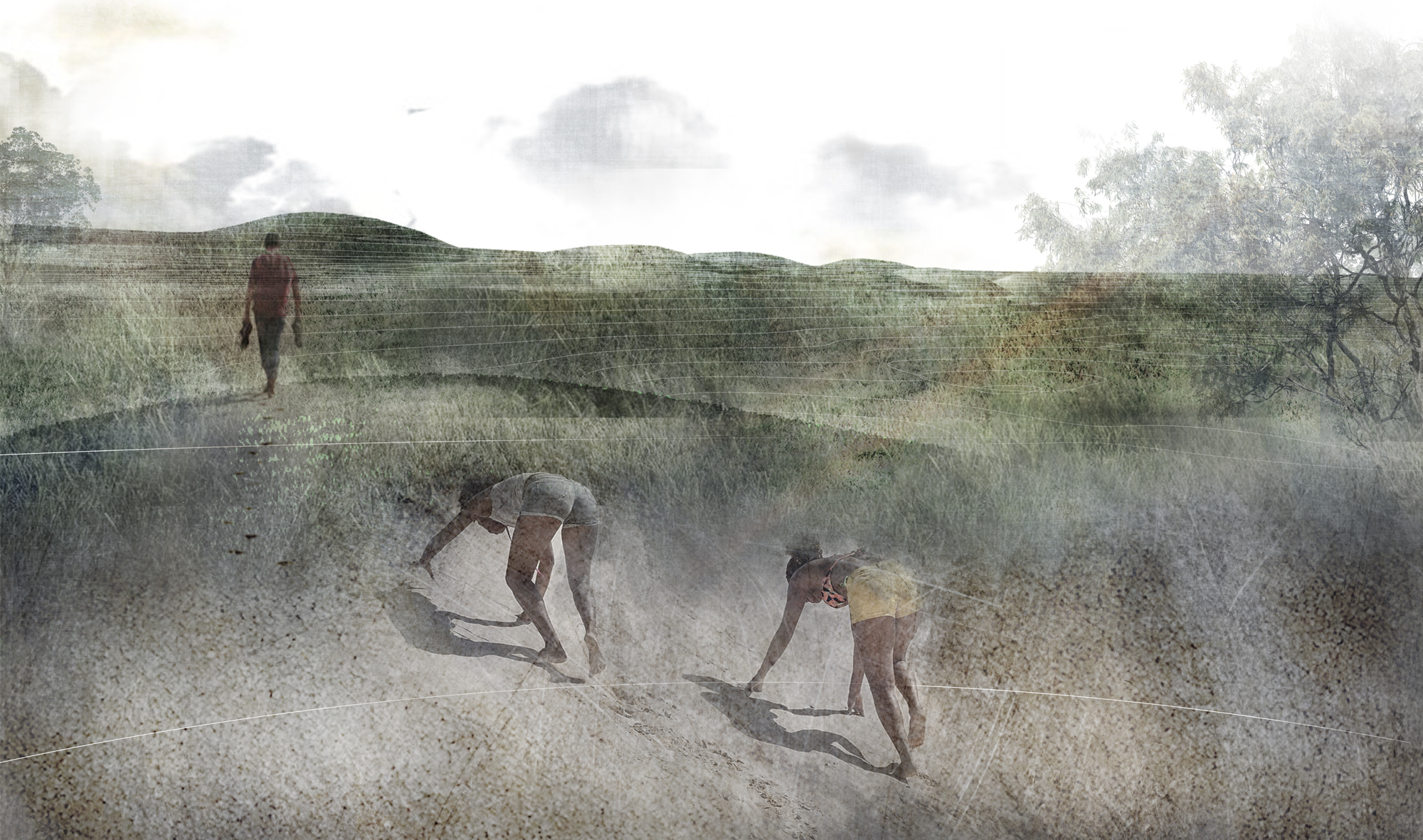
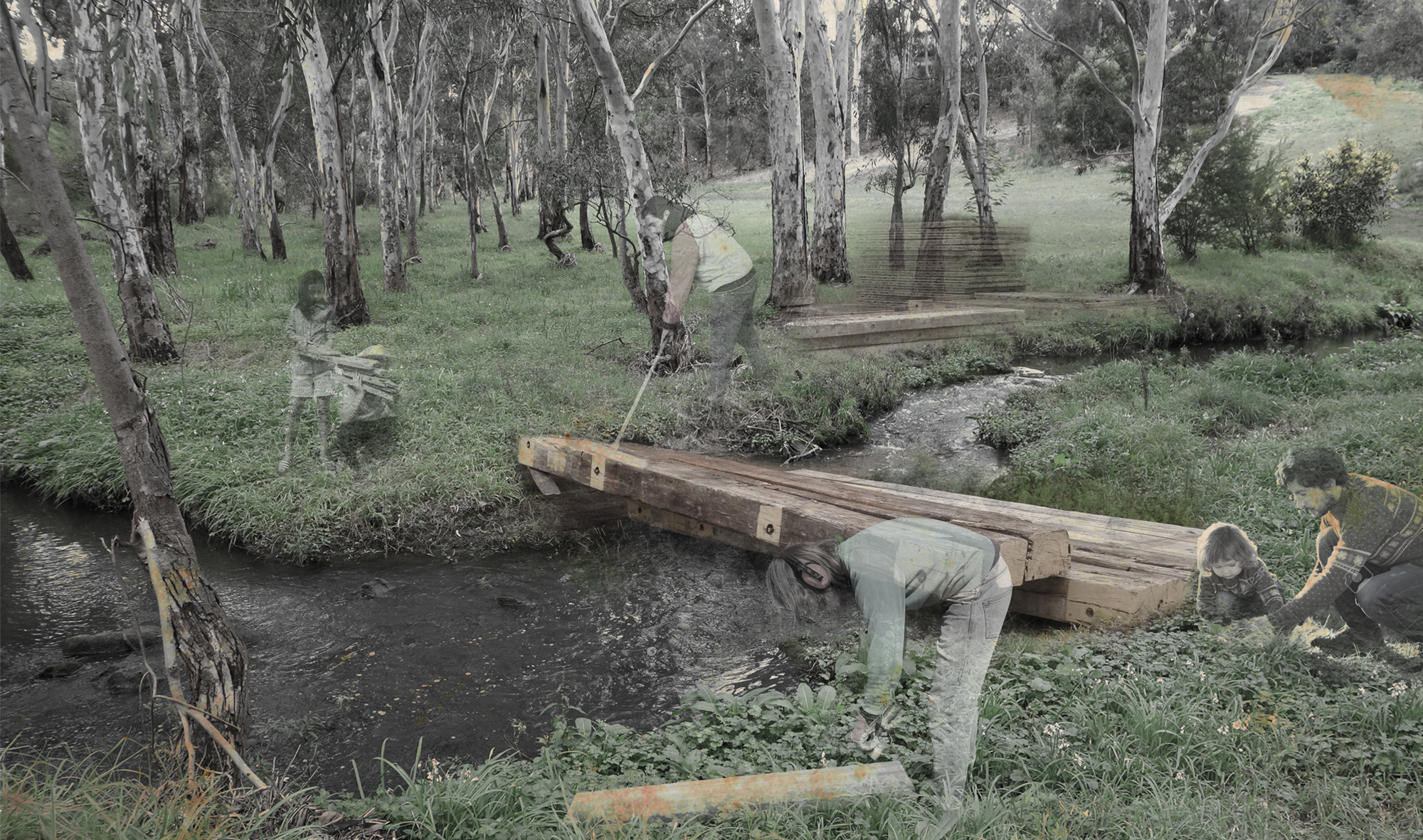
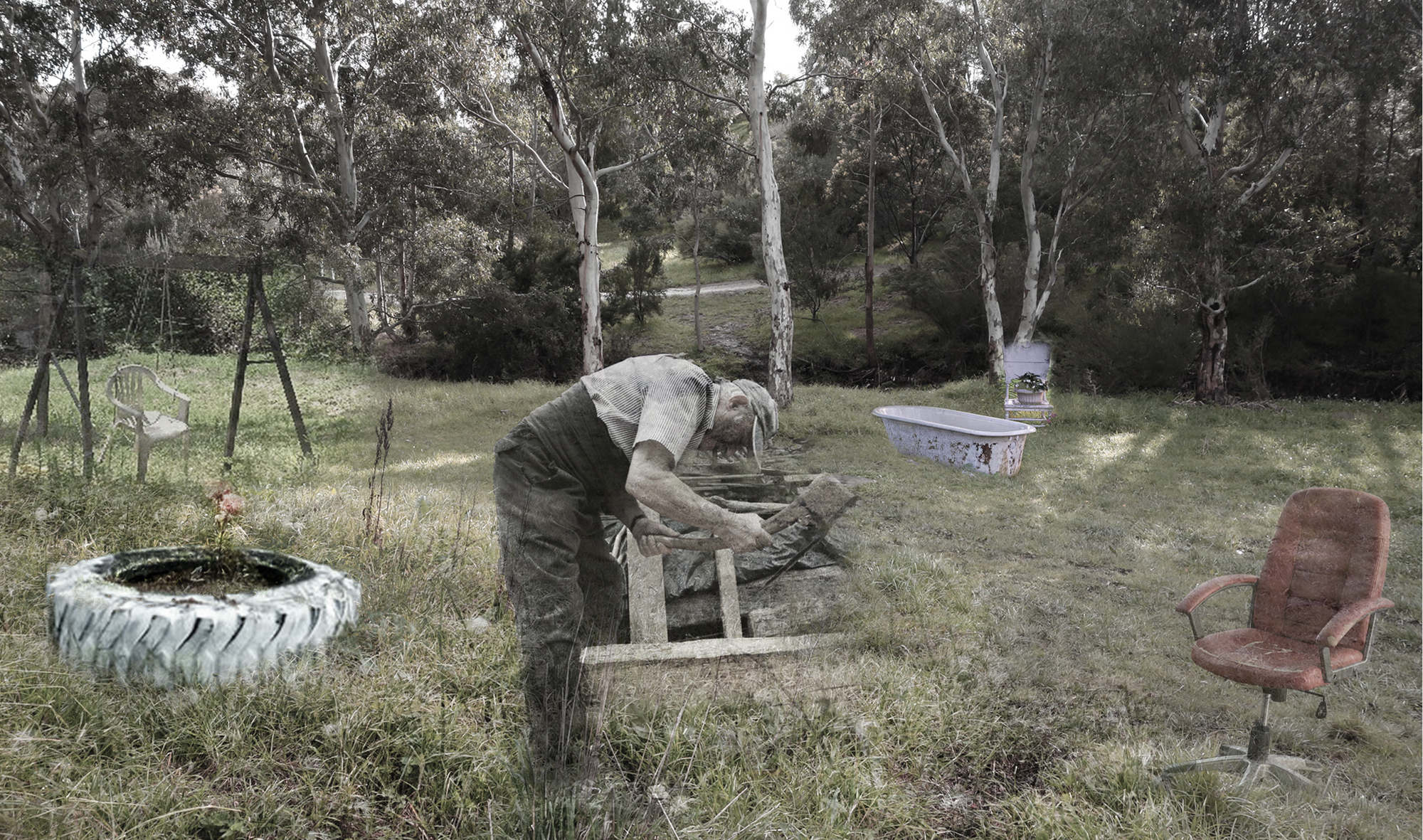
Can ‘organism-environment’ interaction function not only as a main programme, but also as a catalyst point to initiate an iterative process of users modifying landscape autonomously?
How does user-created landscape modification enhance social connection and influence personal and cultural transformation? Additionally, what impact does this process have on local culture in a broader sense, having created a landscape maintenance regime that is between autonomy and traditional management structures?
Design Statement
A lesson we have learnt from the 2020 Covid-19 pandemic is our current landscapes cannot last long or satisfy our expectations without just a few months of lacking decent maintenance. More seriously, with the subsequent economic depression is going on in our society and we might need years to recover. It is time to think about how to shift the current strategies of urban public space design and maintenance regimes to meet challenges from an uncertain future.
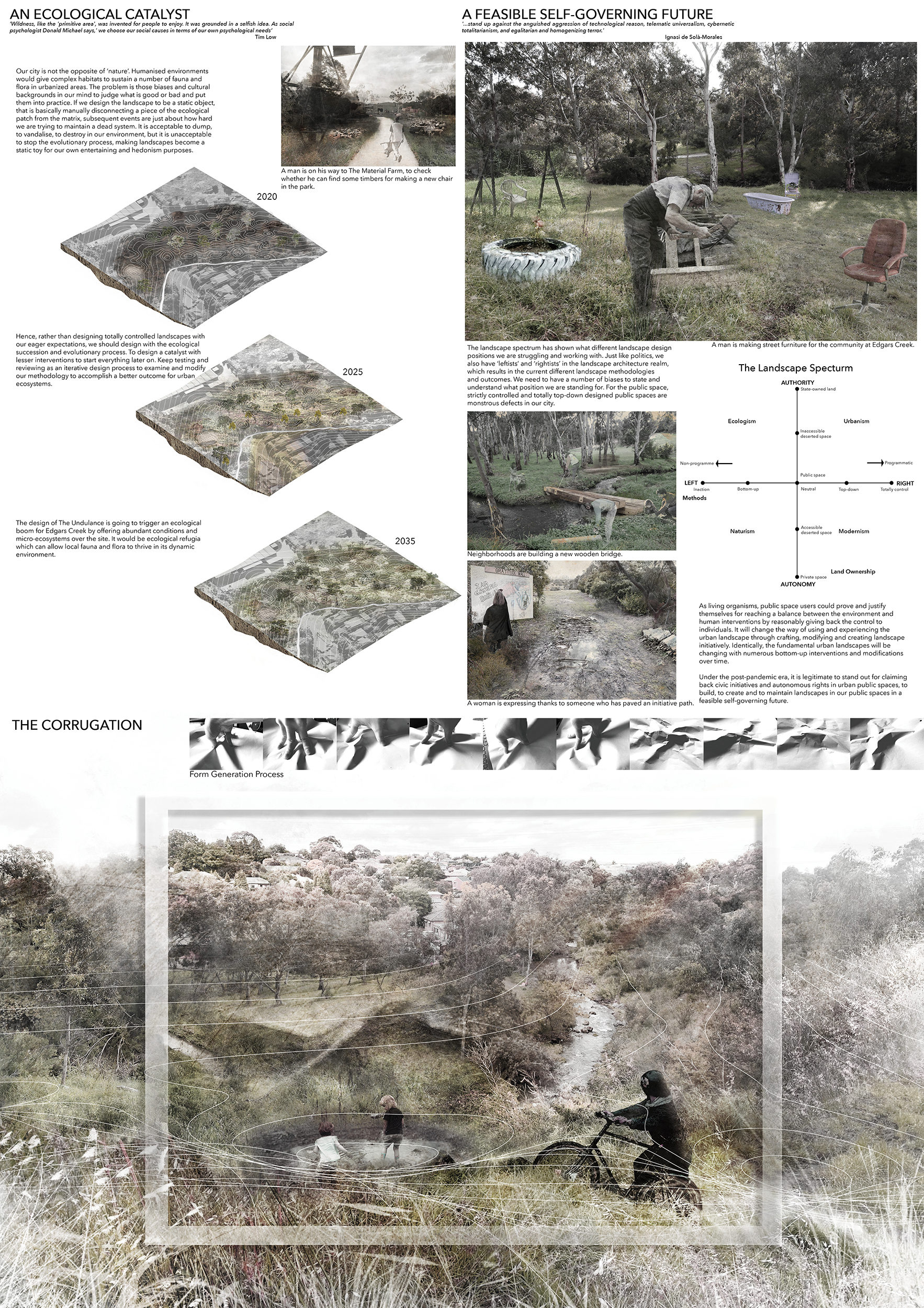
For the public space, strictly controlled and totally top-down designed public spaces are monstrous defects in our city. As living organisms, public space users could prove and justify themselves for reaching a balance between the environment and human interventions by reasonably giving back the control to individuals. It will change the way of using and experiencing the urban landscape through crafting, modifying and creating landscape initiatively. Identically, the fundamental urban landscapes will be changing with numerous bottom-up interventions and modifications over time.
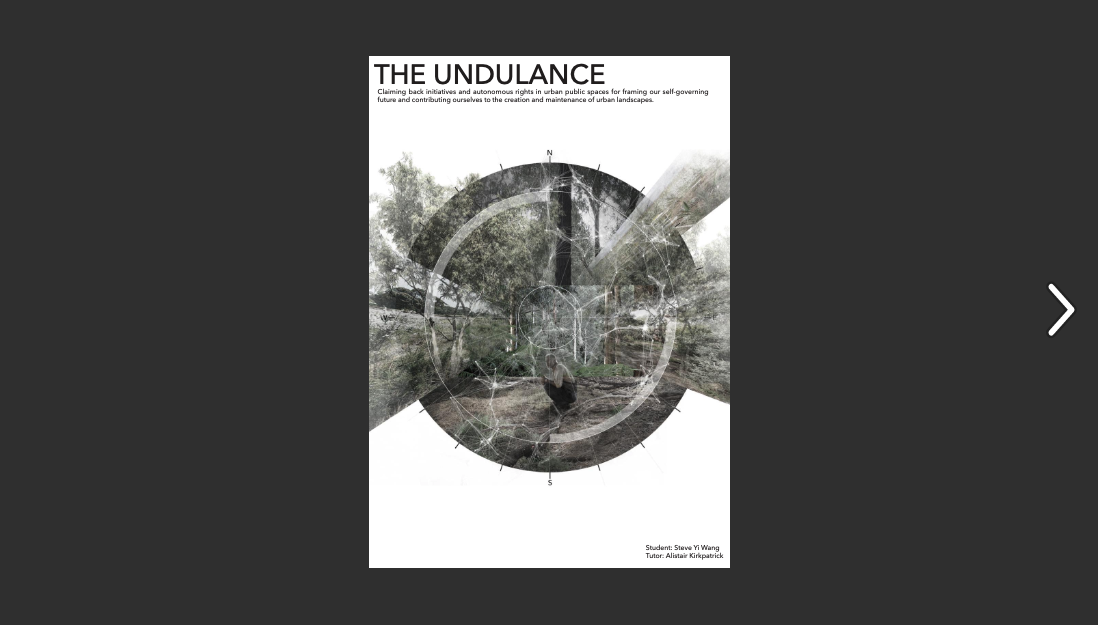
Under the post-pandemic era, it is legitimate to stand out for claiming back civic initiatives and autonomous rights in urban public spaces, for framing our self-governing future and contributing ourselves to the creation and maintenance of urban landscapes.