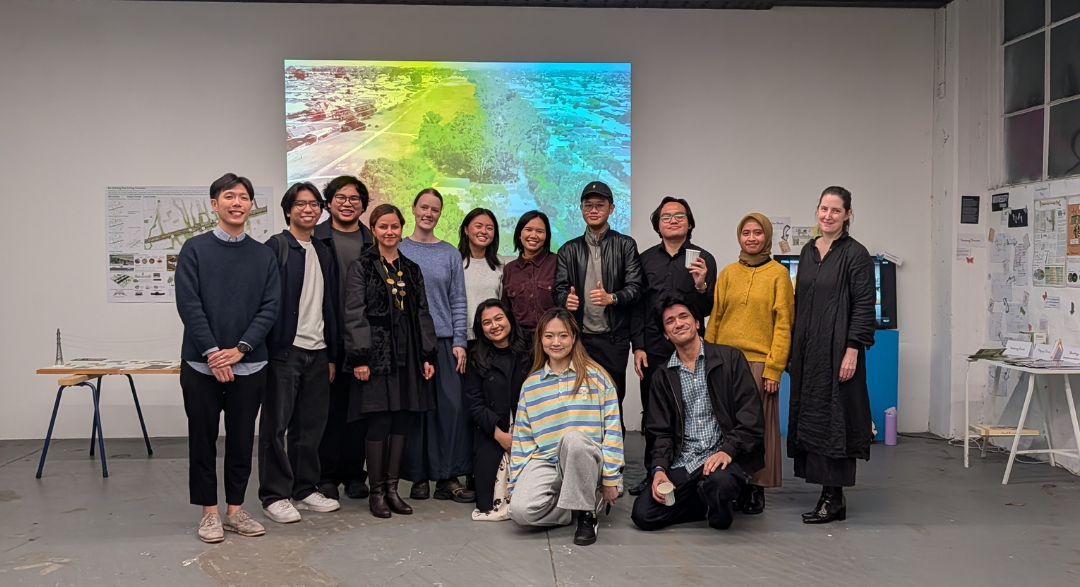
Reimagining Melbourne’s hidden landscapes
What if the spaces we often overlook—beneath power lines, alongside rail corridors and along busy roads—could become some of Melbourne’s most valuable green assets?
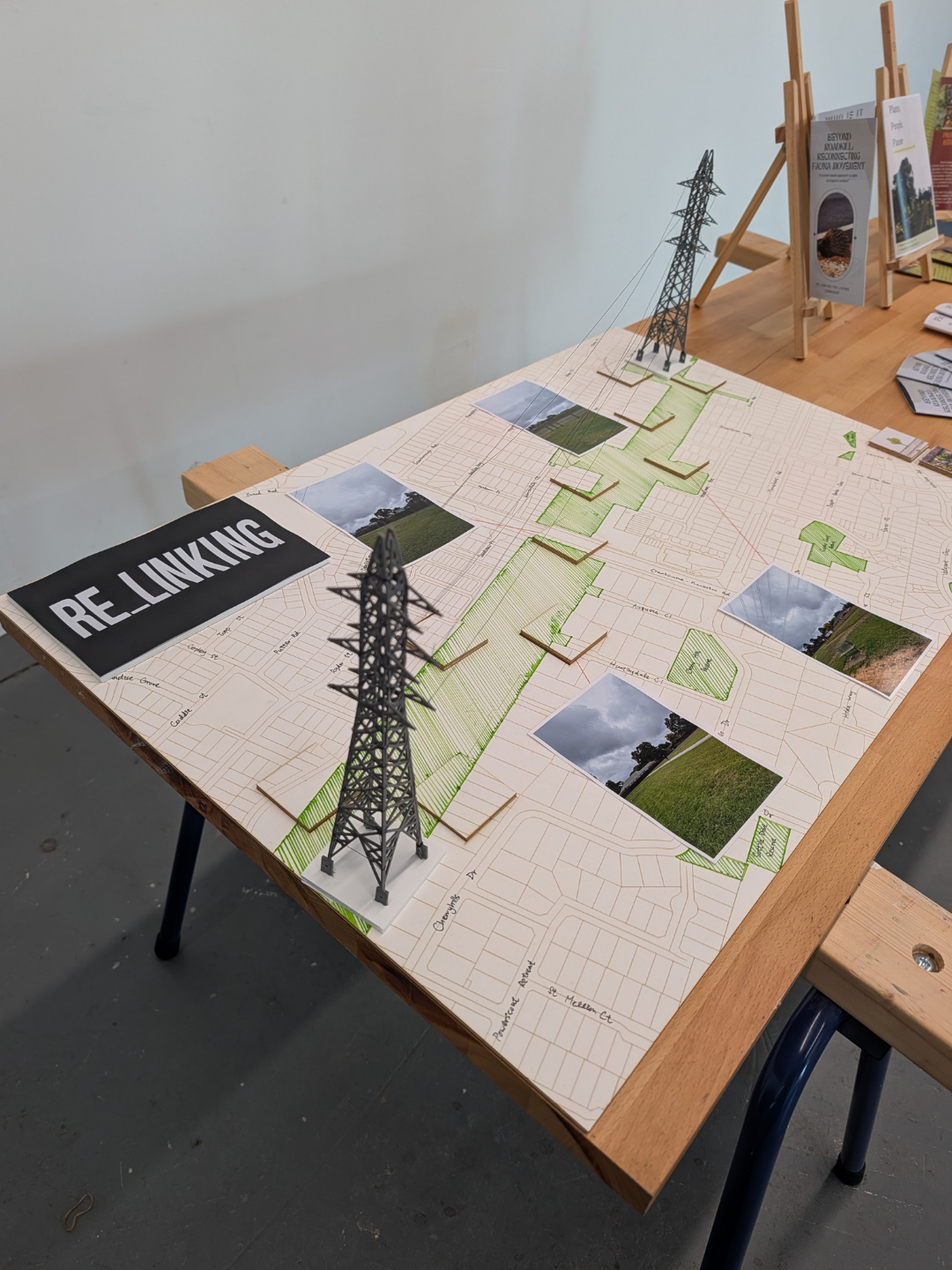 This question framed a recent exhibition by Urban Futures Studio students, exploring how underused infrastructure corridors could be transformed into vibrant, ecological and community-focused landscapes. The projects demonstrated how these overlooked spaces might play a vital role in shaping a more sustainable and connected city.
Across Melbourne, extensive networks of publicly owned land run alongside infrastructure systems. Often inaccessible or underutilised, these areas represent a significant opportunity to rethink how the city grows. The student work responded to this challenge through speculative designs, strategic frameworks and community-focused approaches that reimagined these spaces as essential parts of a healthier urban environment.
The exhibition built on the Connected Corridors Project, led by OFFICE, Regen Melbourne and Dan Hill (Melbourne School of Design). The project proposes repurposing more than 1,600 kilometres of infrastructure-adjacent land into a connected network of ecological corridors. By linking powerline easements, rail lines, road verges and waterways, the initiative aims to improve biodiversity, climate resilience and community wellbeing—while maintaining core infrastructure functions.
“This work shows the scale of opportunity already embedded in Melbourne’s infrastructure landscapes,” said Nina Sharpe of Regen Melbourne. “By rethinking how these corridors function, we can support healthier communities while restoring ecological connections across the city.”
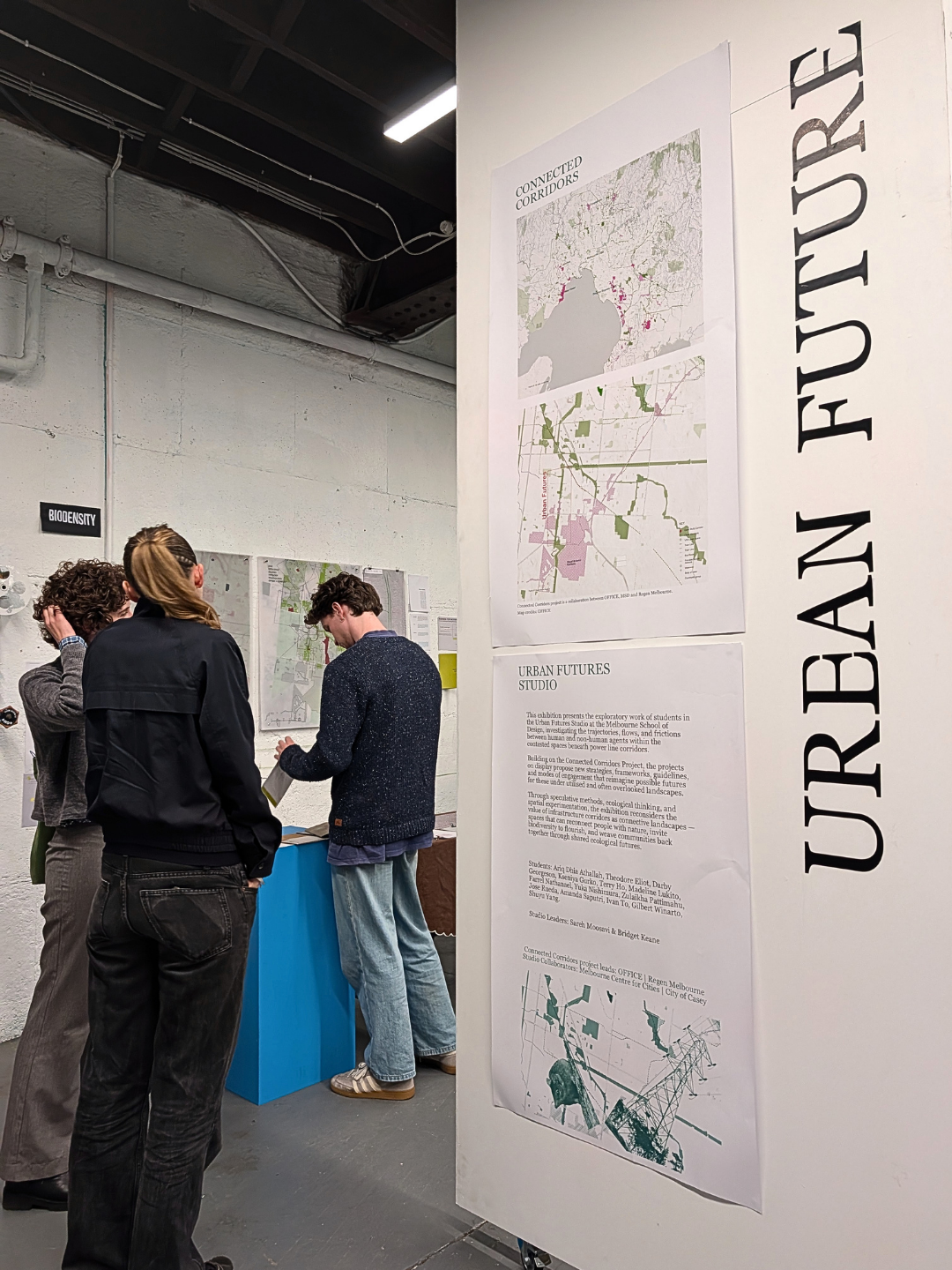 Held on Tuesday 26 May at 3553 in Collingwood, the exhibition offered audiences the opportunity to engage directly with emerging ideas for connected urban landscapes—showcasing how Melbourne’s overlooked spaces could be redefined as vital green infrastructure.
“These corridors already connect the city from an infrastructure perspective,” said Steve Mintern, Director, OFFICE. “The challenge—and the opportunity—is to extend that connectivity environmentally and socially, turning overlooked spaces into a coherent public and ecological network.”
Featuring work by Saba Amoushahi, Ariq Dhia Athallah, Theodore Eliot, Darby Georgeson, Kseniya Gurko, Terry Ho, Madeline Lukito, Farrel Nathanael, Yuka Nishimura, Zulaikha Pattimahu, Jose Rueda, Amanda Saputri, Ivan To, Gilbert Winarto and Shuyu Yang, the exhibition highlighted the value of interdisciplinary, student-led innovation.
Under the guidance of Dr Sareh Moosavi and Dr Bridget Keane, and with support from collaborators including OFFICE, Regen Melbourne, the City of Casey and the Melbourne Centre for Cities, the studio demonstrated the impact of collaborative urban thinking.
“The exhibition emphasised the importance of creativity within urban planning as a means of envisioning alternative futures and fostering public engagement with urban change,” said Dr Sareh Moosavi, Lecturer in Environmental Planning.
“We hope to spark broader conversations about how Melbourne can grow differently—and more sustainably,” said Dr Bridget Keane, Acting Director of the Built Environments Learning + Teaching Unit at the University of Melbourne.