ABP expertise contributes to debate on retrofitting public housing
Academics, practitioners and alumni connected to the Faculty of Architecture, Building and Planning (ABP) have contributed research‑led expertise to a public forum examining the future of Melbourne’s high‑rise public housing towers.
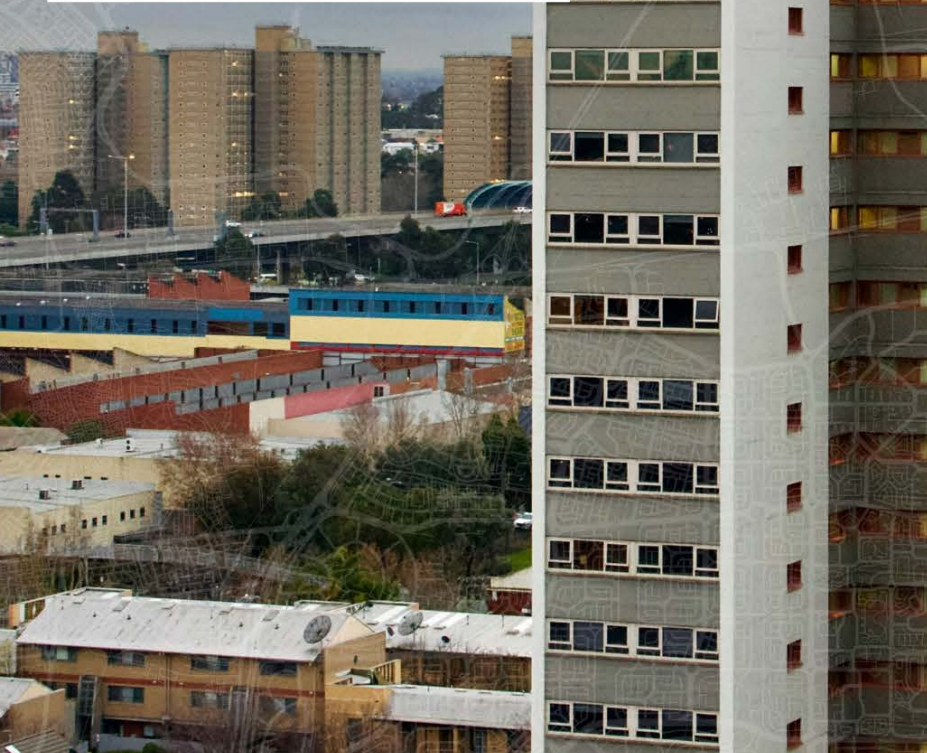
Held at the Capitol Theatre in October 2025, the forum brought together architects, engineers, planners and community members to explore retrofit and sustainability focused alternatives to large-scale demolition.
A new publication, Standing Together for Public Housing, brings together edited contributions from the event.
ABP connected contributors highlighted retrofit as a climate responsive, cost‑effective and community‑centred design approach, demonstrating the Faculty’s commitment to public scholarship and evidence‑based discussion on major urban challenges.
 Brendon McNiven, Enterprise Professor of Architectural Engineering, is part of the core team at the University of Melbourne’s Retrofit Lab and participated in the forum where he addressed the Victorian Governments proposal to demolish all 44 of Melbourne’s high-rise public housing towers.
Below is an excerpt from Brendon McNiven’s contribution to the forum and subsequent publication Standing Together for Public Housing.
The Case Against Demolition
Sustainability – The construction sector is responsible for almost 40% of all Green House Gases we emit (1), and half of all materials we consume and dispose of (2), globally. Retaining existing buildings is a key method by which to reduce emissions and conserve resources.
Avoiding Displacement – Retrofitting buildings can reduce direct costs by minimising the need for alternative accommodation, and indirect costs by avoiding additional burden to societal systems from the negative effects on mental health, education etc.
Architectural Outcome – Maintaining the history of our cities provides opportunities for better overall architectural and community outcomes than new build alternatives.
The Housing Towers
The ‘failings’ of the housing towers identified in the Government’s Housing Statement are what would be expected to be found in any building of a similar age. They are not failings per se, rather a checklist of items that need to be addressed in any retrofit or upgrade that is to take place. Plenty of precedents exist in Australia and around overseas of retrofit projects that are cheaper, quicker, and more sustainable than their ‘knock down & rebuild’ alternatives. Importantly many of these projects also avoid or minimise the societal (human) harm caused by tenant displacement.
Conclusion
Retrofitting the housing towers is possible and may be cheaper, quicker, and more sustainable than knocking them down and rebuilding them. Importantly retrofitting allows opportunities to minimise harmful and costly impacts of tenant displacement. Whether to retrofit or not requires in-depth analysis balancing cost and difficulty against each other. While we have been told this analysis exists it has not been forthcoming from the government.

Chris Jensen is a lecturer in Construction Management at the Faculty of Architecture, Building and Planning and is an expert in environmentally sustainable construction. He also participated in the forum and is a strong advocate for retrofitting the public housing towers as opposed to demolishing them.
Below is an excerpt from Chris Jensen’s contribution to Standing Together for Public Housing.
Construction Waste
Construction activities are globally one of the major generators of waste. Construction and Demolition (C&D) waste may include metal, masonry, concrete, lumber, plaster, glass, asphalt, carpet, and dirt. The Australian C&D sector generated 27 Mt (millions of tons) of C&D waste in 2018-2019. In general, C&D waste goes to landfill sites and attempts for resource recovery are limited which shows the need for a wide application of sustainable waste management solutions in the industry.
- 20.4 million tons of waste is generated by the Australian construction industry annually
- This makes up of 33% of landfill every year
- Minimising waste is a key principle of the Circular Economy
- Cement manufacturing causes ~8% of Global CO2 production
- Retrofit of a PH tower can save 36% of Embodied Carbon
- Retrofitting the Towers is a significant opportunity to demonstrate
- innovative solutions to a global problem
Concrete Production
The energy intensity of cement production makes it the leading single generator of CO2 emissions (~8% of total CO2 emissions), with estimates of concrete use at up to 1m³ per person globally. The ecological impacts of sand extraction are less well documented but are damaging to riverine ecosystems.
Public Housing tower Retrofit
Recent industry research on the Atherton Towers in Fitzroy analysed 3 scenarios including full rebuild and 2 retrofit scenarios and proved that retrofit could save up to 36% of Embodied Carbon whilst achieving all current standards and reduce operational energy requirements. In addition, the retrofit process can be structured to significantly reduce construction time and reduce community impacts through a staged reconstruction
1. International Energy Agency (2019), 2019 Global Status Report for Buildings and Construction.
2. Department of Sustainability, Environment, Water, Population and Communities (2012), Construction and Demolition Waste Guide.