Loose Fit: Provisional and Participatory Practices from East Asia
Share via
Please join us for the opening launch of Loose Fit: Provisional and Participatory Practices from East Asia.
The event will commence with lectures by two of the visiting exhibitors: Professor Hiroto Kobayashi, and Dr Rafael Luna followed by the official opening of Loose Fit in the Design Gallery by Professor Alan Pert, Interim Dean of the Faculty of Architecture, Building and Planning (ABP) and the curatorial team; Nancy Ji, Dijia Chen and Alex Seo.
Exhibition Opening Event
Thursday, 24 September 2026
Lectures by Professor Hiroto Kobayashi and Dr Rafael Luna
5:00pm - 6:00pm
Malaysian Theatre
(speaker details below)
Exhibition Launch
6:00pm - 8:00pm
Design Gallery
Registrations are essential.
Lecture synopses
Professor Hiroto Kobayashi Lecture
Title: Empathic Design for Participatory Architecture
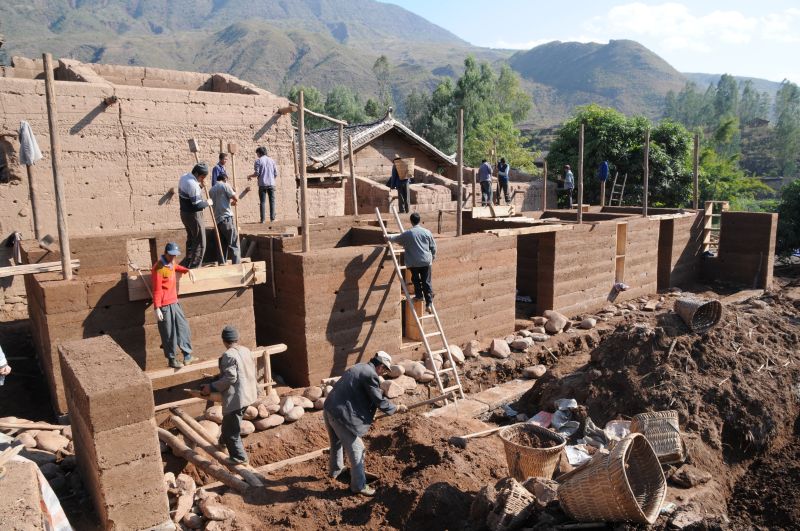
Kobayashi explores a "Do-It-Anyway" approach, working alongside communities to create new environments through communication-based social design and fostering an adaptable attitude for an unpredictable future. He will introduce projects by Veneer House, which began as a student initiative in his research laboratory at Keio University following the Great East Japan Earthquake in 2011.
Drawing on projects across diverse cultural settings in Japan and abroad, Kobayashi reflects on lessons learned through practice and examines their social impacts, including how they respond to challenges such as climate change, disaster recovery and community needs. These projects reveal how mutual understanding develops not only among community members but also between local residents and project teams. By utilising local materials and building techniques, the projects help bridge different cultural backgrounds, creating a deep sense of empathy that extends beyond any single culture, time or place.
Dr Rafael Luna Lecture
Title: From Seoul to Sydney: Architecture as a Productive System
Luna examines how lessons from Seoul's productive urbanism have informed his architectural work in Sydney. The lecture begins in Seongsu, a semi-industrial neighbourhood where manufacturing, commerce, culture and everyday life coexist, within a dense and walkable urban environment.
In Seongsu, tenants modify modernist building shells using borrowed industrial components: vents, gantries, loading platforms, scaffolds and other devices that allow buildings to accommodate changing forms of production. These components are described as "productive elements", a concept developed through research published in the Production Urbanism issue of Architectural Design, which Luna co-edited.
After moving to Sydney, Luna began translating these observations into an architectural language. In his projects, ordinary urban phenomena are transformed into systems that generate new environmental and spatial conditions. His projects ask how architecture can support more adaptable, productive and environmentally responsive cities.