Osama Jamil
Doctor of Philosophy candidate
Architecture
Biography
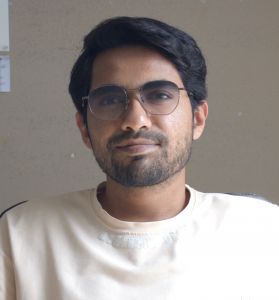
Osama Jamil is an architect, urban planner, and PhD candidate at the Melbourne School of Design (MSD), University of Melbourne. He holds a Bachelor of Architecture degree from the National University of Sciences and Technology (NUST) in Islamabad, Pakistan, and a Master’s in Urban Planning from the American University of Sharjah, UAE. With professional experience in both Pakistan and the UAE, Osama is an affiliate member of the Pakistan Council of Architects and Town Planners (PCATP) and Institute of Architects and Planners (IAP).
His specific research interests include, but are not limited to: Digital art and architecture, Immersive media and environments, media studies, history of technology, AI and machine culture, digital heritage, visual storytelling and historic narratives in architecture. Osama's current PhD research, titled "Time Machine," explores the use of Artificial Intelligence for architectural image-making and speculating on heritage pasts through machine learning. His innovative approach seeks to blend contemporary technology with historical and cultural narratives, challenging traditional heritage practices and conventional ways of experiencing history.
Thesis
Time Machine: AI in Immersive Heritage Environments
Immersive Heritage Environments are virtual spaces that surround the sensory field of a person by projecting a wide variety of historical visual stimuli to that person through various communicative mediums. In media and architecture, there has been extensive exploration of creating immersive environments that can reshape physical spaces into alternate realities though the medium of communication has evolved over the years. Artificial Intelligence (AI) is now emerging as the latest frontier for creative exploration, increasingly regarded as a new medium for experiencing reality in media disciplines such as digital arts, cinema, and gaming industries. This research aims at the transfer of this knowledge in heritage practices and asks how architects and artists can create visuals that inspire historical experiences and interactions between audience and AI in Immersive heritage environments.
AI cannot match human intellect; but it can speculate; learn and generate creative outputs that are often novel for the human mind to process. Given the inherent predictive nature of heritage practices, the aesthetics of AI- generated images and human interaction with them serve as a paradigm for speculating and experiencing alternative historical realities. We do not know enough about AI for visual production in architecture and thus, we are inadequately prepared to confront the philosophical and practical challenge it poses for human relationship with AI in immersive heritage environments.
Through a designed methodological framework, the research investigates how constructive AI can be in revealing historical truths and visualizing-built heritage in immersive environments. This inquiry unfolds through a sequence of creative practice-led immersive episodes, with "Repainting" and "Time
Machine" guiding virtual spatial design and exploring various AI image- making techniques. The episodes will be based upon Shahi Hammam, a 17th-century Mughal period public bathhouse in Lahore, Pakistan. The episode’s results will be curated into immersive installations, both on-site and
off-site, allowing the audience to engage and interact with heritage spaces and artifacts through various human-computer interactions. The creative component will encompass the images (2D & 3D) produced during experimentation alongside video documentation of the design process and
audience experiences of the immersive environments.
Contact
Research Unit
- Australian Centre for Architectural History, Urban and Cultural Heritage (ACAHUCH)
- Human-Computer Interaction