Tanya Burdett
Doctor of Philosophy candidate
Urban planning, Public participation, Impact assessment
Biography
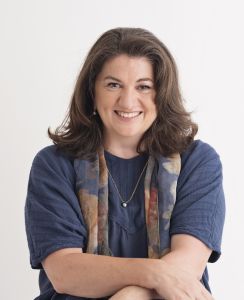
With a 30-year planning career, Tanya is passionate about the integration of strategic planning, impact assessment and engagement. Active in advancing professional and institutional capacity in these spaces, she is a Registered Planner (RPIA - with the Planning Institute of Australia), Licensed International Association for Public Participation (IAP2) trainer, and is co-chair of the public participation section of the International Association for Impact Assessment. Bringing together her planning, impact assessment and engagement interests, she is co-editor on an international Handbook on public participation in impact assessment for the Edward Elgar Impact Assessment series - https://www.e-elgar.com/shop/gbp/handbook-of-public-participation-in-impact-assessment-9781800889989.html
A practitioner with consulting practices in the UK and Australia, Tanya is a part time PhD Candidate (University of Melbourne). Her planning practice has included project management and leadership roles on national level strategic environmental assessment in the UK (in the transport, urban planning, energy and wastewater sectors), and extensive project work throughout the UK and Asia-Pacific region. Tanya regularly reviews Environmental Impact Assessments for the Institute of Environmental Management and Assessment (IEMA) Quality Mark Panel, and is an Assessor for PIA and Registered Planner applications.
With a Masters in Environmental Studies (1st Class Honours – University of Melbourne) and Bachelor of Applied Science in Planning (with Distinctions – RMIT), Tanya's graduate research consolidates a long planning career and a focus on international planning dilemmas in a local context.
Thesis
Integrating social, environmental and economic logics in strategic spatial planning - A case study of urban growth expansion, Melbourne
Planning is a complex endeavour that deals with competing objectives, interests and navigation of associated conflict. In addressing these conflicts, planning practitioners make decisions based on narratives and frames that guide their thinking and practice, and which influence how problems, opportunities and solutions are conceived. Working within a neoliberal context that sets the parameters for what counts in these decision-making processes, challenges for planners also include: dealing with inherent uncertainty given long-term focus for planning, the hegemony of growth and financial logics, and uneven power balance across stakeholders.
This research explores how narrative frames influence the integration of different objectives (logics) in strategic spatial planning. Explored through review of Melbourne’s Urban Growth Boundary (UGB), this case study provides a useful illustration of how strategic planning is influenced by continued pressures of urbanization, desire to achieve sustainable urban development whilst navigating inter-disciplinary integration and complex institutional and governance structures.
Through policy analysis and semi-structured interviews, discourse and thematic analysis the research aims to understand how and why the Melbourne urban growth boundary changed so much in its first decade of 2002-2012, and how sustainability logics (social, environmental, economic and other factors) played a role in such decisions.