Taoyue Wang
Doctor of Philosophy candidate
Architecture, Game Studies, Science and Technology Studies
Biography
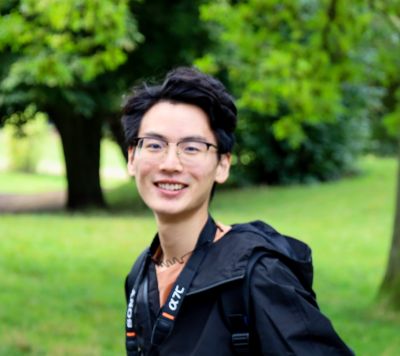
Taoyue’s research sits at the intersection of architecture, game studies, media studies, and science and technology studies. He examines how digital technologies and game cultures are organized, governed, and experienced in specific spatial settings. His current PhD research focuses on the historical transformation of Chinese Internet cafés and related public gaming venues. It seeks to understand how games enter everyday urban life and shape the spatial forms of public digital life through the convergence of architecture, infrastructure, and media culture.
During his undergraduate studies, Taoyue was trained in media and communication and was influenced early on by the critical tradition in communication studies. In the later stage of his undergraduate education, he began to engage continuously with discussions in modern philosophy of technology and science and technology studies. His undergraduate thesis examined Douyu, a Chinese game live-streaming platform, and analysed how the platform organizes viewing, interaction, and labour relations. This research experience gradually led him to realize that games are not merely screen-based content or traffic-driven phenomena on platforms. They are also social practices that move across platforms, devices, bodies, and places. From this point, his interests gradually extended from platform-based research on game culture to gaming practices in offline spaces and their material conditions.
After graduating in 2023 with a First-Class Honours degree in Communication, Taoyue pursued an MSc in Science, Technology and Society at University College London and completed the degree with Distinction. During his master’s studies, he received systematic training in specialized STS approaches, including the politics of technology and the sociology of science and technology. For him, critical theory and STS offer two indispensable perspectives. The former reminds us that technology is not merely a neutral tool, but often participates in the shaping of social order in the name of rationality, efficiency, and convenience. The latter points out that technological systems are not automatic extensions of abstract structures, but are jointly shaped by institutions, interests, controversies, and negotiations under specific historical conditions. It is between these two theoretical trajectories that he gradually developed his basic framework for understanding questions of technology and media.
Taoyue entered the faculty of architecture because he gradually realized that questions of games and technology cannot be understood only through platforms, devices, or discourse. Whether in live-streaming platforms, Internet cafés, esports hotels, or broader public gaming spaces, technology is always situated in specific places, arranged within architectural interiors, managed at the urban scale, and made to shape bodies, social interaction, and perception through interior environments, infrastructure, and spatial discipline. For him, Chinese Internet cafés are especially valuable as a research object: they are important carriers of game culture, key interfaces through which digital media enter public life, and urban spatial types that have been regulated, transformed, and redefined. A faculty of architecture therefore provides an important intellectual location for his research, allowing him to extend his long-standing interests in media, technology, and game studies into the analysis of space, place, and the built environment.
Taoyue has presented his research at international academic conferences, including the International Communication Association (ICA), the Society for Social Studies of Science (4S), and the Digital Games Research Association of Australia (DiGRAA). Beyond his academic work, he has also maintained a long-term practice in martial arts, you may find him at the Melbourne University Wushu Kung Fu club.
Thesis
Between Screens and Spaces: Power Dynamics and Shifting Hybrid Materialities of Internet Cafes
Taoyue’s PhD research focuses on the historical transformation of Chinese Internet cafés and related public gaming venues from the 1990s to the present. It examines how these spaces have been produced, disciplined, and reconfigured amid the expansion of digital technologies, urban transformation, and changing forms of governance. The thesis understands Internet cafés as public digital spaces with architectural, infrastructural, and media-related qualities. It examines how they have supported gaming, Internet access, social interaction, and youth culture, while also responding to regulatory demands, market changes, and technological updates across different historical periods.
By bringing together perspectives from architectural history, media studies, urban studies, and science and technology studies, this research seeks to show that Internet cafés are not merely a commercial spatial type in gradual decline. Rather, they offer an important entry point for understanding urban digital life, public interior space, and the material conditions of game culture in China.
Contact
- Email taoyue.wang@student.unimelb.edu.au
- LinkedIn https://www.linkedin.com/in/taoyue-wang-381a31319
- ORCID Profile ORCID