Yayan Qiu
Doctor of Philosophy candidate
Architectural computation
Biography
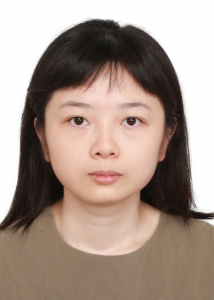
Yayan Qiu is a PhD student in the Transport, Health, and Urban Systems (THUS) Lab at the Faculty of Architecture, Building and Planning, University of Melbourne. Her research focuses on the intersection of architecture and machine learning, particularly the use of generative models to preserve and simulate regional spatial characteristics.
She holds an MRes in Architectural Computation with Distinction from the Bartlett School of Architecture, University College London, and a BArch (Honours) from the Department of Architecture, Tamkang University, where she was recognised as a Representative of Outstanding Undergraduate Graduates. She also spent a year at the Architectural Association School of Architecture, where she further explored architectural theory in combination with computational design approaches.
During the later years of her undergraduate studies, she joined the TKUA lab group, where she explored digital fabrication, voxel aggregation, parametric design, and robotic arm applications. Her master’s studies expanded into areas such as soft robotics, VR, and AR. Since completing her undergraduate degree, she has increasingly focused on the application of machine learning in architecture. Her postgraduate research integrated computational design with algorithmic thinking, forming the foundation for her current interdisciplinary work.
Her published research explores generative AI and in-between spatial design, with a particular emphasis on spatial topology, grey space hierarchy, and regional identity. She introduced the “Fluid Grey” theory, which refines the traditionally ambiguous concept of in-between space by establishing a hierarchical classification and integrating spatial fluidity principles. This theoretical framework supports a more precise interpretation and simulation of transitional spatial conditions and has been applied in generative design workflows. Her work has been published in journals including the Journal of Building Engineering.
Publications:
- Qiu, Y., & Hanna, S. (2024). Fluid grey 2: How well does generative adversarial network learn deeper topology structure in architecture that matches images?. Journal of Building Engineering, 98, 111220. https://doi.org/10.1016/j.jobe.2024.111220
- Qiu Y, Lai I-C. (2024). Fluid Grey: A Co-Living Design for Young and Old Based on the Fluidity of Grey Space Hierarchies to Retain Regional Spatial Characteristics. Buildings. https://doi.org/10.3390/buildings14072042
- Qiu, Y. (2022). Variable Grey: How Well Does GANs Learn Deeper Topology Structure That Matches Images? [Master’s thesis]. University College London. https://bpro2022.bartlettarchucl.com/architectural-computation-22-2/year1-yayan-qiu
- Qiu, Y., Huang, K., & Chen, C. (2021). Digital Fabrication of Woven Wood Board Bending. In Proceedings of the 33rd meeting of the Architectural Institute of Taiwan (pp. 147–152).
Thesis
Machine Learning Retains Regional Spatial Characteristics
Preserving the local culture and characteristics of the city itself is an important issue in urban planning. Among them, the regional characteristics of space not only need to balance the ‘intrinsic’ and ‘extrinsic’ properties, but also exist in the diversity of in-between and fluidity of grey space. However, today's urban planning generally ignores the spatial topological relationship and the regional characteristics in the in-between. At the same time, the application of cutting-edge technology machine learning in the field of architecture does not meet the needs and lacks people-oriented.
Therefore, this study hopes to retain the regional characteristics of urban space and balance different spatial properties by using machine learning to generate regionally diverse designs that are people-oriented.
Contact
- Email yayqiu@student.unimelb.edu.au
- LinkedIn Profile LinkedIn profile
- ORCID Profile ORCID
- Google Scholar Google Scholar
- ResearchGate ResearchGate
Research Unit
- Transport, Health and Urban Systems Research Lab (THUS)