Design with Country
Landscape architects have exciting opportunities to work with Traditional Owners and Rights Holders on Country
The term Country describes a lot more than landscape, but there are many connections and the exploration around regenerating or healing Country - and walking on Country - which resonates with landscape architecture practice. Co-development of 'Design with Country' - a studio subject within the Melbourne School of Design - has been co-taught with an Indigenous designer and the Wurundjeri Woi-wurrung Aboriginal Heritage Corporation since 2021. The relationships built across this time has revealed a number of important parallels and opportunities for bridging landscape architecture with Indigenous knowledge. This includes designing with past, present and future in mind.
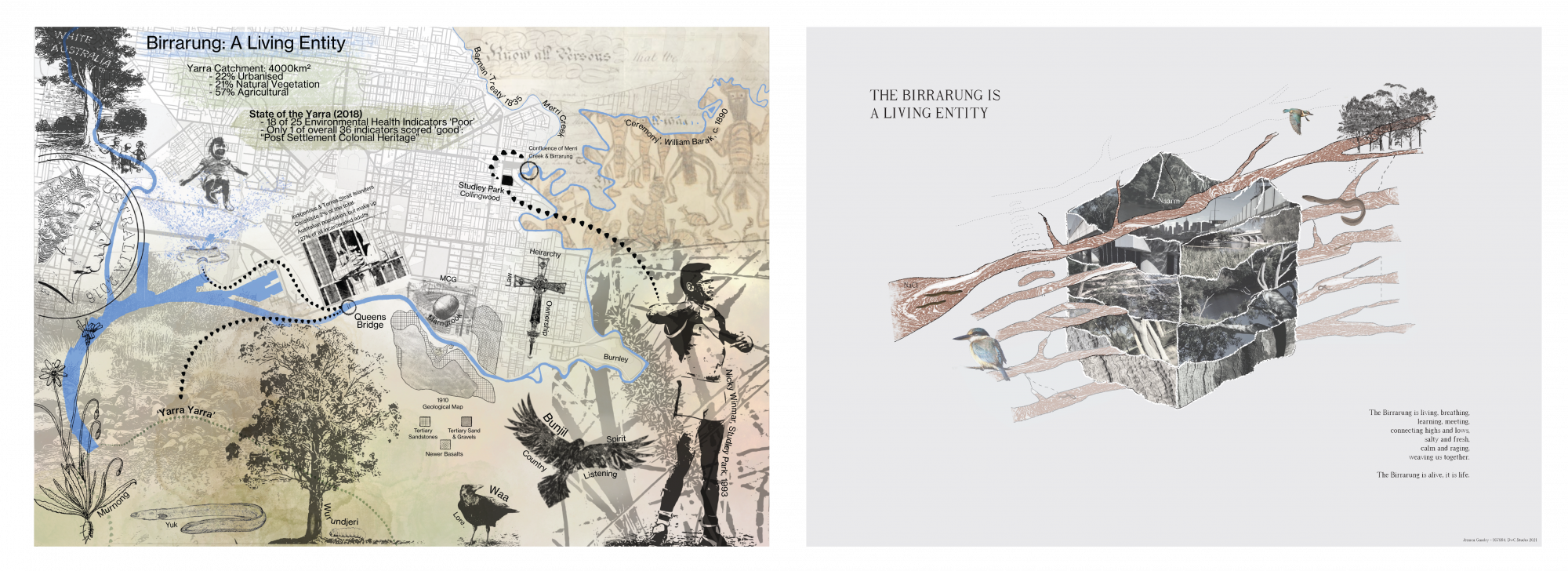
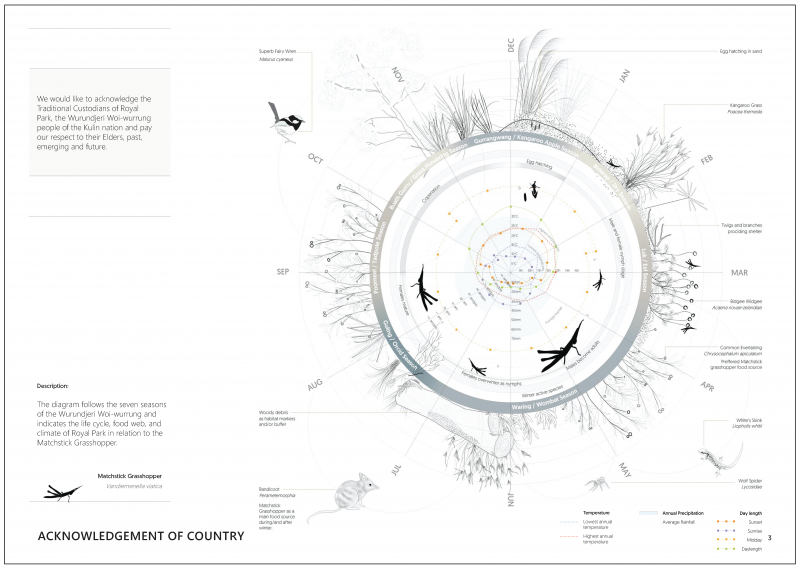
For climate adaptation, looking to geologic history and how it has impacted the land is valuable. Using near, mid and long term design strategies resonates with looking through time. Seasonality tied to distinct flora and fauna and their life cycles as well as other natural cycles are an important part of Aboriginal culture. Moreover, Healing Country resonates with ecological restoration and regeneration practices. The studio aims to expand students' understanding of cultural landscapes and co-design approaches. The landscape architecture profession has an incredible opportunity to bridge between Indigenous knowledge systems and contemporary urban landscapes in a culturally appropriate manner.

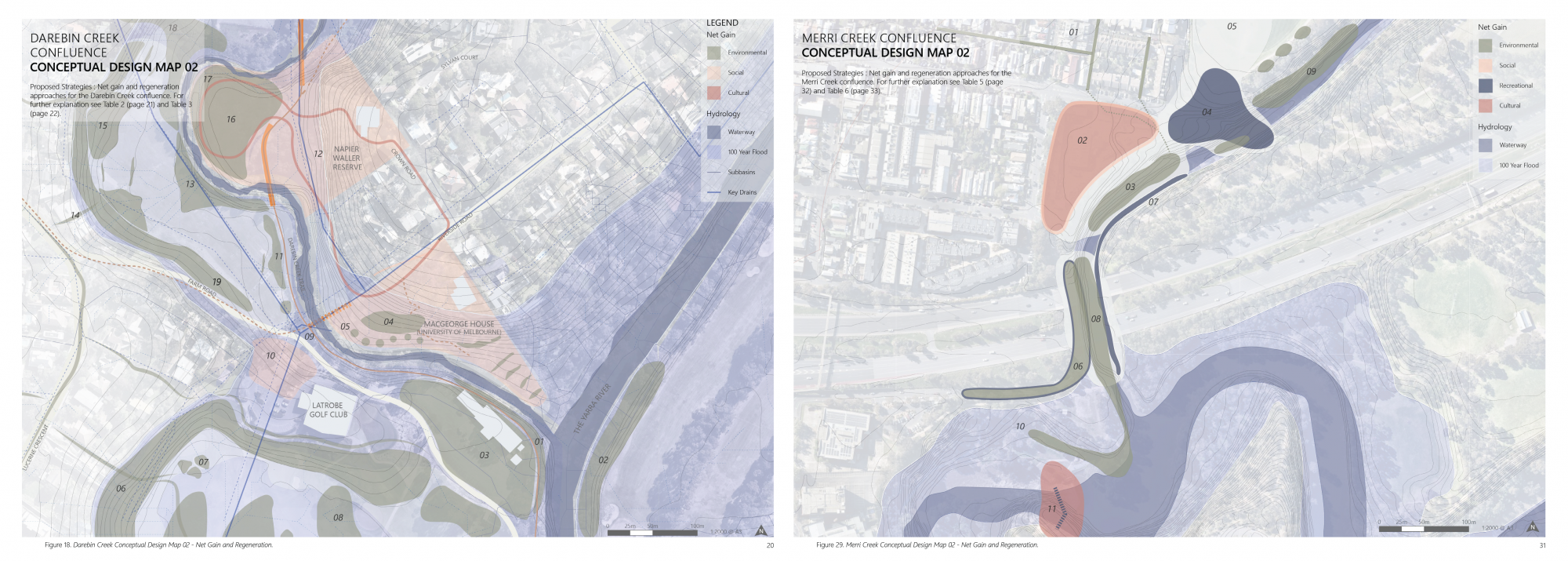
The UEDLAB was commissioned by the Yarra Riverkeeper to undertake the Great Birrarung Parklands Confluences Report, a conceptual and practical exploration of the Birrarung. It contributes to bringing forward the Great Birrarung Parkland, which is enshrined in the Yarra River Protection (Wilip-gin Birrarung murron) Act 2017 – a parkland that celebrates water, land, community, and culture.
The report provides readers with practical actions, strategies, and recommendations contributing to the initial development of the Great Birrarung Parkland. It demonstrates a near-term strategy which begins to re-conceptualise the river as one living and integrated natural entity from source to sea. The identification of opportunities for Traditional Owners to benefit from adaptation strategies is of primary importance to this research.