Leonardo Nogueira de Moraes, Anna Hurlimann, Sareh Moosavi
Line of enquiry
Environmental interpretation and spatial visualisation are critical skills for environmental planners, allowing them to make sense of site opportunities and constraints.
This project identified cross-disciplinary best practice for developing spatial visualisation skills to support the understanding and communication of regional and site-specific climate risks. From this, engaging learning experiences were crafted, that help translate complex concepts (such as climate hazards, exposure and vulnerability) into responsible planning practice. These were then implemented in two environmental focused subjects in the Master of Urban Planning degree: Urban Environmental Policy and Planning (ABPL90341); and Climate Change and Sustainability Planning (ABPL90064).
The learning activities support emerging planners to navigate climate risks. The project thus responds to calls by the United Nations Office for Disaster Risk Reduction (UNDRR) and the United Nations Framework Convention on Climate Change (UNFCCC) for applied understanding of risk that can reduce the likelihood and consequences of disasters and enable climate change adaptation. More specifically, these learning experiences align with Priority One of the Sendai Framework for Disaster Risk Reduction (Understanding Disaster Risk) (UNDRR, 2017) and Article 7 of the Paris Agreement (which focuses on ‘enhancing adaptative capacity, strengthening resilience and reducing vulnerability to climate change’) (UN, 2015).
The project recognises the broad range of disciplines that intersect with planning practice within and outside the spectrum of built environment professionals. In this context, the project adopts a transdisciplinary approach to learning and teaching practice (Gibbs, 2017), looking for cross-disciplinary engagement to inform innovation in supporting literacy and application of understanding climate risks. Examples of relevant disciplines and fields for this project include human and physical geography, climate transitions, disaster and humanitarian studies and nature-based solutions.
Exploration
Student surveys were undertaken understand the impact of L&T interventions, and refine the interventions across two consecutive years mid-2025 to mid-2027.
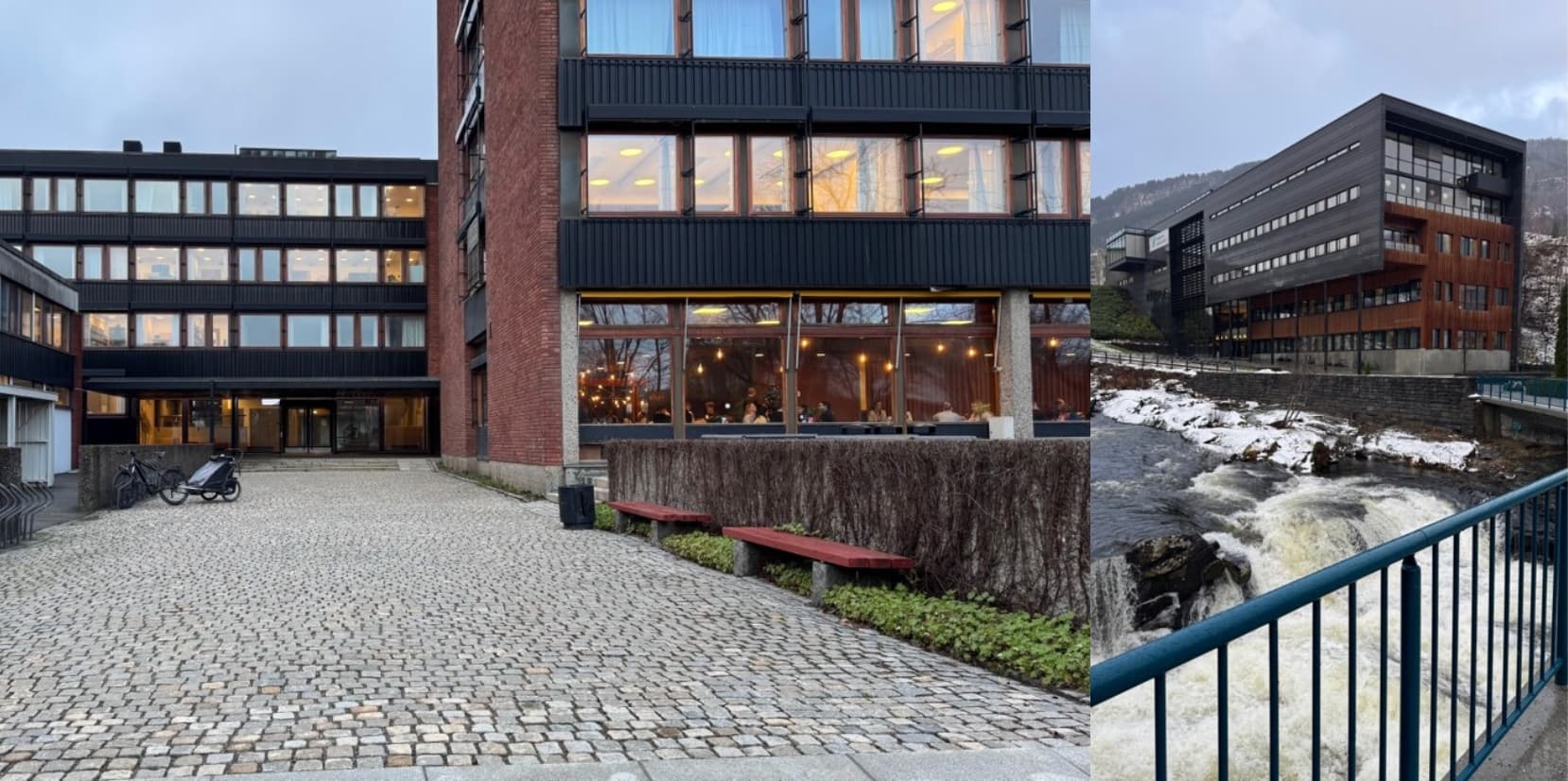
Additionally, the project draws on the peer exchange of learning and teaching practices (Peterbauer, 2021) with academics holding expertise in connected fields such as nature-based solutions, climate transitions, human and physical geography, disaster and humanitarian studies, as well as spatial planning. Peers were identified through their involvement with relevant course components delivered by universities concentrated in cities in the Nordic region, which has a significant concentration of programs focused on sustainability, climate change and environmental studies.
To minimise the carbon emissions associated with the initiative, face-to-face peer exchanges were prioritised based on the location of universities and whether they could be accessed by train or ferry via a logical route connecting Helsinki and Oslo. The initial round of peer exchanges were designed to be face-to-face to support the building of trust and the co-designing of how the exchanges were to occur, all important steps towards the development of cross-institutional communities of practice. Subsequent engagements are occurring online, allowing for an iterative process of curriculum refinement that makes use of evidence generated within the implementation of each edition of the selected subjects.
By serving as soundboards for the reflection on learning and teaching practices, the formation of these communities is expected to be the most important contribution of this project, supporting continuous curriculum refining (see Faulconer, 2024 for an understanding of the value of international collaboration for SoTL research).
Evaluation
The project is supporting continuous curriculum update and the design of tutorial exercises and assignments across two subjects: Urban Environmental Policy and Planning and Climate Change and Sustainability Planning. Student surveys and learning analytics are being used to assess changes in student engagement across two consecutive years before and after the interventions were introduced. This is a two-year project, which is currently in its final year. To date, all of the aims outlined for this period have been achieved, namely:
- The development and implementation of tutorial activities Climate Change and Sustainability Planning and a mapping workshop for Urban Environmental Policy and Planning;
- minor adjustments to the rubric of the third assignment for Climate Change and Sustainability Planning and the first assignment for Urban Environmental Policy and Planning;
- the preparation of a student survey for each subject and the obtaining of human research ethics approval for those (Fedoruk, 2022);
- the initiation of peer-exchange supported by online introductions and face-to-face meetings with 7 academics from 6 Nordic universities in Finland, Sweden, Denmark and Norway;
- survey data collected for the first iteration of Climate Change and Sustainability Planning in 2025;
- A survey for the first iteration of Urban Environmental Policy and Planning is planned for the coming month.
Recognition
This project was awarded an ABP Designing Future Education Grant in 2025.
The project contributes to the scholarship of teaching and learning (SoTL) in environmental planning education by focusing on the development and testing of Learning and Teaching (L&T) practices aimed at: ‘building literacy and supporting application of spatial mapping for the visualisation of climate risks in urban settings’.
The interest and participation of the academics that agreed to take part in the peer exchange is an acknowledgement of the importance of the work being developed. This is particularly the case in relation to the applied nature of climate knowledge that is developed through the proposed activities. Importantly, the initiative supports the building and strengthening of networks between academics from the University of Melbourne and leading Nordic institutions in a context of increasing prospects of academic cooperation opportunities between Australian and European partners (European Commission Directorate-General for Research and Innovation, 2026) and ongoing calls for climate and environmental action.
Dissemination
Learnings from this project are still emerging and will be disseminated once the project completes its first cycle at the end of 2026. The resources being produced are already being shared with relevant parties, including:
- The compilation of relevant web-based mapping tools for climate risk, which has been forwarded to the ABP Library for inclusion in relevant Library study guides.
- The same list was also shared with undergraduate students enrolled in the subject ABPL20035 Cities: from Local to Global, to support their engagement with assignment tasks.
- Both Climate Change and Sustainability Planning and Urban Environmental Policy and Planning have cohorts of students with diverse disciplinary backgrounds, including those enrolled in other University of Melbourne Master programs such as the Master of Environments and the Master of Public Policy Management. That means the impact of the L&T activities that are part of this project extend beyond the Master of Urban Planning.
References
European Commission Directorate-General for Research and Innovation (2026, June 9th). The European Union and Australia successfully conclude Horizon Europe negotiations. European Commission: Research and Innovation: News: All research and innovation news. https://research-and-innovation.ec.europa.eu/news/all-research-and-innovation-news/european-union-and-australia-successfully-conclude-horizon-europe-negotiations-2026-06-09_en
Faulconer, E. (2024). Forming International Collaborations for SoTL Research: An Autoethnographic Reflection. International Journal for the Scholarship of Teaching and Learning, 18(01), 1–4. https://doi.org/10.20429/ijsotl.2024.180102
Fedoruk, L. M. (Ed.). (2022). Ethics and Integrity in Educational Contexts: Vol. 2. Ethics and the Scholarship of Teaching and Learning (1st ed. 2022). Springer International Publishing. https://doi.org/10.1007/978-3-031-11810-4
Gibbs, P. (ed.) (2017). Transdisciplinary Higher Education: A Theoretical Basis Revealed in Practice. Springer Cham. https://doi.org/10.1007/978-3-319-56185-1
Peterbauer, H. (2021, December 13th). Learning and teaching: the added value of international peer exchange. European University Association (EUA). https://www.eua.eu/our-work/expert-voices/the-added-value-of-international-peer-exchange.html?highlight=WyJwZWVyIGV4Y2hhbmdlIl0=
The United Nations Office for Disaster Risk Reduction. (2015, March 18). Sendai Framework for Disaster Risk Reduction 2015 - 2030. United Nations (UN). http://www.unisdr.org/files/43291_sendaiframeworkfordrren.pdf
United Nations [UN] (2015). Paris Agreement to the United Nations Framework Convention on Climate Change, 3156 Treaty Series: Treaties and international agreements registered or filed and recorded with the Secretariat of the United Nations (2015). https://treaties.un.org/doc/Publication/UNTS/Volume%203156/v3156.pdf