Xiao Ma, Dejan Malenic, Leonardo Nogueira de Moraes, Joe Barrins and Melissa Iraheta
Line of enquiry
This Virtual Site Visits (VSVs) project investigates how planning students build the cultural competence needed to understand, critically analyse, and respond to global housing challenges through multimedia VSVs in Melbourne and Bandung, Indonesia. Theoretically, by developing and evaluating the VSVs, the project produced a framework for effective VSV creation and implementation and disseminated both the VSV resource and its pedagogical findings.
Contemporary planning practice increasingly calls for cross-cultural, place-based knowledge, and field trips remain an essential pedagogical component of urban planning education (Krośnicka, 2020; Legacy, 2017). However, traditional site visits face growing challenges from financial constraints and accessibility limitations (Baum, 2021; Hall, 2021). VSVs offer a promising alternative through technologies such as 360-degree video, 3D scanning, and virtual reality. Despite this potential and the professional demand for place-based skills, scholarship on evidence-based approaches to developing pedagogically effective VSVs remains limited (Klippel et al 2020).
Through this project, Seeing the Unseen: Virtual Site Visits and Place-Based Literacy in Urban Planning Education, we developed VSVs using multiple media (documentary video, interactive maps, 3D models, and VR environments) and deployed across three subjects in Urban Planning.
Exploration
The project integrates pedagogical research with innovative digital design to create immersive, accessible, and globally engaged learning experiences. The VSVs were built on primary fieldwork in Bandung: interviews with community leaders and policy makers, an expert workshop, and seven days of on-site footage collection within the informal community, alongside collaboration with Institut Teknologi Bandung (ITB) and the University of Hong Kong.
In collaboration with the NEXT Lab and Sam Holland, we developed a suite of integrated VSV materials (3D models, VR components, documentary and 360-degree video, and interactive maps) that work together to support spatial reasoning, critical analysis, and cross-cultural understanding. These materials enable students to analyse complex urban environments, compare regulatory and cultural contexts, and engage ethically with diverse stakeholder perspectives, while embedding inquiry-led, self-directed exploration.
Evaluation
The VSV have been deployed across four subjects: ABPL90279 Cities without Slums, ABPL90246 The Economics of Cities and Regions, ABPL20035 Cities from Local to Global, and PLAN10002 Introduction to Urban Planning.
In collaboration with the BELT team, we evaluated students' experience and learning outcomes using qualitative methods (interviews, surveys, and focus groups) conducted across the subjects. This feedback directly shaped refinements to the VSVs, ensuring that creativity was grounded in evidence.
Preliminary findings show that the VSVs strengthened students' engagement with marginalised voices through direct community narratives and deepened their cultural competence through immersion in unfamiliar socio-cultural and geographic contexts. Theoretically, drawing on the evaluation, we developed a framework for effective VSV creation and implementation. It indicates that VSV success depends on deliberate coordination across curriculum, pedagogy, and assessment.
Recognition
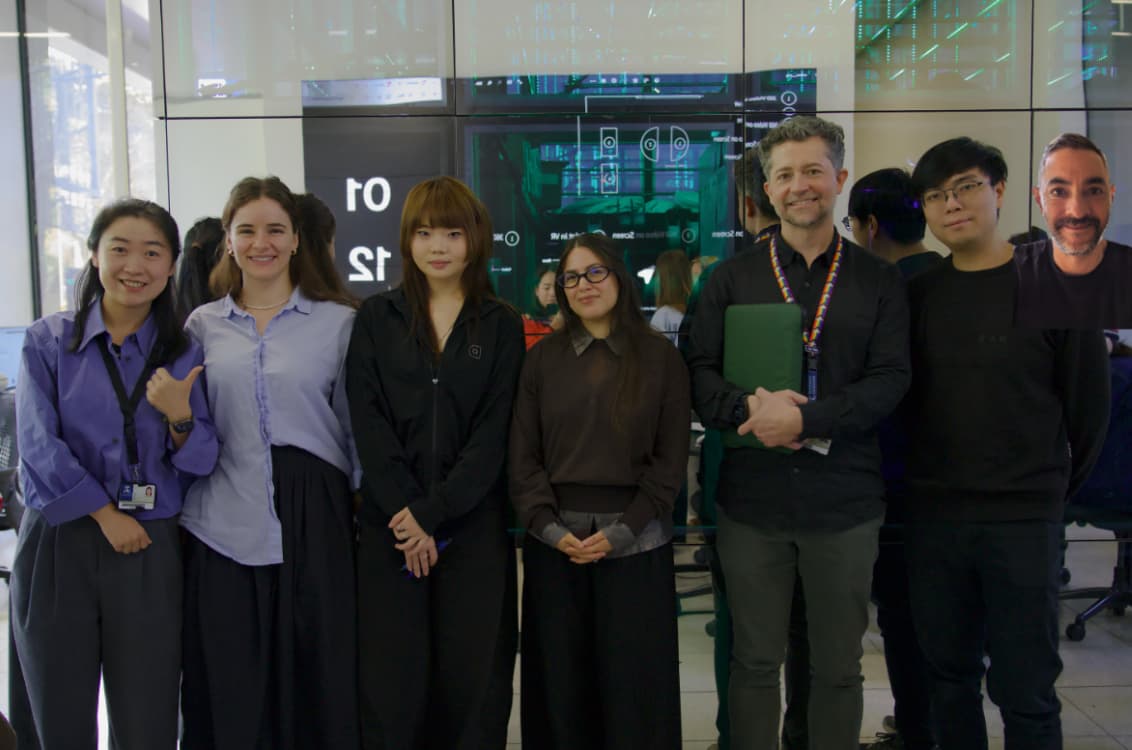
This project was awarded an ABP Designing Future Education grant in 2025.
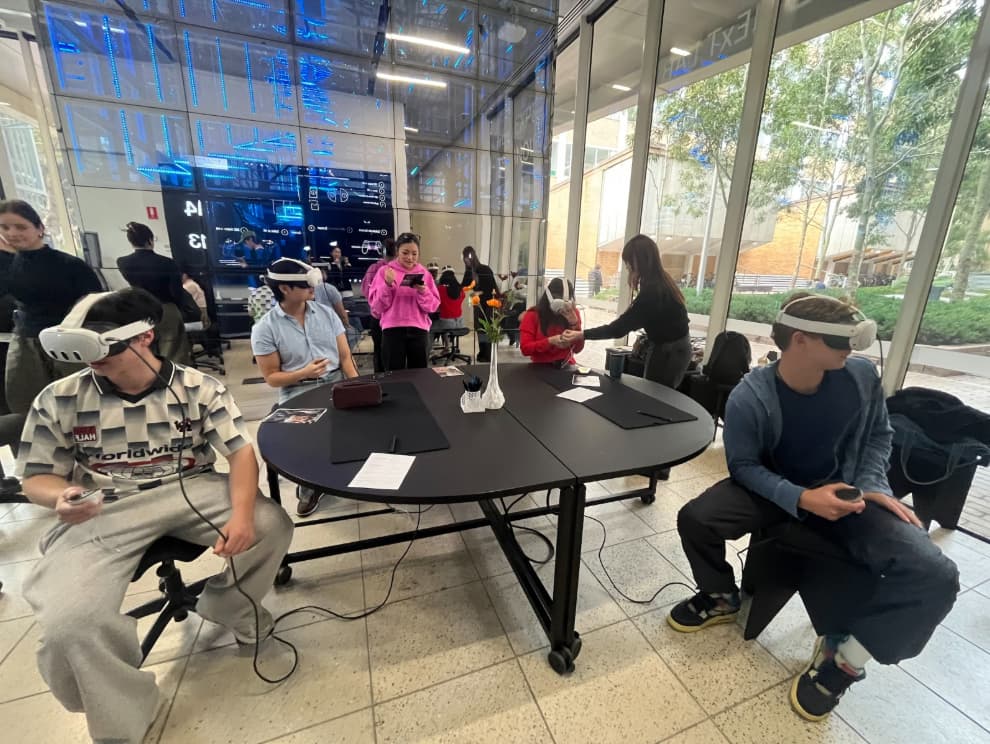
The VSV work was competitively selected for presentation at the Scholarship of Teaching & Learning (SoTL) Showcase on 30 October 2025. The VSV materials were also showcased through MSDTV, attracting strong interest and positive feedback. Building on the VSV resources, we organised a pilot VSV exhibition at MSDX, demonstrating an expanded format that incorporated VR-enabled VSVs alongside 3D models, 2D interactive maps, and curated video, strengthening the project's visibility across the faculty and the wider university community.
In 2026, the VR component was trialled in the 250-student subject ABPL20035 Cities from Local to Global, where students explored international urban issues through the lens of the VSV repository in tutorials. The trial received strongly positive feedback, including from international students from the US, the UK, China, Indonesia and Japan, etc, many of whom said it was their first time using VR in learning.
Dissemination
- Ma, X., Malenic, D., Nogueira de Moraes, L., Thompson, J., & Holland, S. (2025). Seeing the unseen: how digital pedagogy advance place-based literacy in urban planning education., Symposia on Higher Education Research Informed Practice Scholarship of Teaching and Learning Showcase, 30 Oct 2025. Melbourne. Australia.
- Ma, X., Malenic, D., Holland, S., Thompson, J., Nogueira de Moraes, L. (2026). Virtual Exploration: Virtual Site Visits (VSVs) as a pedagogical framework. World Planning Schools Congress, Helsinki, Finland, 29 Jun – 3 Jul 2026.
- Ma, X., Malenic, D., Holland, S., Thompson, J., Nogueira de Moraes, L. (2025). Seeing the unseen: how digital pedagogy cultivates cultural competence in urban housing education. State of Australasian Cities Conference 2025, Brisbane, 9–12 Dec.
- Ma, X., & Holland, S. (2026). Virtual Site Visit Repository - Seeing the Unseen: Taman Hewan Bandung Indonesia - Interactive Map. https://doi.org/10.26188/31311013
- Ma, X., & Putra, B. D. (2025). Virtual Site Visit Repository - Seeing the Unseen: Taman Hewan Bandung Indonesia (Version 1). The University of Melbourne. https://doi.org/10.26188/30977671.v1
- Barrins, J., Ma, X., & Iraheta, M. (2026). Large Scale 3D Scanning as an Interactive Teaching Approach in Built Environment Disciplines. Journal of Digital Landscape Architecture, 11. https://doi.org/10.14627/537770022
- Ma, X., Thompson, J., Malenic, D., Holland, S. Nogueira de Moraes, L. (under review). Seeing the Unseen: Virtual Site Visits and Place-Based Literacy in Urban Planning Education, Journal of Planning Education and Research.
Reference list:
Baum, S. 2021. Why Urban Analysis, in. Baum, S. (ed) Methods for Urban Analysis. Singapore: Springer
Hall, J.N., 2021. Cultivating cultural competence. Canadian Journal of Program Evaluation, 36(2), pp.191-209.
Klippel, A., Zhao, J., Oprean, D., Wallgrün, J.O., Stubbs, C., La Femina, P. and Jackson, K.L., 2020. The value of being there: Toward a science of immersive virtual field trips. Virtual Reality, 24(4), pp.753-770.
Krośnicka, K., 2020. Students’ soft urban planning skills and local development are the benefits from the Fair of Good Practice. Small cities-big challengesprogramme. World Transactions on Engineering and Technology Education, 18, pp.183-189.
Legacy, C., 2017. Is there a crisis of participatory planning?. Planning theory, 16(4), pp.425-442.