GenAI in Learning and Teaching
Introducing the challenges and opportunities of genAI as seen through a learning and teaching lens.
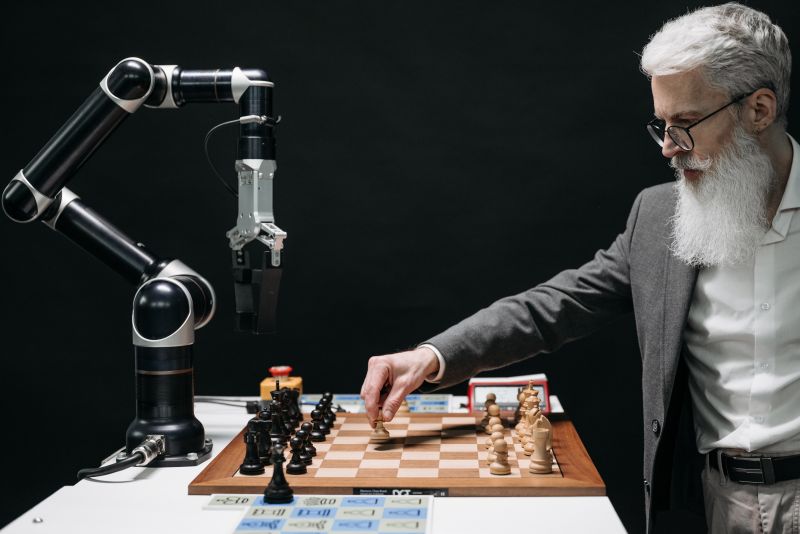
The introduction of novel educational technologies often arouses strong emotions, ranging from doomsday predictions to endless euphoria (Rudolph et al., 2023). In the case of genAI, opinions are polarised between those who are excited about the potential it brings and those who advocate for its prohibition.
GenAI undoubtedly presents both opportunities and challenges in higher education. It offers the potential to fundamentally change the way we think about education and learning, with opportunities for improving efficiency, effectiveness and societal impact for both students and educators (Atlas, 2023). However, alongside these innovations comes considerable risk, including threats to academic integrity, concerns around the accuracy of AI-generated content, propagation of biases or misinformation and potential overreliance on the technology (Gimpel et al, 2023).
Therefore, in approaching the use of these tools, it is imperative for educators and students to be both aware and critically reflective. This guide recommends that built environment learners and teachers proceed with caution, with strong emphasis on ethical and responsible engagement, and a focus on the development of AI literacy. With this in mind, let us look at some of the current and potential issues that must be foregrounded.
Efforts by the Australian Government’s Tertiary Education Quality and Standards Agency (TEQSA) to develop and also share collected guidance from across the Australian HE sector via the TEQSA good practice hub is also helpful to note. Of course, this valuable advice should be considered in a UoM policy context.
-
As with any emergent technology, student perceptions towards genAI are sure to be nuanced and varied. Considering genAI as part of a broader “learning environment”, it is worth remembering that student perceptions of their learning environment—including assessment methods and support services—impact learning outcomes and their ability to engage in “deep learning” (Biggs, 1999). Chan and Hu (2023) argue:
Understanding students on their willingness and concerns regarding the use of GenAI tools can help educators to better integrate these technologies into the learning process, ensuring they complement and enhance traditional teaching methods. This integration can lead to improved learning outcomes, as students will be more likely to adopt a deep approach to learning when they perceive GenAI as a valuable and supportive resource.
The authors’ 2023 survey of university students in Hong Kong revealed that students perceive a set of opportunities and threats related to genAI. The greatest benefits of genAI reported were: personalised and immediate learning support; writing and brainstorming support; research and analysis support; visual and audio multi-media support; and administrative support. Student respondents noted the following challenges related to genAI: accuracy and transparency; privacy and ethical issues; holistic competencies; career prospects; human values; and uncertain policies.
Understanding why students might decide to use AI for their coursework is critical to ensuring that we genuinely support learning, and that the institution meets its obligation to graduate employable and ethical citizens. Students might elect to use genAI for their coursework for numerous reasons, and it is important to understand that not all of these reasons are mischievous or with an intent to cheat. Some students may lack confidence in producing work entirely themselves, whilst others may not feel motivated or supported to do so. Indeed, scholarship on why students participate in academic dishonesty more widely suggests that the possible reasons can extend beyond the desire to achieve certain results to include: feeling inadequately prepared for assessments; caring more about results than learning; confusion around what constitutes academically dishonest behaviour; feeling like the behaviour is commonplace amongst their peers; or feeling a lack of connection to their studies or institution more generally (Bryzgornia, 2022). Some scholars have even raised the notion of ‘ethical cheating’ in reference to students collaborating, sharing knowledge/information/ideas and using open-source platforms precisely to develop 21st-century skills, yet in ways that might traditionally have been considered cheating (Brimble, 2016). Anecdotal reports suggest that students are also using genAI tools because they are fun, and also because they just want to explore what it can do.
As discussed in the GenAI and assessment section of this guide, students deserve clarity and clear communication around what is considered proper versus improper use of AI in their studies and, for each assessment task, what is encouraged and what may be required. This includes when and how students should disclose the use of AI tools, and any distinctions around expectations when it comes to AI use in text-based versus graphic-based formats. Apart from clarifying university policies and expectations, it may be beneficial to discuss with students the use of AI by professionals and academics in the field, and the current set of ethical questions surrounding these practices. Siva Vaidhyanathan writes, this is a teachable moment for our students as well as ourselves. Not only are tools and technologies certain to develop over time, institutional and personal stances towards AI are context-dependent. Generally, if students feel uncomfortable or discouraged to discuss their views or habits with staff, this can contribute to a problematic gap between teacher assumptions/expectations and learner practices. The more educators and students can feel like they are working together to promote learning and professional development the better. As Ouyang and Jiao (2021) argue, the advancement of AI technologies does not ensure good education outcomes; rather, the long-term goal of AI use in educational contexts is to contribute to a paradigm where learners are supported and empowered to take agency for their own learning.
-
GenAI has great potential in higher education, but it is crucial to approach these tools with care, and consider the ethical considerations and potential associated with them. This includes consideration of equity in assessment design, as paid and unpaid versions of genAI tools (such as ChatGPT) have access to different datasets.
Some obvious examples of bias in outputs by GenAI include the tendency of AI models to assume that orientation for design of buildings or landscapes refers to the northern hemisphere. There is clearly potential for emerging GenAI tools producing drawings or representations to incorporate conventions drawn from other locations and professional cultures.
A significant but more subtle and pervasive concern is the tendency of these models to perpetuate societal biases and discrimination (Dahmen et al., 2023). These models are trained on large amounts of data, and if that data is biased, the models will reflect these biases in their output (Atlas, 2023). In doing so, they reinforce existing societal issues and discriminations. To address this, it is essential for users to be educated about these biases, develop critical evaluation skills and gain technical expertise in mitigating biases when using these tools (Gimpel et al., 2023). This includes employing strategies such as proper prompt engineering to guide the genAI models towards generating content that is more inclusive, unbiased and aligned with ethical considerations. By proactively engaging in responsible practices, users can reduce bias and foster an equitable and ethically sound application
Paradigms of AI Usage by Learners in Higher Education: According to Ouyang and Jiao (2021) three paradigms can describe how AI is currently being utilised in education.
- AI-directed, where learner is considered as recipient (paradigm 1),
- AI-supported where learner is perceived as a collaborator (paradigm 2), and
- AI-empowered, where learner contributes as a leader (paradigm 3).
Paradigms 1 and 2 have been the focus of AI in higher education in the past two decades. There is a current call for Paradigm 3, an AI-empowered, Learner-as-Leader approach centred upon promoting human intelligence and integrated AI . This approach aims to resolve issues of bias in AI algorithms and datasets, lack of governance of AI decision-making, to promote learning and teaching experiences that are more socially just and inclusive.
Types of Datasets: For learning and teaching experiences to be more socially just and inclusive, it is important to understand how students use the AI platforms and the forms of information that are input and outputs (Dwivedi, 2023). In built environment education, students can engage with genAI platforms using several types of datasets including image, text, audio and/or code, depending on the subject.
Biases in Datasets: Depending on the type of genAI platform, datasets may not be curated or selected to identify an inclusive range of issues or perspectives. Such biases may be systemic, societal, cultural, racial, ethnic and/or methodologically, as well as intellectually fraught as large social datasets are fed into algorithms and unchecked algorithms can result in systemic discrimination that favours certain individuals or groups over others (Ferrara, 2023; Ray, 2023). Most datasets are Western-centric because of the dominance of these forms of information that are readily available for genAI platforms such as ChatGPT to utilise. As above, they may also be biased toward northern hemisphere assumptions.
This range of potential biases is relevant to cultural, linguistic, ethnic and historic background to the content, or for a student, and should be recognised in support of socially just/inclusive learning (Ferrara, 2023). Datasets drive textual outputs such as essays, reports, summaries, reflective narratives, thesis, rendered images, development of audio outputs and drafts, as well as data analysis. Algorithms in AI/Machine Learning systems that seek to increase efficiencies can embed existing biases and propagate ongoing disparities. This compounding bias can hinder the achievement of social justice in classroom and decolonisation efforts by higher educational institutions.
Responding to Dataset Bias in your teaching: Datasets have a lifecycle of input, usage and interpretation. It is important that at each stage of the lifecycle, students are supported in how they relate to data and its interpretation for their learning and assessment (Dwivedi, 2023).
Some teaching strategies to consider include:
- Build students’ awareness of different types of biases that might be inherent to datasets;
- Encourage students to develop prompts that respond to biases by adding additional information such as ‘internationalise the prompt’ or ‘consider the Global South perspective’;
- Provide students with examples of how bias in datasets might impact their own worldviews about interpretation of readings/scholarship. This can include showing students that certain genAI outputs can impact respectful and ethical engagement from diverse scholars with varied cultural backgrounds, or may also lead to misinterpretation and distortion of information. Such distortion can be disrespectful and may project further bias/exclusion of diverse communities and places;
- Encourage students to check the authenticity of resources and not to rely solely on an output from a genAI platform as reliable information about various cultures, genders, races, ethnicities, histories or experiences of diverse communities to decolonise educational and professional practice efforts.
-
Important issues relating to genAI and teaching in ABP disciplines are related to creativity and authorship, and impact studios and other subjects involving innovation and creativity. Each subject coordinator will need to explore and identify how students can best engage with these tools in relation to specific subject learning outcomes. Related questions are provided within the text below, alongside related links to assist this important thinking.
When we ask students to ‘be creative’ in design-related disciplines or learning activities, we are asking them to contribute and iteratively refine their own beliefs, values and attitudes as they respond to a design challenge. Students learn to select from and/or transform ideas from precedents, research and their own experiences, as well as how to consciously reflect on and direct their approaches (Lawson & Dorst, 2009; Cross et al, 1994). We are asking them to participate in the ‘curious and beautiful relation between design problems and their solutions’(Lawson, 2007). Students are rewarded for designs that contribute positively and innovatively in this context.
How is student innovation or creativity framed and identified in your subject through the ILOs and elsewhere? How is it assessed via the brief and/or rubric?
By contrast, genAI tools search, re-combine and deliver elements from data sets, producing a wide range of outputs including textual, numeric, code and graphic forms, in response to user prompts. Many doubt the capacity for AI to participate in ‘true creativity’ (Lawson, 2007; Kelly, 2019), claiming it lacks the motivation and independent judgement to create something truly new and useful. Human thinking is described as creative and flexible by nature, in contrast to the strengths of AI in relation to repetitive actions at vast scale, and managing complexity and multi-tasking. Some claim the Turing Test (in which an outcome that is indistinguishable from human production offers proof of intelligence) has been reached, while others claim creativity should be relocated to the perception of the beholder, rather than the contribution of a potential author (Natale & Henrickson, 2022).
Purported opportunities to ‘collaborate’ with genAI see typical models of design thinking transformed to propose linked human and computer contributions to identified phases. These outline perceived improvements to human thinking, expressing, building, testing and perceiving, using these tools to increase scope and decrease time and cost (Wu et al, 2021); or outline the ways in which different disciplines may creatively understand and engage with AI including as co-creators (Wingstrom et al., 2022).
A recent genAI-focussed panel discussion at the CSHE Teaching and Learning Conference heard panel members encouraging the design of learning experiences in which students could refine their creative practices and deepen their capacity for evaluative judgement by ‘sparring’ with the machine through reflective use of prompts and the creative recombination of outputs.
How might genAI strengths be distinguished from, and/or contribute to, student learning in the subject?
Elsewhere, human and AI production is being considered through the lenses of moral rights (Miernicki & Ng, 2021), intellectual property and copyright (Shtefan, 2021 ). A recent case before the US Copyright Office found the location of authorship to be via input (prompts) as opposed to output (AI-produced images), although the debate continues.
Simultaneously, some developers of various genAI platforms are in legal hot water, as artists claim these companies are infringing copyright by drawing on their published work without attribution, and the opportunities for recourse or even protection are overly limited (see a summary here). Legal challenges have been gathering pace and resources, including a high-profile case brought by the New York Times (Grynbaum and Mac, 2023) claiming that copyrighted articles are being used to train OpenAI chatbot models, producing outputs that are undermining consumer engagement with the original content, causing damage to authors and creators, and to the publishers.
Related concerns are raised for users, as the tools also collect requests and data from prompts, directly or via ‘plug-ins’. As AI starts to draw on outputs it may claim as ‘its own’ for future production, it all gets a lot more complicated.
How can students learn about and respond to the IP concerns of others? How can students protect their own IP in this subject?
Our challenges as educators include supporting students to engage creatively with emerging tools, to build their own creative expertise and judgement, and to effectively demonstrate authorship and to protect their own IP and privacy in the process. The value and personalisation of creativity and its expression remain central to this learning, as is confidence in an individual students’ right and capacity to develop a novel and a crucial aspect of the learning that students need space and support to practice and refine.