04 Landscape typologies & design precedents
Observation
Galada Reserve is a site which sits as part of a larger system. Landscape Architects recognise and design with/in systems. Systems are very complicated and ever changing (landscape is a living medium) for ease of analysis and research, categories, such as landscape typologies, assist in providing a framework to work across. Typologies are often principle in purpose, broken into function or aesthetic and universally accepted (e.g. the same/similar name in Europe). Typologies present within Galada reserve include bridges, nature paths (can be named slightly different), recreational, play space and water embankment (riverbank).
With the sites landscape typology (in approach/theory) present as design as Synthesis, Cultivated expression, landscape Analysis, Plural design and Ecological design (refer to Crewe, landSCAPES, 2003).
Design theory
Early design theory regarding typology of landscape approaches/theories in landscape architecture can be found in work by Katherine Crewe and Ann Forsyth, 'LandSCAPES: A Typology of Approaches to Landscape Architecture.'. The 'boundaries' of typologies are constantly being pushed, often by new research or material development, but also in theory and landscape practice through design and exploring the intersection between two "separate" categories of typology. For example, the lookout, as a typology prioritises the visual, 'picturesque' of landscape, could it be reimagined through an auditory priority, where the form or spatiality of the design refracts the sounds of the surrounds? How would this change the experience the user has of the space?
Precedents
Landzine. is one of the top websites representing landscape architecture projects to the broader web. They categorise/classify projects under 'landscape typologies' with over 50 categories, often by function or aesthetic.
Water embankment and the design thereof must consider functional aspects (such as flooding, embankment stability) but not at the cost to design considerations. One important design decision to make is the connection to, and interaction with the water. This connection is a criticism often regarding to Federation Square, as it closes in the space and neglects a connection to the River. LTH with images and design drawings may be worth exploring.

Above image: LTH, by Thorbjorn Andersson. For more on this project click here.
Note: there is a distinction between landscape and landscape architecture typologies, however landscape architects are influenced by and influence both (depending on many factors, e.g. type of project).
There are examples of landscape typologies, such as lookouts, which are naturally occurring due (primarily) to topographical shifts and have been translated and represented in design disciplines, architecture (Trollstigen (Troll's ladder) and into landscape architecture (Seljord and the Legends, example here).
 For more examples of natural 'lookouts', you may refer to visitmelbournes website here.
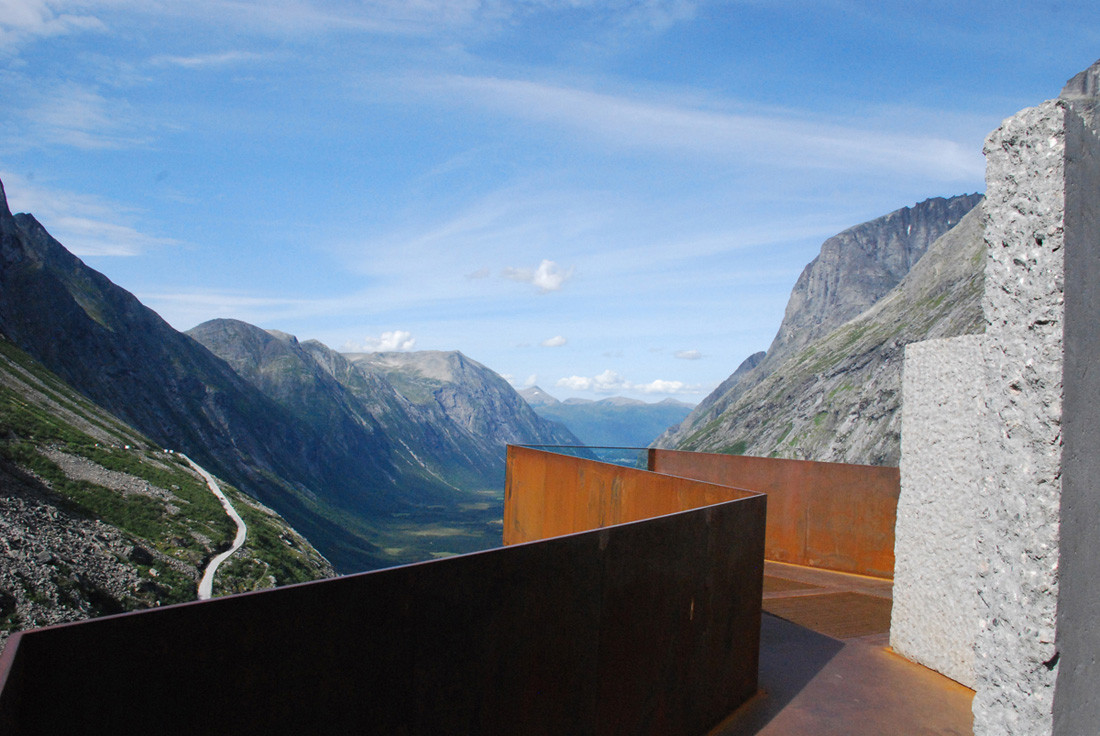
National Tourist Route Trollstigen / Reiulf Ramstad Arkitekter + Oslo Norway, 2009. Source