13 WSUD & Design Possibilities
Observation
Galada Avenue Reserve is part of a larger hydrologic system known as the Moonee Ponds Creek. There are opportunties along this system to implement Water Sensitive Urban Designs (WSUD). WSUD are new designs or retrofits for urban environments that reconstruct the water cycle. The intention is to construct a system that functions similarly to the way biological systems work taking into account the constraints of the anthropogenic landscape and activities. This reduces the impact of development on the water cycle. There are many different types of WSUD used to reduce the volume of stormwater and pollution that enters our waterways. They can occur across multiple scales, from single projects on individual lots to interconnected projects at a regional scale. Common types of WSUD include raingardens, swales, constructed wetlands, porous pavement, rainwater and stormwater harvestng, green infrastructure (e.g. green roofs, green facades and tree pits) or infiltration trenches. The many benefits to implementing WSUD include: Reduced volume of stormwater entering waterways, leading to an improved aquatic environment, improved stormwater quality, leading to an improved water quality in rivers and bays, reduced reliance on drinking water to irrigate green spaces, flood mitigation by intercepting stormwater flows, improved biodiversity as a result of wetlands and raingardens, decreased urban heat island effect as a result of increased green space and increased irrigation capacity and increased levels of permeable or unsealed soil and soil moisture.
Design theory
Water-sensitive urban design is a land planning and engineering design approach which integrates the urban water cycle, including stormwater, groundwater and wastewater management and water supply, into urban design to minimise environmental degradation and improve aesthetic and recreational appeal. The term water sensitive urban design (WSUD) is only used in Australia. In the United Kingdom it is called sustainable urban drainage systems (SUDS) and in the United States it is commonly called low impact development (LID).
Precedents
http://urbanwater.melbourne.vic.gov.au/melbournes-water-story/water-sensitive-urban-design-wsud/
Case Study 1 Oak Park Reserve (Moonee Ponds Creek Naturalisation Report)

Case Study 2: The Trin Warren Tam-boore wetland (http://urbanwater.melbourne.vic.gov.au/projects/wetlands/wetlands-sample-project/) has been constructed in Royal Park, four kilometers north of Melbourne’s central city and just south of our site. The five-hectare wetland takes stormwater from surrounding suburbs, cleans it, and stores it to irrigate the park. The system reduces stormwater pollutant and runoff levels entering Moonee Ponds Creek and Port Phillip Bay. Monitoring shows that the system is exceeding expectations for pollutant and sediment removal. The system also reduces reliance on drinking water for irrigation. The system provides up to 160 megalitres of stormwater per year, or 89 per cent of the park’s irrigation needs. The design creates a variety of different habitats, which has resulted in greater biodiversity.
- Enabled sports fields to remain green all year round, which has enhanced community health and wellbeing.
- Created a space for community enjoyment and recreation. Boardwalks, footpaths and interpretive signage have allowed people to connect with the landscape.
Case study 3
https://mvcc.vic.gov.au/my-council/upgrades-and-plans/woodlands-park-and-salmon-reserve/

Case study 4 Indian Bend,
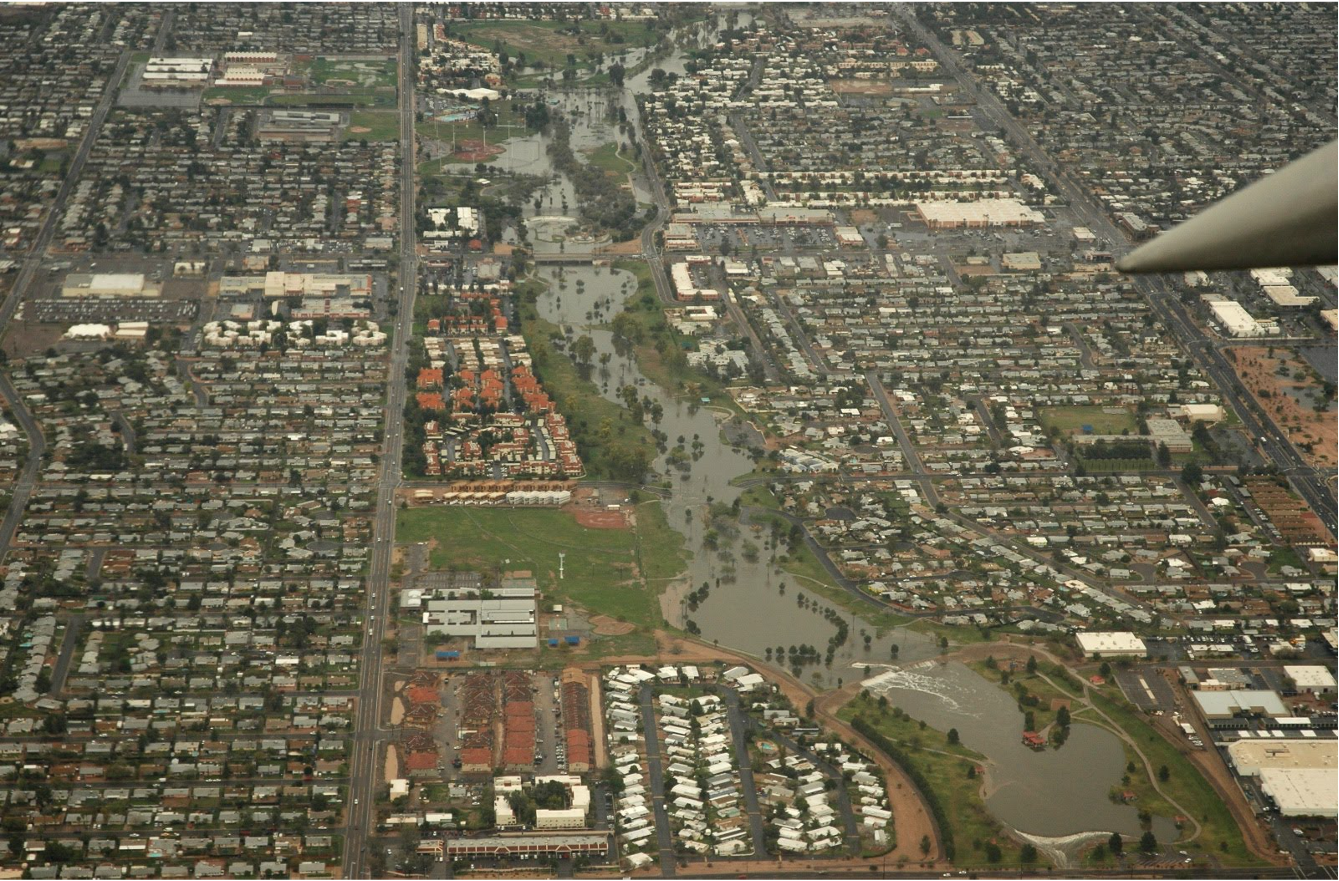
Scottsdale Arizona
This project is a parkland designed to flood. See: https://www.scottsdaleaz.gov/parks/greenbelt
Case study 3
The project Moor Park Development is set in north of Blackpool town centre in England.
