Lilie Paxton-White
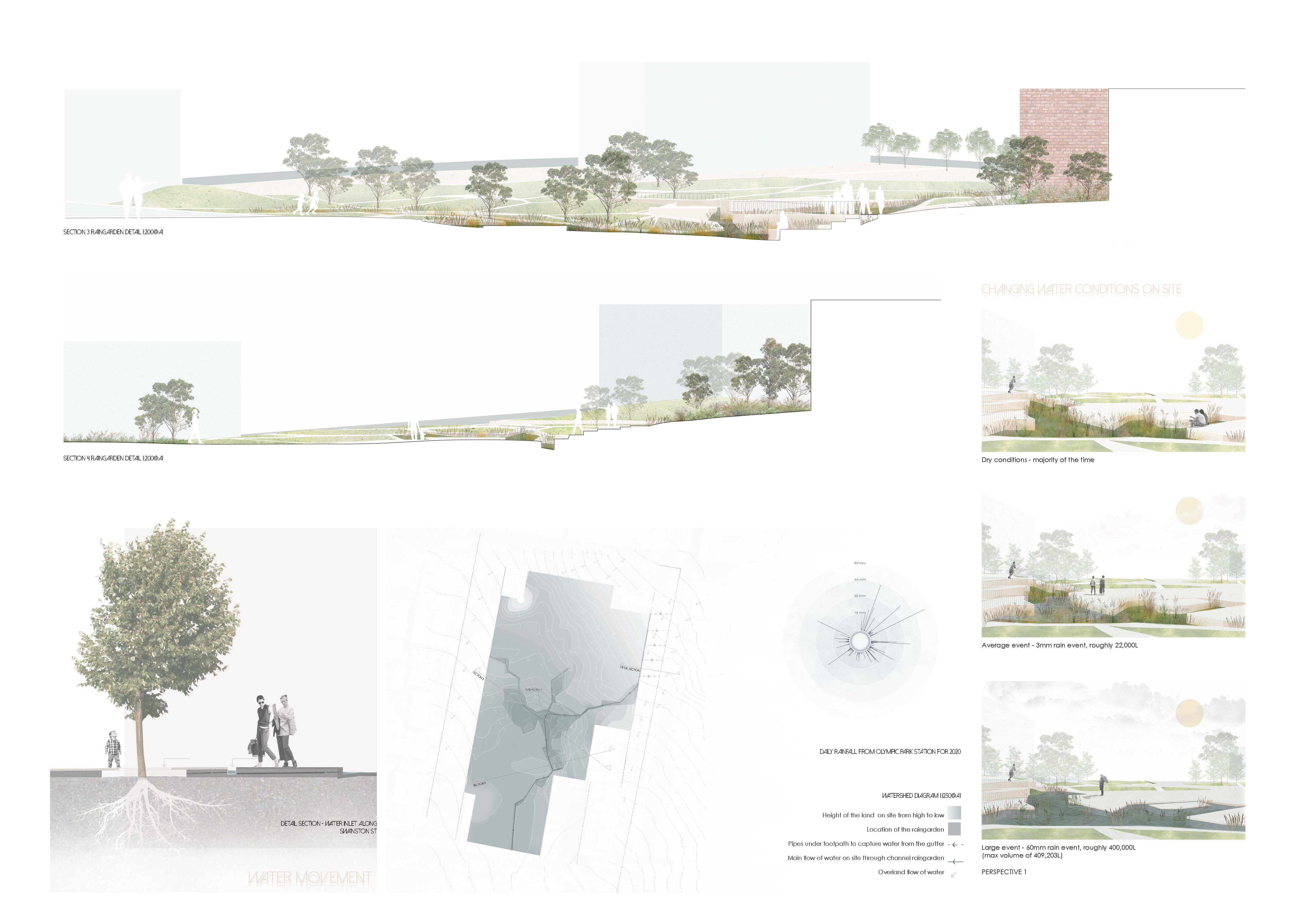
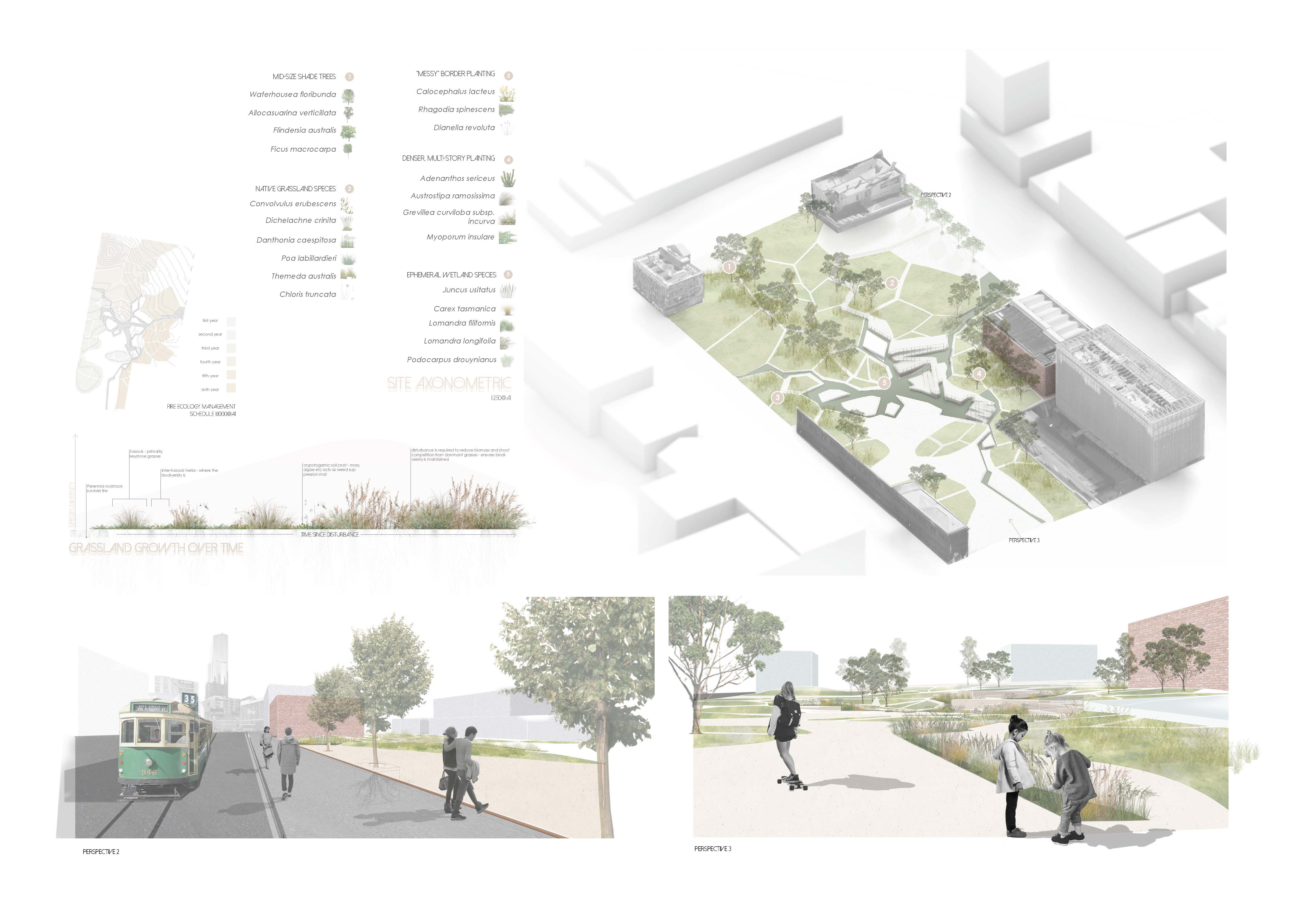
The cracked pattern was used to begin influencing the form on site. I started by manipulating the contours (below) to allow water to run into the centre of the site, for capture and infiltration. I then pulled the pattern onto the surface and used this design to place the raingarden, using the fractures between polygons as an outline. The raingarden was positioned so the majority of it ran diagonally across site, parallel to the contours in order to maximize capture of runoff. These fractures also became paths which criss-cross the site, including the equal access path that cuts across from the north-east corner. While the site will experience dry conditions for the majority of the time, allowing for collection, purification and infiltration of stormwater in the urban environment helps reduce environmental degradation, while also increasing the aesthetic and recreational value of a space. The raingarden I’ve designed will be lush and biodiverse, creating a focal point on site that fluctuates with the changing environmental conditions. During dry conditions, the edges can function as seating and the dense planting is a beautiful, biodiverse landscape feature.