Margaret Sisila
Doctor of Philosophy candidate
Architecture, Housing
Biography
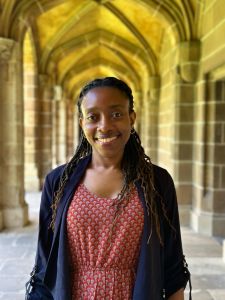
Margaret Sisila is a PhD candidate and recipient of the Melbourne Research Scholarship at the Faculty of Architecture, Building and Planning. She is an experienced academic having worked as a Tutorial Assistant and an Assistant Lecturer at the College of Engineering and Technology, University of Dar es Salaam, Tanzania. Margaret holds a Bachelor of Architecture degree from Ardhi University, Dar es Salaam, Tanzania and a Master of Science in Building and Architectural Engineering from Politecnico di Milano, Lecco, Italy. She is also a Professional Architect registered by Tanzania's Architects and Quantity Surveyors Registration Board (AQRB) and a member of the Architects Association of Tanzania (AAT). Her research and scholarly contribution is around the fields of housing cultures, architectural heritage, sustainable architecture and building technologies.
Thesis
Hybridising Traditions and Aspirations: Culturally Responsive Housing for Rural Tanzania
The provision of suitable housing for civil servants in rural Tanzania is crucial for their well-being and effective service delivery. However, existing housing options in rural areas fail to meet the needs and preferences of civil servants, leading to dissatisfaction with the living conditions, undermining performance and retention and ultimately hindering the rural development that the government intended with their deployment. Civil servants often resort to self-built or modified housing solutions, influenced by modern architectural design and technological trends and the perception that vernacular architecture is outdated, undesirable and no longer accommodates contemporary needs. However, this often creates houses that are incompatible with their persistent traditional domestic practices.
The study aims to investigate the existing housing situation for rural civil servants and to determine a culturally and context specific approach to housing design and construction to accommodate what the modern-day civil servants in rural areas need. The study aims to identify spatial practices and relationships that would inform spatial planning as well as the use of building materials and construction methods sensitive to local environments, vernacular elements and material cultures.
Grounded in interpretivism, the study seeks to explore this housing situation through qualitative strategies such as ethnography and case study, aiming to understand rural civil servants' experiences, behaviours and perspectives towards housing design and construction. The research aims to fill a gap in literature by highlighting housing needs and aspirations, while also contributing to the discourse on designing culturally sensitive yet contemporary rural housing. Additionally, the study aims to stimulate innovation around vernacular architecture for contemporary use and possibly contribute to developing new methods of housing production in rural areas. It further aspires to inform policy development for rural housing in Tanzania, potentially bridging the rural-urban development gap. By identifying conducive housing environments, the study hopes to raise awareness among housing stakeholders and encourage the implementation of favourable housing schemes for rural civil servants, ultimately fostering development in rural areas.
Contact
- Email msisila@student.unimelb.edu.au
- LinkedIn Profile LinkedIn profile
- ORCID Profile ORCID