Designing your Teaching Case Study

[Teaching Case Study Diagram, Bridget Keane, DOI: https://doi.org/10.26188/33432556]
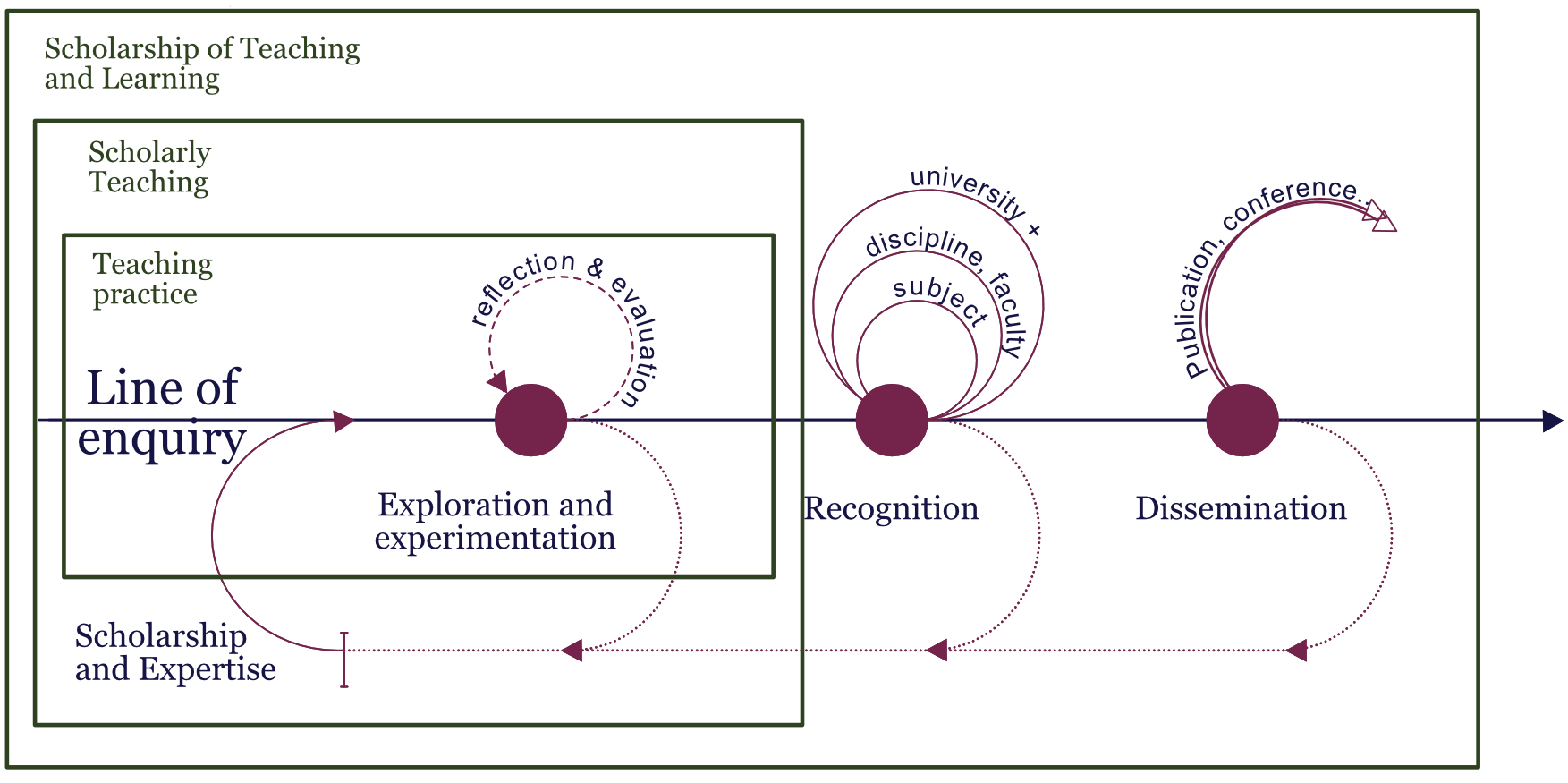
A teaching case study framework supports teaching innovation by outlining connected and relational processes that enfold teaching practice, scholarly teaching and the scholarship of teaching and learning. The framework supports the development of teaching practice across four connected phases:
- Line of Enquiry
- Dissemination
- Exploration and Experimentation
- Recognition
In the first phase, scholarship and expertise inform a line of enquiry that guides the investigation of a learning and teaching idea. In the second phase, these ideas are explored and experimented with in an educational environment with associated modes of reflection and evaluation. The third phase considers how the knowledge produced through experimentation is translated to others and recognised at various scales. For example, teaching innovations may be adopted within a subject, discipline or by others in the university or beyond. The fourth phase explores how this knowledge may be further disseminated through publication or other peer-reviewed outputs, including creative works.
Feedback loops connect each phase to the line of enquiry, allowing reflection to inform and refine teaching practice, evaluation, recognition and dissemination. These connections scaffold processes over time and across subjects and interests.
Line of Enquiry
 [Teaching Case Study - Line of Enquiry, Bridget Keane, DOI: https://doi.org/10.26188/33432556]
The 'line of enquiry' frames the focus of the case study. This is an important step in any project, as it will determine the nature of each of the following phases. What idea are you interested in exploring? How does it relate to your current teaching practice and how might that practice be improved?
The line of enquiry should draw on existing scholarship: what have others written or shared about the topic? Have similar issues been explored in other disciplines or contexts?
Faculty and University strategies can also help situate teaching case study ideas within broader institutional priorities. Examples include the ABP Designing Futures Strategy and the University of Melbourne’s Advancing Students and Education (ASE) strategy.
Important note: In this phase, consider whether you intend to disseminate the case study through Scholarship of Teaching and Learning (SoTL). If students or peers will be involved as partners or participants, clarify the university ethics approval that will be required before commencing the work. The Ethical Coursework Tool can assist in considering the ethical implications.
Exploration & Experimentation
 [Teaching Case Study - Exploration and Experimentation, Bridget Keane, DOI: https://doi.org/10.26188/33432556]
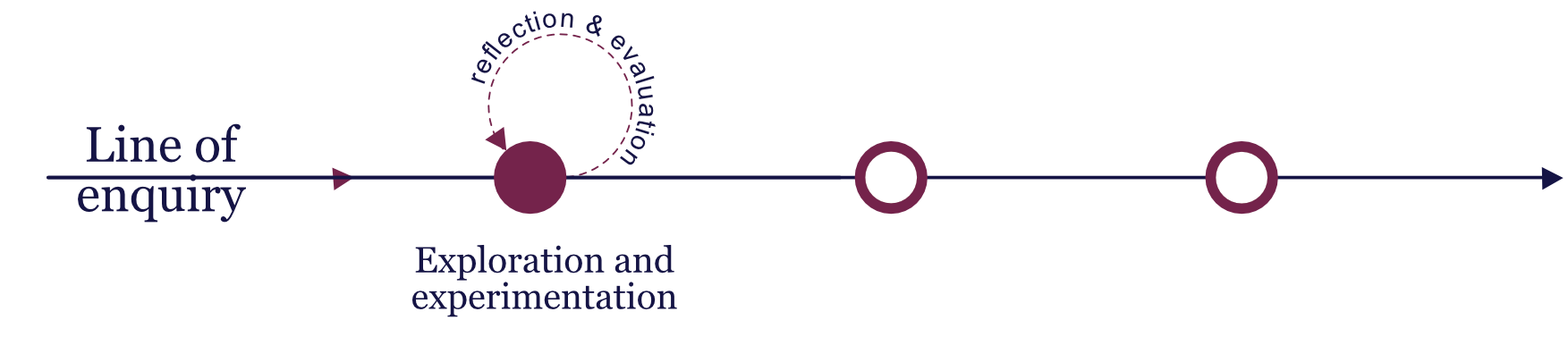
The exploration and experimentation phase is where the design and implementation of an initiative occurs as well as reflection and evaluation. The University of Melbourne Framework for Academic Excellence also provides some guidance to target improvements and frame your exploration. As part of this process, describe and capture the methods employed to undertake the initiative and document any changes over time.
In scoping the case study consider what is achievable within your sphere of influence. This will vary depending on your role, relationship to the subject and capacity. These factors will also inform the timing of the case study. Consider the timing of the case study, what will enable clear testing and evaluation? A semester, a year or longer year period?
Reflecting on and evaluating the outcomes
In designing a case study, set up processes to collect, document and reflect your case study as it transpires. This might include design notes, student work, subject materials, student and peer feedback. Further examples of modes of reflection and evaluation include:
Source | Examples | Things to consider |
|---|---|---|
Yourself | Self-reflection on teaching is a critical, systematic process for evaluating the effectiveness of your instructional methods in promoting student engagement and learning. It typically involves reflective journalling to explore what went well, what did not and potential reasons why. The reflective process also encourages staff to critically examine their own experiences, values and assumptions as educators. | Staff considering how to embed self-reflection in their teaching practice are encouraged to discuss their plans with a mentor, supervisor or BEL+T staff member. Combining self-reflection with other approaches can strengthen your overall suite of evidence. |
Consider using video recording for self-reflection. Recording yourself in a live teaching session, including through automated recording functions, can provide additional opportunities to reflect on your practice. | Staff seeking to record themselves for reflection purposes should discuss their plans with a BEL+T staff member and inform students before recording the session. | |
Students | The End of Subject Survey (ESS) is the University of Melbourne’s standardised approach to collecting student feedback at the individual subject level. Interpreting ESS scores and comments can help guide subject development and inform reflection on subject coordination. To assist with interpreting ESS outcomes, staff are encouraged to review BEL+T’s ESS guidance or speak with a BEL+T staff member. | Not all teaching staff in ABP receive ESS reports directly. The ESS is designed to collect feedback on the subject as a whole; it does not explicitly ask students to evaluate individual tutorials or studios, and results are not disaggregated by tutorial or studio. |
ESS questions are not designed to solicit feedback on specific pedagogical or curricular initiatives within a subject, such as scholarship of teaching and learning projects. Staff seeking more targeted feedback might consider student surveys, interviews, focus groups or in-class observation. | If you intend to collect student feedback for research or potential publication, discuss ethics requirements with BEL+T before collecting data. BEL+T staff can provide guidance on ethical approaches to collecting data on teaching. Tutors should also speak with the relevant subject coordinator. | |
Examples of student work and LMS-based learning analytics can provide evidence of student progress and engagement with the learning experiences or resources you designed. | Consider how these examples relate to intended learning outcomes and the development of relevant skills or knowledge. Explain what the evidence demonstrates and acknowledge any limitations in using it to assess teaching quality or innovation. | |
Peers | Invite a colleague to provide feedback on your teaching. Peer-to-peer feedback can include commentary on your teaching practice through observation, or on teaching artefacts you have produced. | Staff considering this approach are encouraged to contact BEL+T for guidance on arranging and providing formative peer-to-peer feedback. |
Peer evidence can also be obtained through interviews or focus groups with members of your teaching team or industry guests. These discussions typically explore specific teaching initiatives, such as scholarship of teaching and learning projects, in which participants have been involved. | If you intend to collect feedback from staff or guests for research or potential publication, discuss ethics requirements with BEL+T before collecting data. BEL+T staff can provide guidance on ethical approaches to collecting data on teaching. | |
Gather testimonials from colleagues or other evidence showing how they have applied your teaching approaches or resources in their own contexts. | Uptake by peers may occur within ABP, elsewhere at the University or at other institutions. |
(Table 1: Modes of Reflective Practice. Credit: James Thompson).
Recognition
[Teaching Case Study - Recognition, Bridget Keane, DOI: https://doi.org/10.26188/33432556]
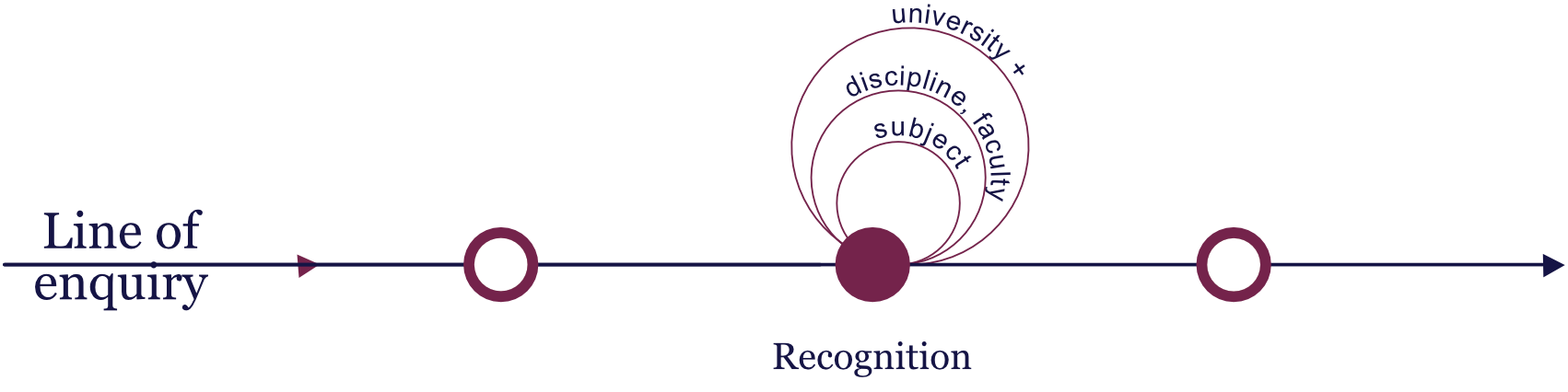
The recognition stage considers how the knowledge developed through exploration and experimentation is shared, adopted and recognised by others. This may involve informing teaching practice within a subject or discipline, across the university or beyond, as well as gaining recognition through awards, grants or peer review. Some examples as a starting point include:
Evidence source | Examples | Things to consider |
|---|---|---|
Independent Experts | Apply for a teaching award or grant to recognise your teaching contributions and/or obtain funding for a teaching initiative. | Awards and grants exist at Faculty and University levels and beyond. Some ABP-related industry bodies also administer external awards and grants. |
Apply for professional recognition or peer review of your teaching through an Advance HE Fellowship or the Melbourne Peer Review of Teaching (MPRT) Program. Both are administered through the Centre for the Study of Higher Education (CSHE), which also offers professional development courses such as the Graduate Certificate in University Teaching (GCUT) and the Certificate of Small-Group Teaching. | Advance HE Fellowships and the MPRT Program offer structured opportunities to reflect on your teaching and have your practice assessed by peers. They can help you articulate your contributions and gather evidence of teaching quality. |
Table 2. Modes of Recognition. Credit: James Thompson.
Dissemination
[Teaching Case Study - Dissemination, Bridget Keane, DOI: https://doi.org/10.26188/33432556]
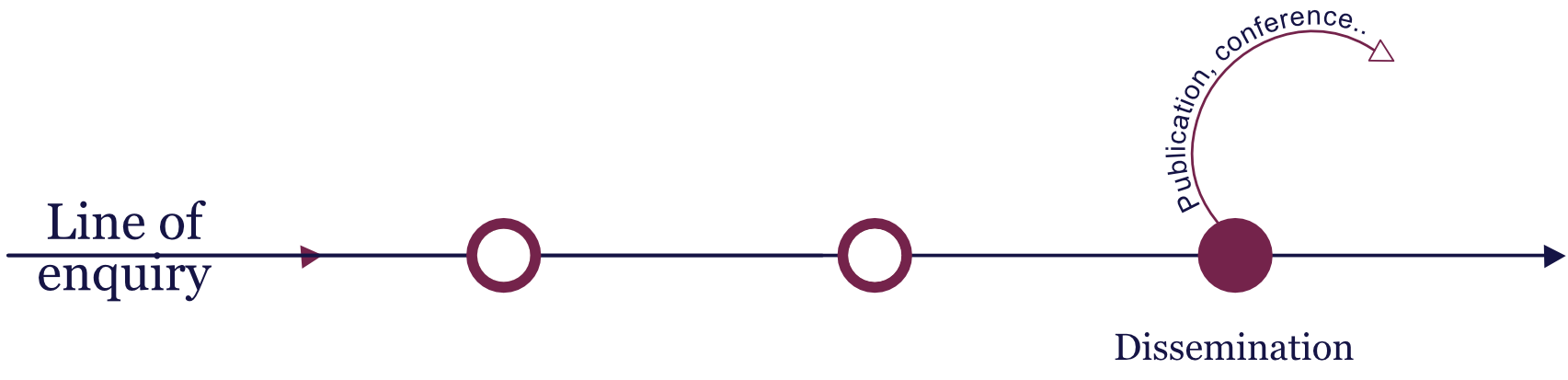
The dissemination stage considers how knowledge developed through the case study can contribute to broader scholarship on teaching and learning. This involves sharing teaching approaches, findings and reflections through publication or other peer-reviewed outputs, including creative works and non-traditional research outputs.
Contribute to scholarship on teaching & learning
Investigate further dissemination through Scholarship of Teaching and Learning (SoTL). SoTL includes research-based projects on teaching (Boyer, 1999 that critically reflect on and aim to improve teaching practice in a specific discipline (Coleman, 2023). This discipline focus (Huber, 2023) differentiates SoTL from education research. SoTL “invites educators to approach teaching not as a set of routines or obligations, but as a reflective, evidence-informed, and intentional practice.” (Rahman et al, 2026)
The University offers a range of support for SoTL through the Melbourne Centre for the Study of Higher Education (Melbourne CSHE) and a dedicated library guide.
NTROs
Dissemination can also include non-traditional research outputs (NTROs), such as creative works, exhibitions and performances that communicate research insights.
Further guidance on developing NTROs from teaching case studies is coming soon.
Teaching Case Studies and SoTL
[Teaching Case Study and SoTL, Bridget Keane, DOI: https://doi.org/10.26188/33432556]
The case study framework and process provides a scaffold for the development along a gradient from teaching practice (informed by own experiences) to scholarly teaching (informed by scholarship) to the Scholarship of Teaching and Learning (contributing to scholarship).
References
Boyer, E. L. (1990). Scholarship reconsidered : priorities of the professoriate. Carnegie Foundation for the Advancement of Teaching.
Coleman, K., Uzhegova, D., Blaher, B., & Arkoudis, S. (Eds.). (2023). The Educational Turn: Rethinking the Scholarship of Teaching and Learning in Higher Education. Springer Nature.
Huber, M. T., & Morreale, S. P. (2023). Disciplinary Styles in the Scholarship of Teaching and Learning: Exploring Common Ground (1st ed.). Routledge. https://doi.org/10.4324/9781003444268