Threshold
Threshold
Athanasios Tsakonas
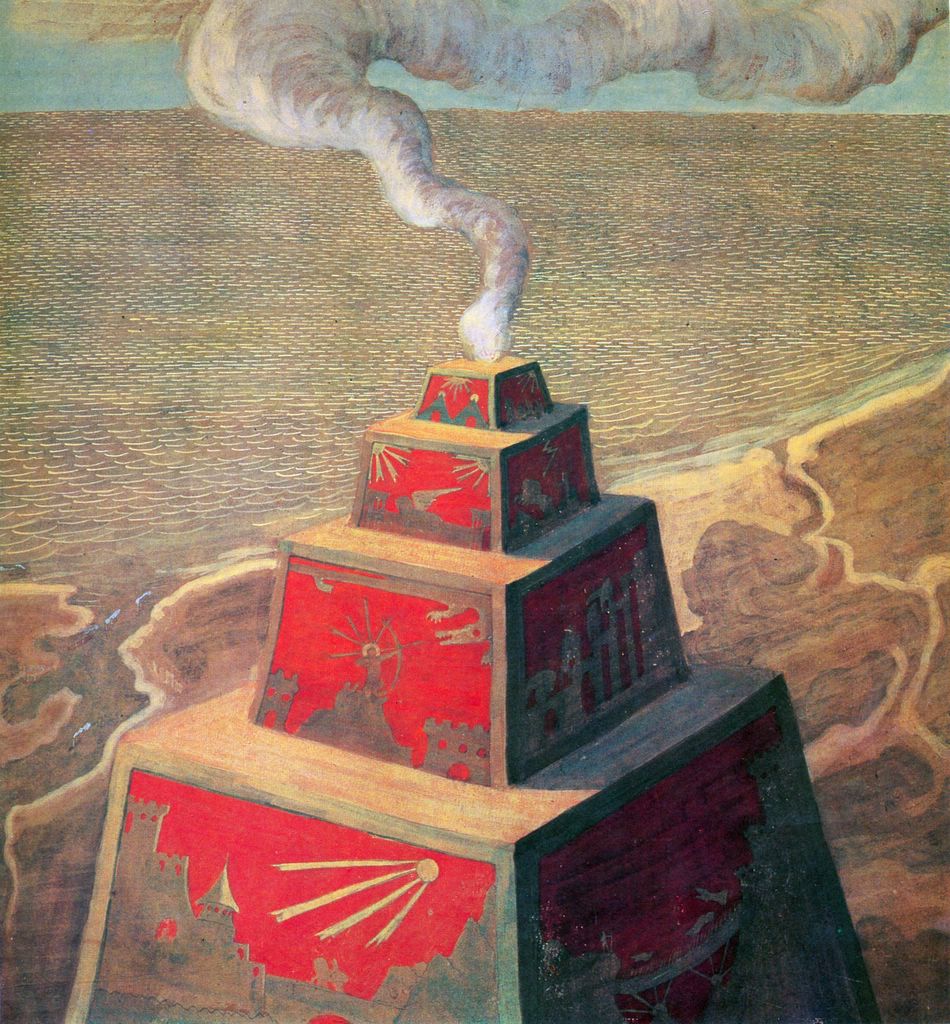
Studio Description
“Not everything that is faced can be changed, but nothing can be changed until it is faced.” -James Baldwin, “As much truth as one can bear” New York Times, 14 January 1962, p.11.
Victoria’s Shrine of Remembrance is arguably the most prominent commemorative structure in Melbourne. Constructed in 1934 through strong community support to honour the sacrifices of thousands of servicemen and women during the Great War, this imposing architectural landmark is a profound socio-cultural symbol reflecting the State’s colonial-European heritage. This is reflected in its position as focal point for annual commemorative anniversaries such as Anzac and Remembrance Day.
Yet the Shrine’s authority aesthetic and heritage identity—an invisible blueprint formed through shared traditions, values, beliefs and history—has long inhibited access and participation for many Indigenous service personnel, their families and communities, unwilling to cross the threshold onto its grounds. This studio seeks to redress this sense of cultural alienation through a design methodology and approach that chronicles the missing, difficult legacy of the colonial frontier wars. It recognises that, historically, Aboriginal communities suffered untold trauma and violence while resisting settler colonialism and defending Country, and that the Shrine of Remembrance, Victoria’s war memorial, needs to integrate the frontier wars into its permanent exhibition strategy.
Using the example of the heritage-listed national memorial site to the victims of the Myall Creek massacre in NSW, unveiled in 2000, the studio asks students to design an equivalent response for Victoria. Myall Creek is considered the first place of reconciliation, where perpetrators were brought to justice, offering important lessons on how reparations might be advanced. To also consider the implications of the recently tabled Yoorrook for Justice Report which chronicles the discriminatory allocation of the Soldier Settlement Schemes omitting Indigenous service personnel and their families. These two intertwined lines of inquiry address different interpretations both of war and of Country. The studio’s specific focus thus covers the effects and consequences of the frontier wars on Aboriginal communities, the need to recognise conflicts internal to Australia as war memories, and of Aboriginal service in defence of Australia.
This studio asks you to: Explore the idea of Country both as relational and symbiotic extensions of a lived environment and a broader idea of national territory. Focusing on reconciliation as its central theme, to demonstrate how placemaking can engender social and cultural recovery. Using the far northern plaza of the Shrine of Remembrance as the design threshold, to create a courtyard and dedicated interpretive space - imagined as a medium scale facility and entry point to the Shrine via a reconciliation precinct.
Studio Outcomes
When developing a design strategy and material and spatial vocabulary, you are encouraged to seek inspiration from the histories and characteristics of indigenous memorials such as the Myall Creek Massacre and Memorial Site in NSW, Standing by Tunnerminnerwait and Maulboyheenner in Melbourne, For our Country in Canberra, and to recognise how they address their site’s difficult histories.
In proposing a parallel response in Victoria, the site is in the far northern plaza of the Shrine of Remembrance grounds. You are asked to design sympathetically, respecting the visual authority of the Shrine and its surrounding heritage-protected landscape. Furthermore, as the site is located along the main ceremonial thoroughfare onto the Shrine’s grounds, you are also asked to consider a multiplicity of intersecting narratives and design intentions. Through the complexity of the urban interface and this urban edge connection with St Kilda Road and nearby tram stops, along with the programmatic pressures that accompany it (commuters, public, commemoration attendees), the ‘Threshold’ project marks an important statement for the future of reconciliation in this state.
Participation in a full-day field trip in Week 1 [Tues 3 March] to Tynong Quarry, the Cornucopia Museum, Nar Nar Goon and Koo Wee Rup in eastern Victoria, as part of the background historical, cultural, and social context of this project, is compulsory. All travel costs are covered. Students to provide for their meals and drinks.
Studio Leader/s
Athanasios Tsakonas is a practising architect, builder, and writer with an extensive professional career spanning Australasia, the Middle East, and Southeast Asia. A partner in the Singapore-based consultancy Tan + Tsakonas Architects LLP, he also runs a small design & build studio in Melbourne. He holds a Bachelor of Architectural Studies and Bachelor of Architecture from the University of Adelaide and a Master of Arts (Urban Design) from the National University of Singapore.
Athanasios’s research interests include investigating the spatial impact war cemeteries and memorials have upon commemoration and remembrance practices, and the ‘architects of conflict’. His book In Honour of War Heroes: Colin St Clair Oakes and the Design of Kranji War Memorial was published by Marshall Cavendish in 2020. https://www.dymocks.com.au/in-honour-of-war-heroes-by-athanasios-tsakonas-9789814893367
Athanasios has taught Master of Architecture Studio C from 2023-25, and Design Thesis studio at the Melbourne School of Design. In 2024, he organised the exhibition Bringing Them Home comprising selected student works from his previous studios (2023-24) at Cardinia Cultural Centre, Pakenham. He is guest co-curator of the Eucalypts of Hodogaya major exhibition at Victoria’s Shrine of Remembrance (Aug 2025- July 2026), and co-curating the travelling version for Japan, opening at the Yokohama Archives of History Museum on 25 April 2026.
Readings & References
Yoorrook Justice Commission, 2025. ‘How the colonisers stole Country’, Yoorrook for Transformation: Third Interim Report Vol. 2, chapter 7, pp.47-97. https://cdn.craft.cloud/06ad3276-b3d9-4912-bcbb-37795aade9a8/assets/documents/YoorrookForTransformation_Third_Interim_Report-Volume2_Accessible.pdf
Clarke, Ian. 1995. Scars in the Landscape, Canberra: Australian Institute of Aboriginal and Torres Strait Islander Studies Report Series http://nationalunitygovernment.org/pdf/2014/IanDClark-Scars_in_the_landscape.pdf.pdf
Friends of Myall Creek, Stage 3: educational & Cultural Centre, https://myallcreek.org/cultural-centre/
Reynolds, Henry. 2019. “Frontier Conflict and the War Memorial” Meanjin, Autumn, https://meanjin.com.au/essays/frontier-conflict-and-the-war-memorial/
---- [2013] 2022. Forgotten War, Sydney, New South Publishing.
----- 2022. “Recognising the warriors: Henry Reynolds on the war memorial’s surprising change of direction, The Conversation, 6 October, https://theconversation.com/recognising-the-warriors-henry-reynolds-on-the-war-memorials-surprising-change-of-direction-191861
Quilty, Ben. “Painting Myall Creek”, National Gallery of Australia, https://nga.gov.au/on-demand/ben-quilty-painting-myall-creek/
University of New Castle, Colonial Frontier Massacres, Australia, 1788-1930, https://c21ch.newcastle.edu.au/colonialmassacres/map.php
Shrine to Sea: Creating a boulevard for Melbourne, connecting Domain Gardens to Port Phillip Bay along Albert and Kerferd roads https://www.environment.vic.gov.au/shrine-to-sea
Pascoe, Bruce. 2007. Convincing Ground: Learning to fall in love with your country, Aboriginal Studies Press.
Gardner, Peter. 1993. Gippsland Massacres: the Destruction of the Kurnai Tribes, 1800–1860, Ngarak Press
Birch, Tony. 1992. “Nothing Has Changed: The Making and Unmaking of Koori Culture”, Meanjin, Winter. https://meanjin.com.au/essays/nothing-has-changed-the-making-and-unmaking-of-koori-culture/
Tonkin, Daryl and Carolyn Landon, 2000. Jackson's Track: Memoir of a Dreamtime Place, Penguin Group Australia.
Scates, Bruce. 2016. The last battle: soldier settlement in Australia, 1916-1939, Cambridge University Press.
Schedule:
Tuesday 9am-3pm
Off-site Activities:
Tynong, Tynong North, Nar Nar Goon, Koo Wee Rup, Tooradin
Need enrolment assistance?
Stop 1 provides enrolment and other support to Bachelor of Design, Bachelor of Environments and Melbourne School of Design students.