Material Metaphors
Material Metaphors: A Grand Escape
Tim Jones
Studio Description
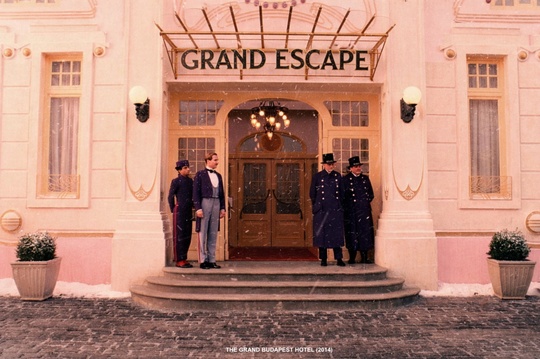
Inspired by the movie “The Grand Budapest Hotel”, Material Metaphors: A Grand Escape investigates architectural materiality as a narrative and sensory medium. Set within two heritage buildings at 255–259 Albert Street, Brunswick, the studio proposes an adaptive reuse of the site into a boutique hotel celebrating the artistry of food. Drawing parallels between the precision of culinary craft and architectural composition, students will explore how materials, textures, and spatial sequences can evoke memory, identity, and sensory richness. Emphasizing food as both art and cultural expression, the studio foregrounds design as an act of both composition and transformation—honoring site history while imagining new futures.
Students will design a compact mixed-use boutique hotel that:
- Showcases the crafted experience of a chosen edible product;
- Accommodates its makers and short-stay visitors;
- Embeds social and cultural significance through spatial storytelling.
- Focusing on the "ingredients" (materials) and "plating" (narrative), projects will merge pragmatic adaptive reuse strategies with poetic, systems-based sustainability.
Studio Outcomes
The studio encourages students to develop a thoughtful, multi-disciplinary design approach that engages materiality as both a conceptual and environmental concern. Working across macro, meso and micro levels, students will learn to articulate spatial ideas through rigorous material testing, iterative development, and critical reflection—linking sensory experience with sustainability and adaptive reuse.
Through two core design projects—a conceptual visual merchandising narrative and a compact mixed-use boutique hotel—students will explore the intersection of food as art and architecture as craft. These projects aim to honour the cultural, social and sensory significance of food, while embedding its making and sharing into the architectural fabric.
The studio supports the development of technical proficiency in response to real-world constraints such as structure, servicing, and heritage context, while nurturing conceptual depth and narrative richness. Strong emphasis will be placed on crafted representation, including drawings, crafted physical modelling and graphic storytelling through elegant and curated presentations.
Studio Leader
Tim Jones
Has 14 years of experience working in architectural practice. Ranging from small to large projects. Delivering projects from Concept to Completion, including Residential, Commercial, Civic, Education, Aged Care and Heritage. The facilitation of educating all team members throughout the process is what has driven Tim, so all team members can feel a valid contribution to the project. As a senior mentor at FK, to also actively engages with graduates regularly to assist in their development into architectural practice.
Readings & References
Burra Charter
https://australia.icomos.org/publications/burra-charter-practice-notes/
Deliciously Designed : How design theory is applied to food production
Food, Architecture and Experience Design
Fisker, A & Olsen, T 2008, ‘Food, Architecture and Experience Design’, Nordic Journal of Architectural Research, vol.20, no. 1, pp. 63–74.
Schedule:
Tuesday 3pm-9pm
Off-site Activities:
TBA
Need enrolment assistance?
Stop 1 provides enrolment and other support to Bachelor of Design, Bachelor of Environments and Melbourne School of Design students.