Vernacular Spectacular
Vernacular Spectacular: Ecologies for Living
Nancy Ji
Studio Description
Melbourne is a city shaped by waves of expansion, where housing has often followed extractive models: resource-intensive and reliant on centralised systems of energy, water, and food. Yet hidden within this sprawl are seeds of hope: garden cultures, DIY building practices, native ecologies, and diverse ways of living. What if we could start afresh and rethink not only what we should build, but also how to live?
The studio asks students to speculate on a new vernacular - a way of building and living that works with soil, sun, water, and multi-species for the present day. Drawing on the traditional wisdom of vernacular architectural knowledge as well as more recent movements such as solarpunk and permatecture, the studio considers how domestic architecture can be reimagined as a living system. Each student will design a small house and garden. These are not only for humans and non-humans to dwell but also for growing, making, sharing, and co-existing.
Studio Outcomes
Students will be allocated neighbouring sites in an archetypal Melbourne neighbourhood. We will begin with precedent studies on vernacular and contemporary projects from Australia and beyond. The studio focuses on material ecologies and alternative construction methods, encouraging low-carbon approaches and the use of recycled, waste-derived, or biodegradable materials. Students are expected to consider the full life cycle of materials: Where do they come from? Where do they go? How might they return to the soil at the end of their life?
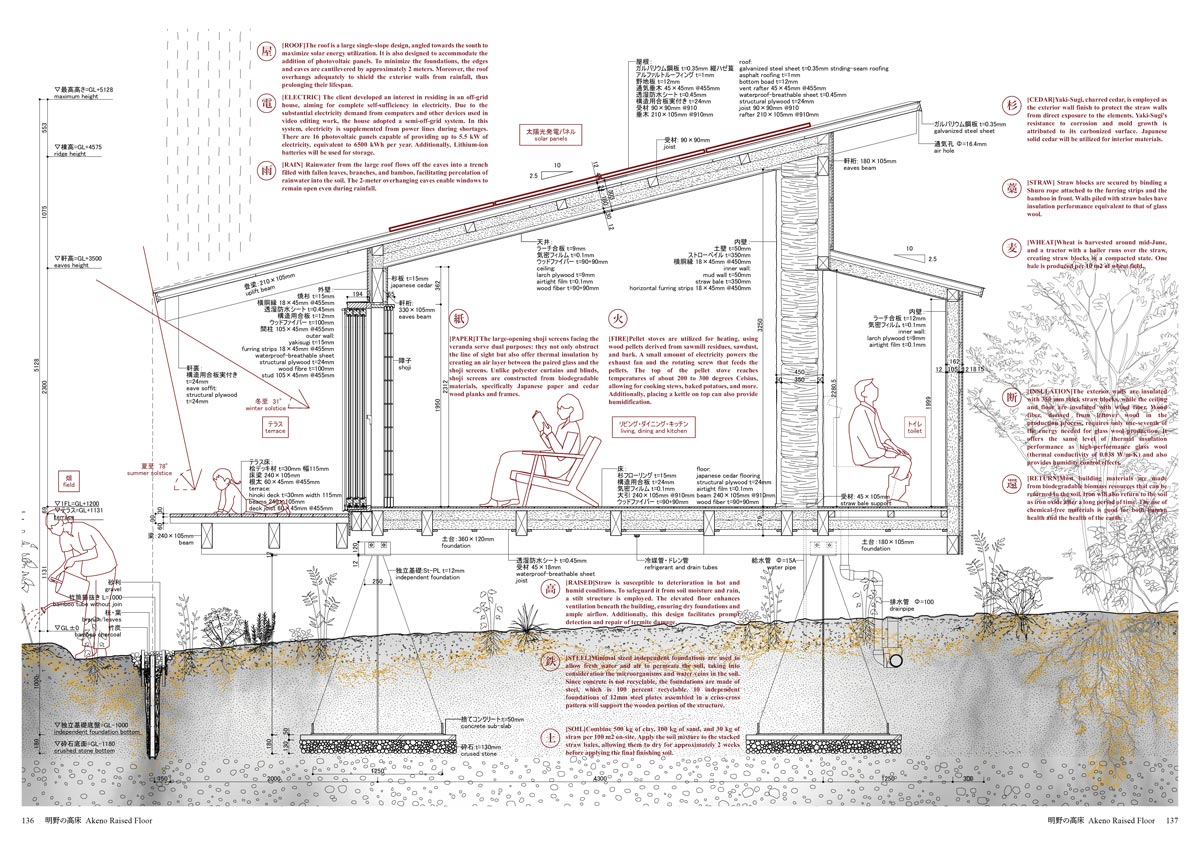
Graphic representation is a key focus in this studio. All students will produce a large-format section drawing communicating materiality, energy cycles, and systems, as well as a series of models throughout the semester.
Studio Leader/s
Nancy Ji is a designer, academic, and lecturer in Architectural Design at the Faculty of Architecture, Building and Planning at the University of Melbourne. Her research explores the intersection of architecture and culture across Japan, China, and the broader Asia-Pacific region, with a focus on contemporary practice and community-engaged design.
An experienced educator, Nancy has taught at the MSD since 2015 across history and theory and undergraduate and graduate design studios. She is a registered architect and has worked with firms including Bates Smart Architects in Melbourne and Kengo Kuma and Associates in Tokyo.
Readings & References
- Bekkering, J, Nan, C, Schroder, T, (Eds). Circularity and Biobased Materials in Architecture and Design, 2021.
- Center for Industrial Architecture.Biogenic Construction: materials architecture tectonic. Available from: https://royaldanishacademy.com/news/ny-bog-udforsker-biogent-byggeri
- Hartman, H & Williams, J. Materials: An environmental Primer. RIBA Publishing, 2024.
- Lewis, P, & Tsumaki, M & Lewis, D. Manual of Biogenic House Sections. Oro Editions, 2022.
- Material Cultures & D, Amica, Material Reform. Mack Books, 2022.
- Nousaku, F and Tsuneyama, M. Urban Wild Ecology. Toto, 2024.
Schedule:
Friday 12pm-6pm
Off-site Activities:
CERES
Need enrolment assistance?
Stop 1 provides enrolment and other support to Bachelor of Design, Bachelor of Environments and Melbourne School of Design students.