Design Studio C
Living Island
Ben Waters
| Studio Structure | |
|---|---|
| Is the site determined? | Yes |
| Is the program determined? | Yes |
| Is the user(s) determined? | No |
| Is the concept determined? | No |
| Is the approach determined? | Yes |
Studio Description
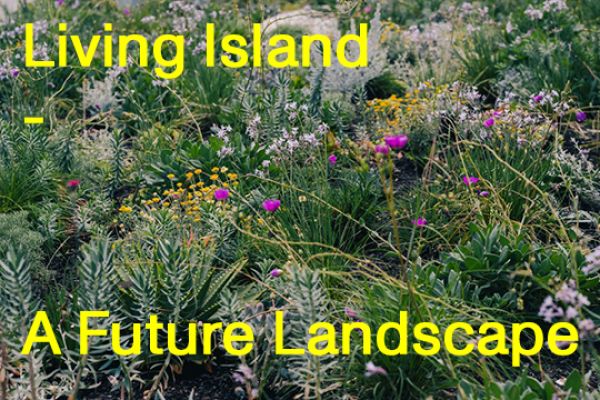
A future landscape. Plants and buildings in relation. Site renewal and ecological repair. Community spaces, native gardens, pathway infrastructure. Designing environments through looking and making. Technical and resilient. Simple, open and covered structures. Circularity and reuse.
Studio Outcomes
This semester's iteration of the studio turns to the relationship between plants and buildings - designing architecture and landscape as a single, connected project - hosted within the volcanic crater island at Tower Hill – Koroitch. This is a landscape charged with layered histories: abundance, culture, human and ecological violence, and more recently, regeneration.
A small gem of a building sits at the centre of the island: a Robin Boyd–designed, tent-like structure with a roof sprinkled in scoria stones. Originally conceived as a museum space, the building feels almost portable, as if it could be packed up and moved, yet at the same time it is deeply grounded in its geological context.
Our site stretches from the Boyd Visitor Centre, through the existing picnic and car parking areas, along the key pathways, and encompasses the existing Lava Tongue Boardwalk. The existing site infrastructure across this stretch is in need of assessment and renewal. The redesign of this landscape into a connected, layered community garden - bringing together community spaces, native gardens, a workshop, new park path infrastructure, and the adaptive reuse of the Boyd Visitor Centre as a single, designed environment - is the key studio project for the semester.
Through this studio, you will design through an ecological lens, using geological and water systems as generators of spatial planning, and consider architecture's relationship to plants, seasons and regeneration. The work will centre on three parallel design projects:
- Site Assessment and Ecological Mapping
- The Connected Community Garden - community spaces, native gardens, workshop, and park path infrastructure, including the Lava Tongue Boardwalk
- Adaptive Reuse of the Boyd Visitor Centre
First Nations seasonal calendars are understood as event cycles rather than fixed points in time. The migration of eels, a prevailing wind, the emergence of insects — these are signals that the environment is shifting into a new cycle. Your projects will acknowledge and express these temporal layers and engage with community groups, ecological systems, contemporary cultural authors, and Indigenous perspectives to inform your proposal.
In the studio you will learn new ways to observe, map, and plan site conditions. Through workshops, we will work collectively on a studio research project, building models of the site's geological and water systems and their relationship to planting and built form. Close study of historical and cultural references - through drawing and physical model-making - will be foundational to your design work later in the semester.
Your final projects will be developed individually, but we operate as a studio collective. Through a field trip to Tower Hill to meet with Traditional Owners, visits to Burnely’s Living Labs, Robin Boyd's Walsh Street House, and lectures from visiting architects, ecologists, and historians, we will develop a shared understanding of the cultural, ecological, and architectural context of the studio.
Past and on-going studio partners and collaborators include Burnley Living Labs, Worn Gundidj Aboriginal Co-Operative, Robin Boyd Foundation, Prof. Philip Goad, Lovell Chen, Playte, Nohla, and many other special guests.
Studio Leader
Ben Waters is an architect and founder of Waters Architects, a regional based architecture practice working on community, housing and cultural projects. Ben also leads S-I Projects – a design agency working at the intersection of technology, ecology and cultural heritage. Ben is a Creative Practitioner – Educational Fellow at MSD.
Readings & References
- First Knowledges Plants - Past, Present and Future - Zena Cumpston, Michael-Shawn Fletcher & Lesley Head
- Regions, histories and futures – Emily Potter
- A Geomorphological and Hybrid Approach – Nigel Bertram
- Nature Without Ecology - A review of Piet Oudolf at Work - Rosetta S. Elkin
- Robin Boyd – Spatial Continuity - Mauro Baracco and Louise Wright
Schedule:
Thursday 3pm - 6pm
(30 minute break)
Thursday 6.30pm - 9.30pm
Off-campus Activities:
6th of August - Day trip to Tower Hill site in Warrnambool
Need enrolment assistance?
Stop 1 provides enrolment and other support to Bachelor of Design, Bachelor of Environments and Melbourne School of Design students.