Design Studio E
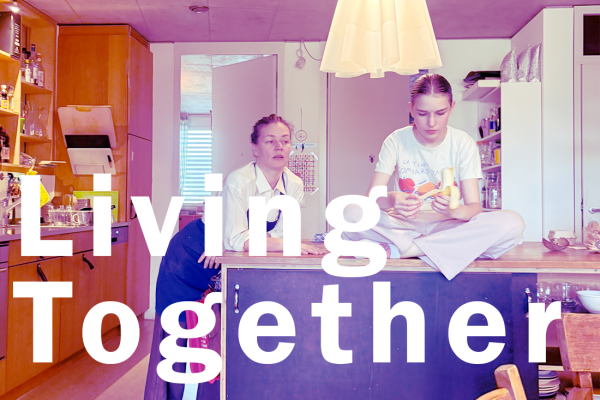
Abitare Insieme - Living together
Lisa Garner, Cam Gordon & Luke Martelli
| Studio Structure | |
|---|---|
| Is the site determined? | Yes |
| Is the program determined? | Yes |
| Is the user(s) determined? | No |
| Is the concept determined? | No |
| Is the approach determined? | No |
Studio Description
There is a housing crisis. But there is also a crisis of housing imagination. For decades, Australian housing has been designed around fixed household types: the nuclear family, the individual, and little in between. Yet our lives are increasingly lived differently. We live longer. We separate. We care for ageing parents. Adult children remain at home for longer. Friends become family. As housing becomes increasingly unaffordable, living together is becoming less a lifestyle choice than an economic necessity. Households change. Our housing rarely does.
Abitare Insieme – Living Together builds upon research into multigenerational living and everyday networks of care undertaken across Italy and Europe to ask a broader question: how might housing better support changing patterns of living together? Working within Melbourne's evolving medium-density planning framework, students will rethink housing not as a fixed product, but as an adaptable setting for relationships, care and everyday life over time.
Studio Outcomes
Working from a shared suburban site, students will develop a speculative medium-density housing proposal within Melbourne's emerging Mid-Rise Design Code and Housing Choice & Transport Zone planning framework. The recent planning reforms present a unique opportunity to rethink suburban housing beyond conventional apartment models and explore new forms of living together.
Through precedent research of a broad spectrum of case studies, and through iterative design, students will investigate how architecture can respond to changing patterns of household formation, care, ageing and community while engaging with contemporary planning, housing and urban policy. The studio will encourage rigorous testing of spatial, social and environmental ideas across multiple scales, from the individual dwelling to the shared spaces that shape everyday life.
Final outcomes will include a resolved architectural proposal supported by drawings, physical and digital models, visualisations, and a clear design narrative articulating each project's social proposition and architectural strategy.
Studio Leader
Lisa Garner is an architect and Director of LIAN, a Melbourne-based architecture practice focused on housing and community-based projects. The practice's work spans medium-density residential, social housing and adaptive reuse, with a focus on architecture that is simple, adaptable and resource-conscious. Alongside practice, Lisa has taught at the University of Melbourne, with a particular focus on housing, urbanism and suburban futures through the Infill Housing design studio (2022–2024).
In 2026, she was an Affiliated Fellow at the American Academy in Rome, where her research project Abitare Insieme – Living Together investigated how housing can better support changing patterns of living, care and community.
Cameron Gordon and Luke Martelli, architects at LIAN Architects, will co-lead the studio, bringing experience across housing design, architectural practice and teaching.
Readings & References
Books
- Boudet, D. (Ed.). (2017). New Housing in Zurich: Typologies for a Changing Society. Park Books.
- Coccia, E. (2024). Philosophy of the Home: Domestic Space and Happiness. Penguin.
- Ebner, P., Herrmann, E., & Roellbacher, R. (2009). Typology+: Innovative Residential Architecture. Birkhäuser.
- Habraken, N. J. (1972). Supports: An Alternative to Mass Housing. The Architectural Press.
- Plocková, J. (Ed.). (2024). Come Together: The Architecture of Multigenerational Living. Park Books.
Research Articles & Reports
- AHURI. (2022). Alternative Housing Models for Precariously Housed Older Australians.
- Easthope, H., Liu, E., et al. (2017). Changing Perceptions of Family: A Study of Multigenerational Households in Australia.
- Liu, E., Easthope, H., & colleagues. Multigenerational Family Living: Evidence and Policy Implications from Australia.
- Crabtree, L., et al. (2021). Impediments and Opportunities for Growing the Cooperative Housing Sector: An Australian Case Study.
Planning & Reference Documents
- Future Homes Program
- Mid-Rise Code & Design Guide
- Train and Tram Zone Activity Centres Program
- YIMBY Melbourne
Off-Campus Activities:
Site Visit - Footscray
Date TBC
Schedule:
Tuesday 12pm - 3pm
(30 minute break)
Tuesday 3.30pm - 6.30pm
Need enrolment assistance?
Stop 1 provides enrolment and other support to Bachelor of Design, Bachelor of Environments and Melbourne School of Design students.