Animal, Vegetable, Mineral : Architecture in the Anthropocene
Animal Vegetable, Mineral: Architecture in the Anthropocene
Virginia Mannering
| Studio Structure | |
|---|---|
| Is the site determined? | No |
| Is the programme determined? | No |
| Is the user(s) determined? | No |
| Is the concept determined? | Yes |
| Is the approach determined? | Yes |
Studio Description
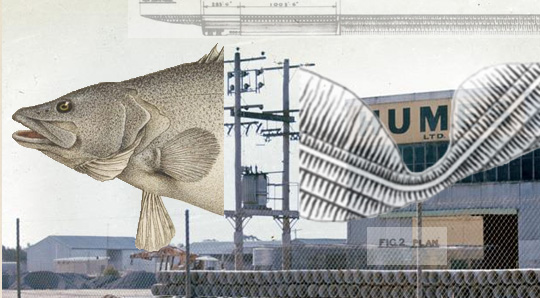
We live in the Anthropocene: a contested term describing the current geological epoch in which human activity has become the dominant force shaping the Earth’s climates and ecologies. The construction industry is a major actor in this transformation. Leaping off from this, ‘Animal, Vegetable, Mineral’ invites students to critically examine architecture’s entanglement in these systems, and to imagine alternative modes of practice.
Across the semester, students will develop an original architectural project, whilst considering a broadened field of ‘clients’ and concerns: not only human users, but critters, ecologies, atmospheres, waters, waste streams, and geological systems.
Students may select a site and program aligned with their interests and ethics. Projects could engage with:
● Material extraction, reuse, or repair
● Disturbed, contaminated, or post-industrial sites
● Multispecies or more-than-human habitation
● Soil, water, waste, or atmospheric systems
● Climate adaptation or speculative futures
For students unsure about site or program, the studio exercises + studio leader will actively support the development of a focused and achievable direction.
Studio Outcomes
Through guided exercises, suggested readings, and discussions, students will:
- Develop a self-authored bried (or co-develop with guidance from the studio leader)
- Select (or refine) an appropriate site
- Define a program or spatial strategy that responds to the theme
- Work across multiple scales (e.g. from territorial and ecological mapping to architectural detail)
Studio exercises will support:
- Site analysis and theoretical positioning
- Ethical and positional reflection
- Material and systems thinking
- Representational experimentation
Projects are expected to move between planetary and hyperlocal scale, demonstrating how architectural decisions participate in broader environmental systems.
By semester's end, students will produce:
- A resolved architectural proposal
- A clearly articulated conceptual position
- Multi-scalar drawings and representations
- A project that demonstrates ambition, intellectual clarity, and design rigour.
Studio Leader
Virginia Mannering is a Lecturer in Architectural Design at the Faculty of Architecture, Building and Planning, University of Melbourne. Her research examines the way the construction of the settler-colonial city has reshaped landscapes, the built environment and its relationships with the Anthropocene, and the flows of construction materials across time and space.
www.virginiamannering.com
Readings & References
Anna Tsing et al., Feral Atlas (Redwood City: Stanford University Press, 2021),http://doi.org/10.21627/2020fa. https://feralatlas.org/
Daniel A. Barber, “Drawing the Line,” Places Journal, January 2024. https://doi.org/10.22269/240130 https://placesjournal.org/article/drawing-the-line-architecture-in-the-anthropocene/#0
Max Liboiron, “Pollution Is Colonialism” (Durham: Duke University Press, 2021),
Kim Förster, ed., Environmental Histories of Architecture (Canadian Centre for Architecture, 2022),https://www.librarystack.org/environmental-histories-of-architecture/.
Hannah le Roux and Gabrielle Hecht, “Bad Earth Architecture,” e-flux architecture, accessed September 7, 2020,https://www.e-flux.com/architecture/accumulation/345106/bad-earth/.
Katrin Klingan, “Textures of the Anthropocene : Grain, Vapor, Ray” (Cambridge, MA : The MIT Press, 2015).
.
Schedule:
Thursday 10am-4pm
Need enrolment assistance?
Stop 1 provides enrolment and other support to Bachelor of Design, Bachelor of Environments and Melbourne School of Design students.