Design Thesis
RETHINKING SUBURBIA
Place, Ecology and Housing in Melbourne’s growth areas
Dr Delia Teschendorff
“The most significant response to anxiety about population and density is to emphasise the importance of design”.
Prof. Peter Newman, AO, Environmental Scientist
| Studio Structure | |
|---|---|
| Is the site determined? | Yes |
| Is the program determined? | Yes |
| Is the user(s) determined? | Yes |
| Is the concept determined? | No |
| Is the approach determined? | No |
Studio Description
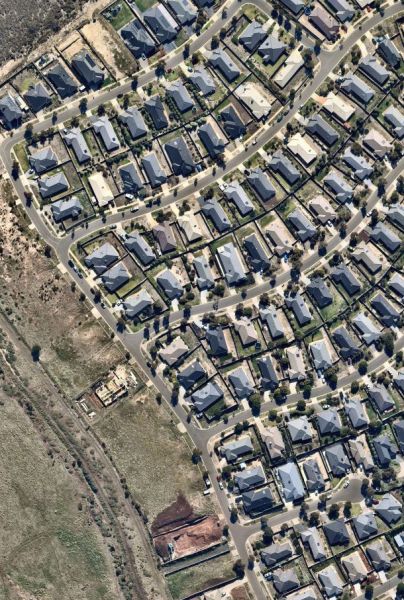
Addressing deep concerns about climate change and the damaging environmental impact of Melbourne’s rapid urban expansion, this studio will investigate alternative subdivision and housing approaches, using a real-life greenfield site, located in one of Melbourne’s growth corridors.
Greenfield suburban expansion is often a process of erasure, treating sites as a blank slate to be overlayed with a network of new roads, paths, and suburban lots for homogenous low-rise housing. In this studio greenfield sites are not considered ‘empty,’ rather, recognising layered, deeper histories, ecologies, and First Nation narratives.
The detailed analysis of an actual site will be used to inform a more enriched greenfield subdivision design approach, exploring more liveable, culturally responsive, sustainable solutions.
Studio Outcomes
This is an ambitious studio that challenges the status quo and takes the approach that growth areas are sites of opportunity for new and alternative forms of suburban development with the potential to play a critical role in the future shape of our cities. More flexible, regenerative, higher-density forms of suburban development are needed to ‘stop the sprawl’ and mitigate further expansion.
Over the semester students will develop a research-led project that traverses a range of scales from the macro: exploring and testing broader master planning design considerations and subdivision approaches for the overall site, to the micro: an exploration of flexible, diverse ranges of housing models, including spatial and siting strategies. The housing will be designed for future residents from a range of socio-economic and diverse cultural backgrounds, including First Nations, elderly and young families, with a diverse range of needs. Students will be encouraged to challenge traditional settlement patterns and investigate new forms of sustainable, more culturally responsive and regenerative suburban development.
- Learn the importance of detailed analysis and explore precedents to your work.
- Investigate environmental and climate responsive design, which considers the landscape and resources.
- Investigate medium density housing typologies including flexible and adaptable household types.
- Understand the planning, policy, and economics of current greenfield practice.
- Understand concepts of Caring for Country, and Connecting to Country, in a suburban context, and ways to design architecture that is for and of place.
Studio Connection to Practice
This is a live practice project. Students will have the opportunity to undertake on-site research and fieldwork, interact with key stakeholders, and gain a deeper understanding of First Nation perspectives.
Studio Leader
Delia is director of Delia Teschendorff Architecture Studio, an award winning Naarm/Melbourne practice founded in 2009. She is a Fellow of the Australian Institute of Architects and a Lecturer in Architectural Design, Creative Practitioner at Melbourne School of Design, Melbourne University.
Delia recently completed a practice based, design research PhD at Monash University. Her research focus examined the need for more climate resilient, alternative housing and subdivision approaches for Melbourne’s growth areas.
For more info:
https://www.deliateschendorff.com.au/
Instagram: @deliateschendorff
Readings & References
Studio sessions will include a series of invited guest talks. Weekly tasks and readings will be provide
Schedule:
Tuesday 9am - 11am
(2 hours break)
Tuesday 1pm - 5pm
Off Campus Activities
Site Visit in Sunbury
Date TBC
Need enrolment assistance?
Stop 1 provides enrolment and other support to Bachelor of Design, Bachelor of Environments and Melbourne School of Design students.