MATERIAL TRACES
MATERIAL TRACES
Uncovering Invisible Footprints of Goods and Cultures
Ana Abram
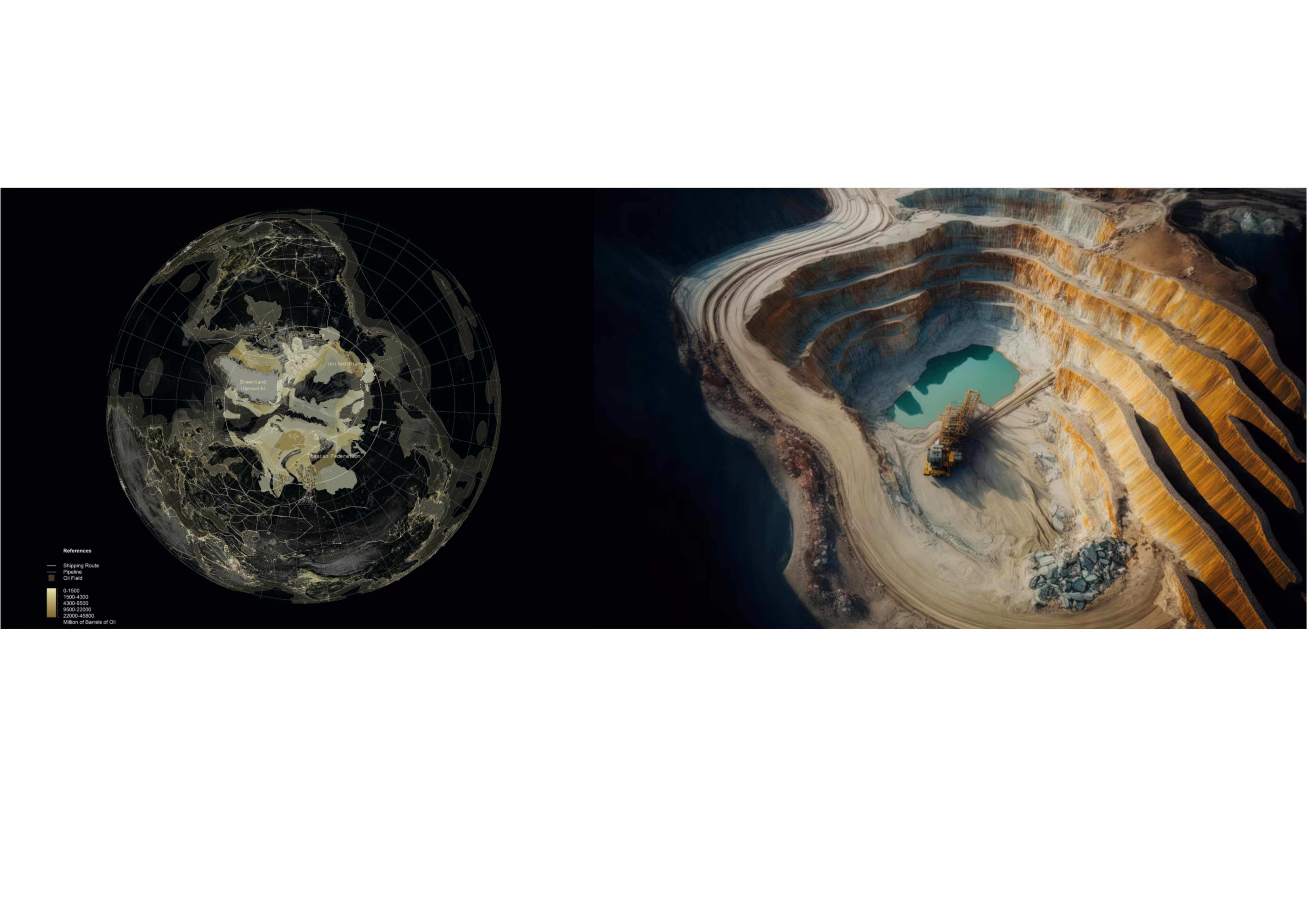
Studio Framing
Melbourne's metropolitan expansion is materially inseparable from the landscapes it consumes. Each suburban estate, freeway, and transit corridor is built from basalt aggregate, clay, and crushed hornfels, drawn from quarries that sit, increasingly, within the very growth corridors they supply. The question is no longer whether extraction and urbanisation are connected. It is how design can move beyond mitigating damage toward actively restructuring material flows, challenging extractivist logics, and proposing spatial systems grounded in local matter, knowledge, and care.
The lands now occupied by Melbourne's peri-urban quarries were, for tens of thousands of years, managed by the Wurundjeri and other Kulin Nation peoples through reciprocal land stewardship: seasonal burning that maintained grassy plains, yam daisy cultivation that regenerated soils, and trading networks that moved materials across vast distances without ecological destruction. These practices changed with industrial extraction, which created massive voids within the landscape and simultaneously deposited an entirely new anthropogenic geology: compacted pit floors, landfill strata, altered groundwater tables, and regraded landforms that will persist in the geological record for millennia. These "sacrifice zones", once remote and invisible for the Melbourne metropolis, will now need to be integrated within new urban communities and neighbourhoods as the city expands. Thus, this studio focuses on investigating what it means to extract as well as deposit at a territorial scale, what will happen to these "sacrifice zones" in the future, and what alternative ways exist for building and sustaining future peri-urban areas. Three critical questions structure the inquiry: What is the role of peri-urban quarries in Melbourne's growing metropolis? What are the environmental consequences of extraction, and what remains when it ends? How can quarry landscapes transition to regenerative futures?
Students will select develop their project for one of three quarry sites, situated within a designated Melbourne growth corridor as defined by the Growth Corridor Plans (Victorian Planning Authority).
About your instructor
With almost 20 years of experience across landscape architecture, urbanism, and academia, Ana Abram has worked in professional, research, and teaching roles to address complex urban challenges and shape dynamic, resilient landscapes and environemnts. She has contributed to internationally renowned practices including Turenscape, McAslan + Partners, Gustafson Porter + Bowman, and McGregor Coxall. Ana is also a co-founder of Amphibious Lab, an award-winning research and design-research practice exploring the interfaces between natural and anthropogenic systems. She is a Chartered Member of the Landscape Institute (UK). Her academic experience includes roles as Design Studio Lecturer, Technology and Environment Coordinator, and Co-Director of the MA/MLA Landscape Architecture programmes at the Bartlett School of Architecture, UCL. She has published, lectured, and exhibited internationally, including at AIA New York, the Venice Biennale, Harvard GSD, Architectural Association and NGV.
Key reading list and resources
NOTE: Expanded Reading List will be provided during Studio sessions
-Landscape Urbanism (Charles Waldheim, James Corner, Field Operations)
- Hutton, Jane. Reciprocal Landscapes: Stories of Material Movements. Routledge, 2020.
- Post-Industrial Landscape (Alan Berger, Peter Latz)
- Victorian Planning Authority. Growth Corridor Plans: Managing Melbourne's Growth. Chapter 1: Growth Corridor Plans. VPA, 2012.
-Buxton, Michael, et al. "'Pasture Not Pavements': Governmental Planning Failure and the Slow Death of Melbourne's Green Belt." Land 13.12 (2024).
Schedule:
Tuesday 10am-1pm
Thursday 12pm-3pm
Off-site activity:
Need enrolment assistance?
Stop 1 provides enrolment and other support to Bachelor of Design, Bachelor of Environments and Melbourne School of Design students.