Landscape Studio 4: Strategies
Landscape of Survival:
Infrastructural Justice and the Walkable City
Siqing Chen
Studio Description
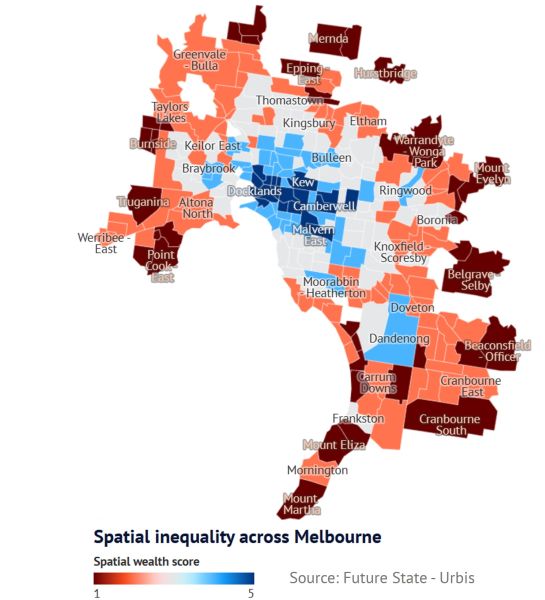
The "right to the city" is a physical reality written into our streetscapes, yet Melbourne is divided by a historical "Latte Line." This socio-economic divide determines a pedestrian's "survival margin"—the physical protection offered by the urban fabric during environmental stress.
This studio investigates the landscape of survival, focusing on how infrastructure and roadscape interact with stressors like rainfall and poor visibility to create unequal fatal risks. Moving beyond standard "Vision Zero" targets, students will treat the roadscape as a primary site of landscape intervention. Students will use historical crash data as a forensic tool to diagnose where design has failed vulnerable populations. By testing the performance of streetscapes under climatic stress, students will propose "structural adaptations" that transform hostile industrial and suburban corridors into safe, resilient, and just environments.
The studio is structured around a central question: how can landscape architecture physically secure the survival margin in the walkable city?
Studio Outcomes
Students will develop a multi-scalar design workflow merging advanced spatial science with high-resolution landscape visualization across three stages.
Stage 1 involves a metropolitan-scale diagnostic where students use GIS to map the "Landscape of Inequity" across Greater Melbourne.
In Stage 2, students will select a high-sensitivity corridor to perform a morphology audit, identifying the physical "mismatch" between historical road design and contemporary safety needs.
Finally, in Stage 3, students will design site-specific structural adaptations. Students will graduate with high-level GIS skills and an evidence-based design methodology, learning to use spatial data as a powerful tool for social advocacy and the creation of truly equitable walkable cities.
Studio Leader
Dr Siqing Chen is a Senior Lecturer in Landscape Architecture at the University of Melbourne. Before joining MSD, Siqing was in the US studying Landscape Architecture and working in the profession for more than 10 years, focusing on large scale landscape planning and urban development projects. His current research and teaching concern applications of GIS and Geospatial AI in urban and landscape planning. He has published widely on these topics and supervised more than 20 PhD, Landscape Design Thesis, and Urban Planning Minor Thesis projects in these areas including, most recently, Master of Landscape Architecture Student Cheng Xing’s Design Thesis “Transitioning to renewable energy” which won the Landscape Architecture Australia Student Prize.
Readings & References
- Davis, V. (2023) Inclusive transportation: A manifesto for repairing divided communities. Foreword by T.L. Butler. Washington, DC: Island Press.
- Forsyth, A., and Southworth, M. 2008. “Cities Afoot—Pedestrians, Walkability and Urban Design.” Journal of Urban Design 13 (1): 1–3.
- Hamraie, A. (2017) Building access: Universal design and the politics of disability. Minneapolis: University of Minnesota Press.
- Harvey, D. 2003. “The right to the city.” International Journal of Urban and Regional Research, 27: 939-941.
- Martens, K. (2016) Transport justice: Designing fair transportation systems. New York: Routledge.
- Southworth, M. 2005. “Designing the Walkable City.” Journal of Urban Planning and Development 131 (4): 246–257.
- Stehlin, J.G. (2019) Cyclescapes of the unequal city: Bicycle infrastructure and uneven development. Minneapolis: University of Minnesota Press.
- Su, S., Zhou, H., Xu, M., Ru, H., Wang, W., and Weng, M. 2018. “Auditing street walkability and associated social inequalities for planning implications.” Journal of Transport Geography 74: 62–76.
- Zavestoski, S. and Agyeman, J. (eds.) (2014) Incomplete streets: Processes, practices, and possibilities. New York: Routledge.
Schedule:
Thursday 9am - 3pm
Need enrolment assistance?
Stop 1 provides enrolment and other support to Bachelor of Design, Bachelor of Environments and Melbourne School of Design students.