Studio 26
Housing Home, and Content(s) IV
Colby Vexler & Pricilla Heung
Studio Description
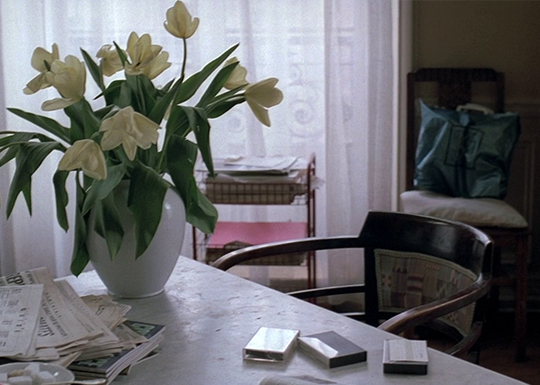
The home may perhaps be the best avenue to explore "contemporary life." That is, the convergence of humans in space, facilitated by the ideas, content(s) and containers of humanism, humanities and the physical human body. The house not only plays host to the physical human body, but all things that entertain the notion of life-style: thought, activity, ritual, signifying objects and spatial arrangements; this is where the house becomes home.
“Architecture houses. It is at home in - and provides a home for - philosophy [concepts and thought], aesthetics [cultural and material objects] and those discourses which are thought to describe it.”
Andrew Benjamin, Eisenman and the Housing of Tradition.
Philosophical, aesthetic and cultural reference will generate contextual frameworks that allow the home to find place, sustenance and content(s). Here, architecture will be considered an in-between of the ideal and the existential, where the house may mediate between two parallel states, the abstract and the material; revealing the unexpected slippages, transitions and tension between ideas, content(s), user and space.
This investigation will argue for the critical agency of architecture, evoking discourse and dialogue between disciplines, technologies and representations. The house produced will act as an agent for mediating, critiquing and navigating through the limitations, possibilities and transferences between the abstract and material. In doing so, the project may become a critical survey, experiment or meditation. This is where architecture may be at home in - and provide a home for - the real, ideal, fetishised and/or romanticised contemporary life(style).
Studio Outcome
Students will use a number of philosophical, aesthetic and cultural references to explore the spatial potentials between ideas, content(s) and users. This will be investigated through three key stages:
- Finding home in (site): Students will develop a strategy to frame and materialise a set of thoughts establishing relationships between their respective ideas; its users, content and space, a contextual framework that houses the design to come.
- Finding home for (contents): Students will develop a taxonomy - A curated selection of material, content and objects that signify a particular value toward the thoughts, activities and rituals related to their idea - housed in the design to come.
- Designing the home in and for: Here, students will activate modes of transference by designing a spatial mediation between the context it is housed in and the content(s), users, activities and rituals it is home to.
Studio Leaders
COLBY VEXLER is a graduate architect, educator and creative consultant. He has long standing interest in various disciplinary reference spanning still life painting to post-structural philosophy. He has recently developed a particular interest in the surplus value of aesthetic nuances latent in high and low forms of contemporary life(style).
Colby is currently engaging in a research project between the School of Culture + Communication and Melbourne School of Design where he is exploring connections between aesthetics, philosophy, poetics and various modes of architectural representation and production.
PRICILLA HEUNG is a practising architect, image maker and graphic designer. Her interests explore the techno-performative and socio-cultural implications of design and their respective application to cultural trends and ‘life-styles’.
Pricilla has worked on the production of a number of spatial installations, exhibitions designs and built outcomes across domestic settings, institutional environments and commercial contexts.
Readings & References
This studio will involve a number of workshops, readings and lectures from philosophers, writers and artists. This studio is based on a number of notions drawn from:
- Andrew Benjamin, Peter Eisenman and the Tradition of Housing
- Elizabeth Grosz, Architecture from the outside.
- John Rajchman, The Virtual House: A Description
- Chiara Briganti & Kathy Mezei (editors),The Domestic Space Reader
- Marcel Proust, Chardin: The Essences of Things
- Marcel Proust, Monet
- James Rubin, Manet's Silence and the Poetics of Bouquets
Students will be exposed to a number of conceptual references including:
- Simulacra, Jean Baudrillard
- Paranoiac Critical Method, Salvador Dali
- Rhizome, Gilles Deleuze
- Deconstruction, Jacques Derrida
- Plasticity, Catherine Malabou
Students will also be encouraged to explore a number of art-based, text-based and spatial based references.
Schedule Mondays 18:15-21:15 in Room 213; Thursdays 18:15-21:15 in Room 314
Need enrolment assistance?
Stop 1 provides enrolment and other support to Bachelor of Design, Bachelor of Environments and Melbourne School of Design students.