Studio 02
What is a liveable Melbourne in 2050?
Wendy Walls
Studio Description
Despite our many efforts and relative wealth overall, as a city we face stresses that weaken the fabric of our society, further entrench disadvantage, and may trigger the shocks of the future. Chronic stresses act like ‘shock amplifiers’, increasing both their likelihood and the harm they cause.
Resilient Melbourne Strategy, 2016
Melbourne is facing extreme long-term urban stress. The combined pressures of urban growth, climate change and aging infrastructures are diminishing the liveability of the city. The current rate and scale of urban development is degrading the quality of urban space, weakening community cohesion, environmental health and long-term future resilience. This thesis asks student to explore new urbanism models which can mitigate social and environmental stressors faced by Melbourne 2050. More specifically, it asks how the urban form of Melbourne would evolve if liveability was taken seriously?
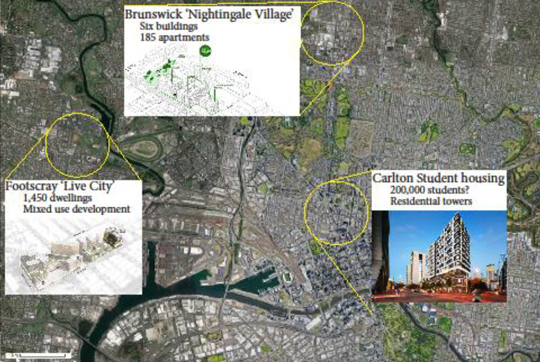
Students can choose from three Melbourne development contexts, selected for their distinctive demographics, cultural influences and environmental challenges. The studio begins with a critique of an existing residential development model, together with analysis of Melbourne’s open data portal, the ABS and other open platforms, to model, network and diagram the relationships between changing demographics, environmental conditions and potential new urban form.
Working with contemporary urban theory, influential housing precedents, alongside the predictive and generative capabilities of open data, students will then explore the potentials for new urban configurations of open space, housing, transport and community facilities which offer a more socially and environmentally resilient vision for Melbourne.
Need enrolment assistance?
Stop 1 provides enrolment and other support to Bachelor of Design, Bachelor of Environments and Melbourne School of Design students.