Studio C
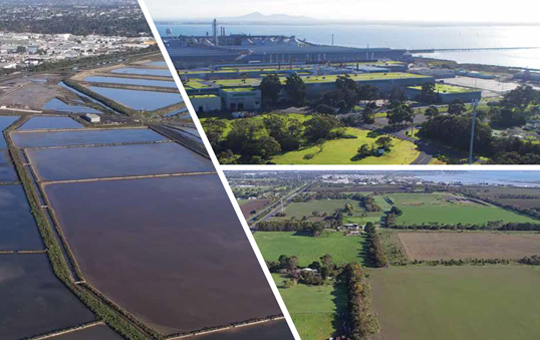
Complexity at Land's End: planning future land use at Moolap Geelong
Judy Bush
Studio Description
Planners and landscape architects play a major role in shaping the built environment. They carry the ability to document and understand cultural and natural systems, and generate responses to contemporary environmental challenges, while considering social and cultural aspects.
With the pressing issues of global climate change on social-ecological systems and population growth, planners and designers need new integrated approaches to better engage with ecological knowledge, temporality and natural dynamics to respond to multi-layered aspects of site development. The challenges are exemplified when converging stresses meet at land’s end in renewal of coastal brownfield sites, such as Moolap in Geelong. Complex and overlapping challenges including sea level rise, land contamination, threatened biodiversity, cultural values, interact with pressures of growth, urbanisation and renewal. In this studio the main focus is given to interdisciplinary planning and design approaches to critically review and redefine Sustainable Urbanism, by moving towards ‘regenerative’ approaches that support the health and vitality of social-ecological systems through mutually beneficial relationships between all the stakeholders and flows.
Students will engage with a number of ‘urbanism’ discourses to define an integrated theoretical lens through which they will interrogate and examine the Moolap strategic redevelopment site. These discourses include infrastructural urbanism (Hauck et al., 2011), landscape urbanism (Waldheim, 2002, 2006; Mostafavi & Najle, 2003), ecological urbanism (Mostafavi & Doherthy, 2010; Reed & Lister, 2014), water urbanism (De Meulder & Shannon, 2008), green urbanism (Lehmann 2015) and metabolic urbanism (Baccini & Brunner, 2012; Ferrao & Fernandez, 2013). Students will form interdisciplinary groups (planning and design) to review the current proposed land use strategies for the site, and through a comparative analysis with international case studies, suggest alternative planning and design directions. Urban planning students will then work individually to develop strategic responses and proposals to guide the future directions for the Moolap site. These could focus on social, environmental or economic sustainability or resilience.
This studio will be partly co-taught with Sarah Moosavi's ABPL90072 Landscape Studio 5: Sustainable Urbanism.
Schedule Wednesdays 09:00-15:00 in MSD Room 246
Need enrolment assistance?
Stop 1 provides enrolment and other support to Bachelor of Design, Bachelor of Environments and Melbourne School of Design students.