Studio 26
Housing Home and Content(s)
Colby Vexler and Pricilla Heung
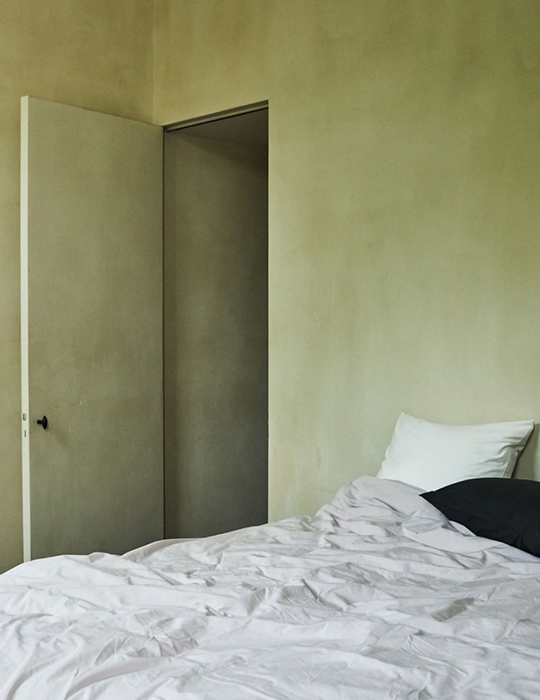
This studio is available to students enrolled in ABPL90142 Studio C, ABPL90143 Studio D, and ABPL90115 Studio E.
Studio Description
A Dyson Cordless Vacuum leans on a plasterboard wall, serenaded by the faint sound of a neighbour’s UE Boom.
Two slack postures slumped over something IKEA, scroll lethargically.
Creases and folds in a pile of energy bills illuminated by the glow of a screen.
An UberEats delivery arrives.
From the banal and mundane, to tropes and concepts given a high value in contemporary culture, Housing Home and Content(s) critically re-evaluates architecture’s role in understanding what housing, home, lifestyle, and domesticity might mean in 2020.
From the socio-political and economic dynamics of shared living, to the proliferation of convenience culture; signifying objects, to spatial arrangements -- across the romanticised, the real, and the habitual -- this is where a housing typology becomes home.
“Architecture houses. It is at home in - and provides a home for - philosophy, aesthetics and those discourses which are thought to describe it.” - Andrew Benjamin, Eisenman and the Housing of Tradition. (p)We are not interested in an architecture that only serves a pragmatic means, that is, to provide shelter and comfort for the physical human body. Rather, we will explore reference usually considered outside our traditional disciplinary milieu to guide our architectural inquiries.
In studio 26, architecture is considered as a mediator between the ideal and the existential, where it oscillates between two parallel states: the abstract and the material; revealing unexpected slippages, transitions and tension between ideas, content(s), user and space.
This is where architecture may be at home in - and provide a home for - the real, ideal, fetishised and/or romanticised contemporary life(style).
Studio Outcome
Students will use philosophical, aesthetic and cultural references to identify contemporary phenomena and consider how they a/effect the ideas, content(s), users and space of the domestic realm.
Investigations will be guided through three stages:
1. Finding home in (site): Students will identify and locate a set of contemporary phenomena that a/effect the domestic realm. Here we will develop theoretical positionings to map such conditions, establishing a contextual framework for the design to come.
2. Finding home for (contents): Students will develop a taxonomy of content and subjects that signify the elements, agents and parties affected by the phenomena they choose to explore. These will be housed in the design to come.
3.Designing Home: Here students will design a speculative housing typology that reflects their critical evaluation of what housing, home, lifestyle and domesticity might mean in 2020 and how such notions are affected by certain contemporary phenomena.
Studio Leaders
COLBY VEXLER is a graduate architect, writer and creative consultant with a long standing interest in various disciplinary reference spanning still life painting to post-structural philosophy. His current work focuses on the surplus value drawn from aesthetic nuances latent in high and low forms of contemporary culture. Colby is also writing his MA thesis at the School of Culture and Communication on architecture's complex and paradoxical relationship with other disciplinary discourses.
PRICILLA HEUNG is a practising architect, image maker and graphic designer. Pricilla's current work is situated in the residential realm where her interests are oriented toward the techno-performative and socio-cultural implications of design, and their respective application to cultural trends and ‘life-styles’.
Both Colby and Pricilla have worked on the production of spatial installations, exhibitions designs and built outcomes across domestic settings, institutional environments and commercial contexts.
Readings & References
This studio will involve a number of workshops, readings and lectures from philosophers, writers and artists. This studio draws reference from:
- Andrew Benjamin, Peter Eisenman and the Tradition of Housing
- Elizabeth Grosz, Architecture from the outside.
- Sylvia Lavin, Flash In The Pan
- Chiara Briganti & Kathy Mezei (editors), The Domestic Space Reader
- Marcel Proust, Chardin: The Essences of Things
Students will be introduced to a number of philosophical references including:
- Simulacra, Jean Baudrillard
- Paranoiac Critical Method, Salvador Dali
- Rhizome, Gilles Deleuze
- Deconstruction, Jacques Derrida
- Plasticity, Catherine Malabou
Students will also be encouraged to explore a number of art, literature and spatial based references.
Schedule Mondays 18:15-21:15 and Thursdays 18:15-21:15 in MSD Room 141
Need enrolment assistance?
Stop 1 provides enrolment and other support to Bachelor of Design, Bachelor of Environments and Melbourne School of Design students.