Studio 42
Co2_ZeRo
Josephine Lettieri and Patricia Stocca
This studio is available to students enrolled in ABPL90142 Studio C, ABPL90143 Studio D, and ABPL90115 Studio E. This studio is co-taught with CVEN90047 IE Research Project 2.
Studio Description
At COP 21 in Paris, on 12 December 2015, Parties to the UNFCCC reached a landmark agreement to combat climate change and to accelerate and intensify the actions and investments needed for a sustainable low carbon future.
This studio will explore how building performance can assist Australia’s response to the 2015 Paris Climate Accord by investigating ways to reduce energy usage in the built environment and reach carbon neutrality. Emphasis will be on advancing renewable integration toward zero energy buildings, and challenge conventional interdisciplinary thinking between engineering and architecture to promote integrated design outcomes.
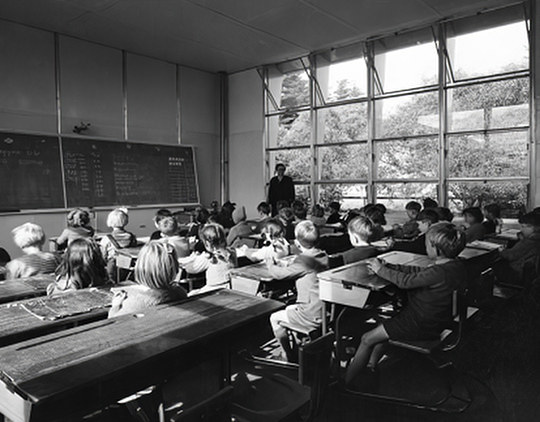
Through the education program lens, students will learn to adapt, reuse and explore new spatial configurations to synthesis existing and new building fabric over a full building life cycle. This studio will test ideas of how education buildings need to adapt to meet emerging challenges around learning environments, technology and the climate. Often sustainability is applied to a building design with a “greenwash” resulting in poor design outcomes. A truly innovative sustainable design approach dismantles traditional hierarchy between engineering and architecture as both disciplines are reliant on each other through technology to realise integrated design outcomes.
Co2_ZeRo is one of two integrated Design Studios offered in MSD 2020. You will be exposed to state-of-the-art research from the LEARN research hub as well as other specialists in education design. You will engage with a real Client (ACT government) using existing school building stock in the ACT as a case study. The studio will include a select number of students from Melbourne School of Engineering (MSE). More broadly, this studio will contain a renewable focus with industry experts to guide your research and integrated design led thinking and will include a research agenda that aims to change current paradigms around how architecture and engineering interact.
Studio Outcome
In this studio students will acquire the necessary technical knowledge to integrate architecture and engineering design led thinking in a collaborative environment.
Specifically, students will explore building systems and construction type analysis through historical and contemporary design case studies. Through exploration of experimental approaches to siting, open space, orientation, building volumes you will develop a design response to site with urban systems incorporating existing building stock and its strategic role in broader urban context including streetscape, neighbourhood and community context.
The studio will examine innovative conceptual design techniques exploring building performance with digital and physical models used to test architectural ideas of scale, form and materiality with an emphasis on reduction in energy. Students will be able to identify areas for improvement of existing building fabric and apply conceptual thinking and propose alternatives to conventional engineering systems through an understanding of energy consumption to improve energy efficiency across lighting, cooling and heating and through on site passive systems such as thermal mass, geothermal, stormwater reuse, solar and wind energy generation.
Students will develop a design portfolio on a real project based on an actual client guided by practising architects and engineers from leading industry consultants. In collaboration with Damon Van Horne from GRIMSHAW architects and Nick Adams with others from ARUP this studio is industry based with a real Client (ACT government) and uses existing school building stock in the ACT as a case study.
Studio Leaders
Josephine Lettieri and Patricia Stocca are experienced in multidisciplinary design led practises and bring a wealth of industry knowledge in education projects with a focus on ESD. Josephine Lettieri is a Principle Architect at Jacobs with a qualified background in engineering. Her approach is design led with over 20 years’ experience in integrated design projects. Patricia Stocca is Principle at Stocca Architects, an ESD led practise and brings over 25 years’ industry experience in design and constructability. They have both tutored at universities previously including Melbourne, Monash and Deakin Universities.
Readings & References
- Kiel Moe and Ryan E. Smith. 2012. Building Systems: Design Technology and Society. Routledge. New York.
- 7group (John Boecker, Scot Horst, Tom Keiter, Andrew Lau, Marcus Sheffer and Brian Toves) and William Reed. 2009. The Integrative Design Guide to Green Building: Redefining the Practice of Sustainability. John Wiley & Sons, Inc., Hoboken, New Jersey.
- Peter Silver and Will Mclean. 2008. Introduction to architectural technology. Laurence king. London.
- Brenda and Robert Vale. 2000. The New Autonomous House. Thames and Hudson. London.
- Brenda and Robert Vale. 1996. Green Architecture: Design for a sustainable future. Thames and Hudson. London.
- Lisa Heschong. 1979. Thermal Delight in Architecture. MIT Press. London.
Integrated Design Studio
Co2_ZeRo is one of two integrated Design Studios offered at MSD in 2020. You will be exposed to state-of-the-art research from the LEARN research hub as well as other industry specialists in education design. You will engage with a real client (the ACT government) using some of their existing school building stock as a case study. The studio will include a select number of students from Melbourne School of Engineering (MSE).
Students will develop a design portfolio on a real project, based on an actual client, guided by practising architects and engineers from leading industry consultants. In collaboration with Damon Van Horne from GRIMSHAW Architects and Nick Adams with other colleagues from ARUP Group, this studio is industry based and uses existing school building stock as a case study.
More broadly, this studio will contain a renewable focus with industry experts to guide your research and integrated design led thinking and will include a research agenda that aims to change current paradigms around how architecture and engineering interact.
====================
If you are interested in taking the Integrated Design Studio this semester, please make yourself familiar with the Plain Language Statement describing the research side of the project. And please make yourself familiar with the Deed Poll, which you'll be asked to sign, clarifying the position of IP in the project.
====================
Schedule Mondays 15:15-18:15 in MSD Room 314 and 18:15-21:15 in MSD Room 125
Travel Canberra | Week 3
Need enrolment assistance?
Stop 1 provides enrolment and other support to Bachelor of Design, Bachelor of Environments and Melbourne School of Design students.