Studio 01
Mind the gap
Isabel Lasala
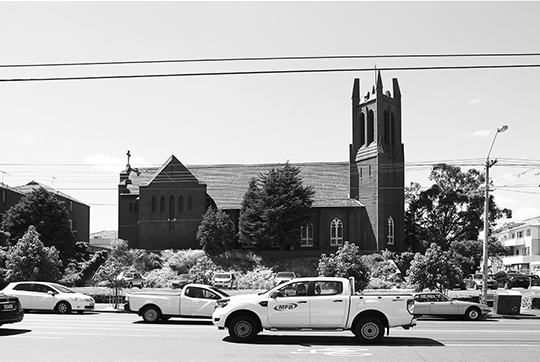
This studio is available to students enrolled in ABPL90142 Studio C, ABPL90143 Studio D, and ABPL90115 Studio E.
Studio Description
The exponential growth that is currently undergoing in almost all of Australia’s major cities has brought as a consequence significant changes in specific urban programs and activities. Many of these changes have been poorly resolved from an urban, architectural, and landscape design perspective. This studio looks at this phenomenon, and presents students with the opportunity to re-program and re-design an existing site in one of the inner-suburbs of Melbourne. To do so, the studio asks students to implement a specific design strategy, based on challenging the disciplinary boundaries that exist between architecture and landscape architecture. With this, students will discover (and will work with) the untapped relationships that exist between these two apparently different disciplines. The intention is to offer students the opportunity to create the singular experiences and perceptions of urban space that can be produced by the ambiguous spatiality that emerges from their combination. The project’s site is located in the northern inner-suburb of Northcote, where an uncommon, vacant urban space still remains. The lot is adjacent to the Bulgarian Eastern Orthodox Church, located at the corner of High and Bayview streets. This site, surrounded by mix-use and different density buildings, is characterised by a four-meter level difference between the street level and church’s ground level, a topographic gap that presents a unique opportunity to explore the correlations between architecture and landscape architecture. To address this level difference, or gap, it is necessary to produce a significant topographic transformation. This means that students will learn how to design with topography, and thus create a hybrid architecture/landscape architecture public space that can resolve the present topographic accident. Students will also have the opportunity to formulate their own conceptualisation of what a contemporary urban space might be, in particular one determined by new programs that can challenge the boundaries between interior and exterior space. With this, the studio aims at maintaining the existing open area as an exterior space, and simultaneously at re-programming the site with an internal “public” space articulated by the four-meter level difference. In this studio, C,D & E students will be presented with the challenge of exploring the potential relationships that might exist between architecture and landscape architecture, and reflect on a site-oriented project that acknowledges the importance of the redefinition of existing programs through a strategy that seeks to emphasise the importance of public open spaces in the urban fabric.
Studio Outcome
The design process will be undertaken through three main methods that will be complementing each other:
- Observation of the site and its surroundings: students will be required to critically analyse the site in order to approach the main problem.
- Case study methodology: a selection of purposefully and analytically precedents will be chosen by the students in order to set the state of the art.
- Design exploration, with the information brought by the previous two methodologies, students will be encouraged to find project-based answers to the studio questions.
Studio Leader
Isabel Lasala is one of the Directors of Lasala & Lasala Architects, an award-winning practice with more than fifteen years of experience. Isabel holds a Bachelor of Architecture from Universidad Central de Venezuela, a Master of Architecture from ETSAB/Universitat Politècnica de Catalunya, and an MPhil in Landscape Architecture from University of New South Wales. Her practice-based research investigates new possibilities emerged at the intersection of architecture and landscape architecture. In 2014, Ediciones FAU/UCV published her book Creating Places: Exalting and Overcoming the Architectural Object in the Work of Pablo Lasala. Before settling in Australia in 2009, Isabel was a Senior Lecturer at the Faculty of Architecture and Urbanism of UCV. Here, she has taught design studios at Melbourne University, Monash University, RMIT, UNSW, and University of Technology Sydney.
Readings & References
- Andersen, B 2003, Alvar Aalto and Jorn Utzon: An Architecture of Ancient Gathering Forms, University of Aalborg, Aalborg.
- Cosgrove, D 1999, Mappings, Reaktion Books, London.
- Carr, S, Francis, M, Rivlin, L & Stone, A 1992, Public Space. Environment and Behaviour, Cambridge University Press, New York.
- Corner, J (ed.), 1999, Recovering Landscape: essays in contemporary landscape architecture, Princeton Architectural Press, New York.
- Cosgrove, D 1999, Mappings, Reaktion Books, London.
- Galofaro, L 2002, Artscapes El arte como aproximación al paisaje contemporáneo, Gustavo Gili (Land&ScapeSeries), Barcelona.
- Gehl, J 2001, Life between buildings: using public space, Island Press, Washington DC
- Leatherbarrow, D 2009, Architecture oriented otherwise. Princeton Architectural Press, New York.
- Leatherbarrow, D 2004, Topographical Stories. Edited by John Dixon Hunt, Penn Studies in Landscape Architecture. Philadelphia: University of Pennsylvania Press.
- Martinez, A 2005, Dwelling on the roof, Gustavo Gili, Barcelona.
- Petschek, P 2008, Grading for landscape architects and architects, Birkhauser, Basel - Boston – Berlín
- Ruby, I & A 2006, Groundscapes The rediscovery of the ground in contemporary architecture, Gustavo Gili (Land&ScapeSeries), Barcelona.
- Sola-Morales, I 1999, Differences: Topographies of Contemporary Architecture, Massachusetts Institute of Technology, Boston.
Schedule Mondays and Thursdays 09:30-12:30 and 13:30-16:30 in MSD Room 141
Need enrolment assistance?
Stop 1 provides enrolment and other support to Bachelor of Design, Bachelor of Environments and Melbourne School of Design students.