Studio 4/03
Studio 3: Climate Responsive Landscape Planning Strategies
Jenny Yu
Studio Description
As the apparent presence of climate change and the frequent occurrence of bushfire causing air pollution in Melbourne, it is quite challenging for the city’s development and people’s healthiness in a long term. This triggers the question that what the future development can provide for the people and what planners’ and designers’ role are under the pressure. Lack of vegetation cover, dense high-rise development, extensive deforestation, etc. are all the contributors of climate change, which boosts bushfire risk. Increasing number of planning projects have engaged with climatic, geographic, cultural, and other data as a strong support for decision-making. This studio involves strategic climate responsive landscape planning informed by GIS-based spatial analysis. Students will engage with land development from broad scale regional planning to local scale masterplanning, using a range of geospatial data and tools.
Studio Outcomes
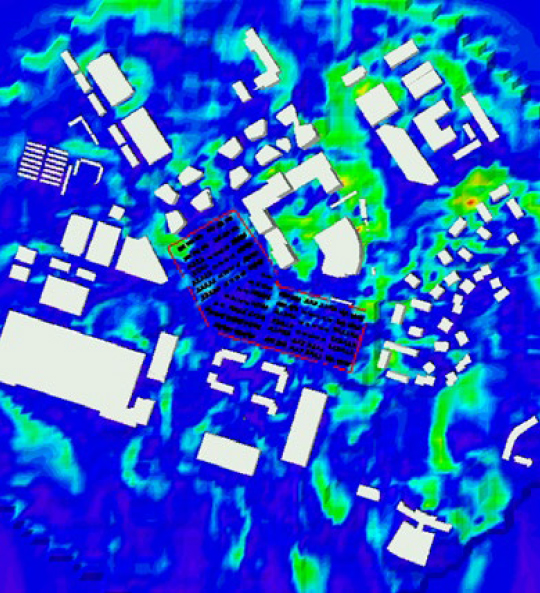
In developing their projects, students will focus on collecting and digitizing relevant data using GIS applications and drawing the conclusion to mitigate environmental problems such as climate change, air pollution and other socioeconomic issues for future development in Melbourne. By learning in GIS tutorials, students will develop skills in GIS for spatial analysis, computational simulation, 3-D visualization, landscape capacity/suitability analysis for decision-making to identify a site (or several ones) as the base for further design. For the second half of the studio, students will be challenged to set up rationales and strategic moves to guide the site detailed planning, which responds to initial data analysis and future development plans.
Studio Leader
Jenny Yu is the Founding Director of JF Studio – a landscape planning and design practice in Melbourne. She is an advocate and practitioner of digital technology in landscape architecture. She has professional experiences in both public and private sectors in China, Australia, and the US since 2010. Her passion in education is to inspire the younger generations and advocate the power of landscape architecture for both people and the environment. In 2018, her planning and design project received regional shortlist in City Future Challenge Competition, which was involved with GIS applications in urban climate and morphologies.
Readings & References
- DLenzholzer, S., Brown, R.D., Climate-responsive landscape architecture design education, Journal of Cleaner Production (2013), http://dx.doi.org/10.1016/j.jclepro.2012.12.038
- Esch, Marjolein. (2015). Designing the Urban Microclimate. A framework for a design-decision support tool for the dissemination of knowledge on the urban microclimate to the urban design process. A+BE: Architecture and the Built Environment. 5. 10.7480/abe.2015.6
Need enrolment assistance?
Stop 1 provides enrolment and other support to Bachelor of Design, Bachelor of Environments and Melbourne School of Design students.