Studio N
Studio N: Managing Cities at Night
Michele Acuto, Shelby Bassett, Tim Hunt, and Andreina Sejas
Studio Description
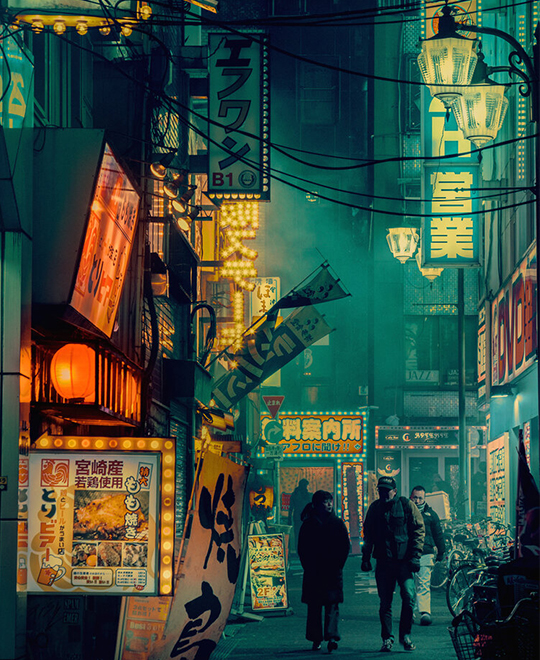
Cities do not stop as the lights do down. If urban areas are now recognised as crucibles of sustainable and equitable development at a planetary scale, little attention is paid to the night when half of urban activities take place. New 'after-hours' thinking is needed. Evidence is clear to this direction: the night-time economy is a key driver of Australia's growth. It employs 1.17m people across Australia and generates $102 billion. Around 1-in-9 employees work night shifts, often in low pay and precarious health conditions. Over 2% of Australian households live in ‘food deserts’ where affordability plummets at night-time. Several cities have recognised this with the recent introduction of night time strategies, pilot programs, night time strategies and commissions, even ‘night mayors’ – not least in London, Amsterdam or Sydney. This intensive studio focuses on ‘night time’ skills for built environment practitioners and offers a venue to further refine interdisciplinary and policy-relevant understanding of urban planning, urban design and architecture at night time for scholarly and professional careers.
Studio Outcomes
The studio is run by the Connected Cities Lab in partnership with ARUP and the City of Melbourne, presenting students with a chance to both test interdisciplinary urban analysis as well as practical (industry and policy) engagement approaches. In 2020, the challenge for studio participants will be to think through what Melbourne’s “night time strategy” and what an “office of the night life” for the City could look like, building on international case studies. This studio has an explicit international planning/design perspective and focuses on sharpening and testing international, interdisciplinary and night-time skills for those aiming at a career oriented towards multiple countries, cities and urban policymaking contexts around the world. Over a period of three weeks, it offers a chance for regular engagement with the studio partners, Arup and City of Melbourne, as well as University of Melbourne experts in this area. The studio takes a design approach to produce tangible practice-worthy tools. Students work with instructors and experts (from academia and practice) to identify key nigh-time challenges for cities, testing the input provided by diverse mode of thinking about the urban against ‘after-hours’ and ’24 hour' views of the city
Studio Leaders
Michele Acuto is director of the Connected Cities Lab, Professor in Urban Politics and Associate Dean (Research) in the Faculty of Architecture, Building and Planning. He is an expert in international urban development.
Tim Hunt is Lighting Leader at Arup Melbourne and a senior lighting designer, having worked at Arup in night time planning and design since 2008.
Andreina Seijas J. is a Venezuelan researcher and international consultant specializing in nocturnal governance and planning. She is currently a Teaching Fellow, Research Fellow and Doctoral Candidate at the Harvard University Graduate School of Design. Previously, Andreina was the Information Manager for the Mayor’s Office of the Chacao municipality in Caracas, worked as Policy Associate at Americas Society/ Council of the Americas and Editorial Associate for policy journal Americas Quarterly in New York City, and worked for the Housing and Urban Development Division at the Inter-American Development Bank in Washington D.C.
Readings and References
- Seijas, A., & Gelders, M. M. (2019). Governing the night-time city: The rise of night mayors as a new form of urban governance after dark. Urban Studies, 1-23, online first, doi: 0042098019895224.
- Acuto, M. (2019). We need a science of the night. Nature, 576(7787), 339.
- Smeds, E., Robin, E., & McArthur, J. (2020). Night-time mobilities and (in) justice in London: Constructing mobile subjects and the politics of difference in policy-making. Journal of Transport Geography, 82, 102569.
- Crary, J. (2013). 24/7: Late capitalism and the ends of sleep. Verso Books.
- Shaw, R. (2018). The nocturnal city. Routledge
Schedule
09:00-12:00 Monday 7, 14, 21, and 28 September
09:00-12:00 Monday 5 October
09:00-12:00 and 12:00-15:00 Tuesday 6 October
09:00-12:00 and 12:00-15:00 Wednesday 7 October
09:00-12:00 Friday 9 October
12:00-15:00 Tuesday 13 October
13:15-16:15 Thursday 15 October
Need enrolment assistance?
Stop 1 provides enrolment and other support to Bachelor of Design, Bachelor of Environments and Melbourne School of Design students.