Studio 09
Interspecies-Design Studio: Bee Friends and Dog Colleagues in Future Cities
Stanislav Roudavski | Environmental Futures Focus
Studio Description
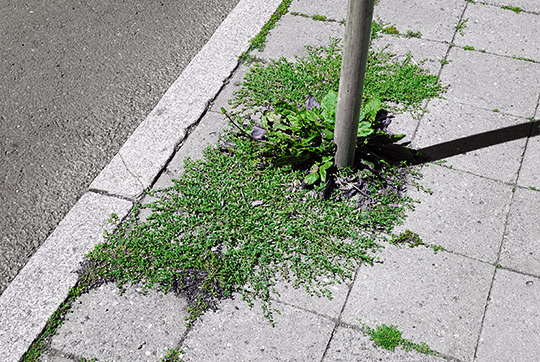
Leading UK and Australian architects recognise the massive loss of nonhuman life as a state of emergency. Calls to give nature half of the planet gain increasing support. Can designers describe the future where wildlife thrives in urban environments and companion organisms have greater rights, freedoms, and access?
In response to this question, the studio will consider the University of Melbourne’s plans for the future of campus. These plans propose to replace the Union House with a new interdisciplinary hub. The studio will reimagine this project as an opportunity for interspecies design. Students will examine the university’s commitments to sustainability and biodiversity, analyse the existing brief prepared by Hassell and develop innovative re-imaginations of inner-city life. The studio will receive guidance from the project’s clients and architects. Importantly, students will have an opportunity to present their work to the university management and influence future development.
To demonstrate that resulting innovations are applicable at multiple sites, the studio will curate the best outcomes as submissions to the LA+ CREATURE design competition.
Studio Outcome
The studio will support a diversity of approaches that can involve narrative responses to aspects of future life, applications of creative computing, construction innovations, practical prototyping, and detailed planning across scales.
Students will produce and express through their drawings, models, and journal:
- Interspecies design manifesto. A critical analysis and an imaginative extension of the existing site-management and architectural-development documents.
- Agent report. An evidenced diagrammatic representation of biology, ethology, life histories, and capabilities for urban living of selected existing or potential nonhuman inhabitants.
- Design proposals.
- Macro: urban precinct plans, models, and diagrams, including the critical comparative analyses of business-as-usual and speculative futures.
- Midi: building plans and models, including scenarios for future interspecies life.
- Mini: design, models, and prototypes for building components, including considerations for their reuse at other sites.
- Assessment report. A visual/textual description of proposed uses.
- Competition submission.
Studio Leader
Dr Roudavski is a Senior Lecturer in Digital Architectural Design at MSD. His work focuses on more-than-human design and combines sciences, arts and design innovation supported by creative computing. His creative research has been disseminated through multiple publications and international exhibitions including Venice Architecture Biennale, Tate|Modern, and The Czech National Gallery. Prior to his current position, Dr Roudavski worked at the University of Cambridge, MIT and several European architectural practices with some 40 project credits. The work of Dr Roudavski’s past studios has won multiple international awards including an A’ Design Award and a prize at the Swell Sculpture Festival. It has been published as ‘top studio work’ by Architecture Australia and won awards for research at eCAADe and CAADRIA. This studio is supported by the Estate Planning and Development division at the University of Melbourne and Hassell architects.
Readings & References
Some architectural examples
The Expanded Environment Website
Some conceptual context
Zoopolis (7min)
Some urban animals
Urban Wildlife series
Some thoughts on nonhuman life
Donaldson, S., and W. Kymlicka. 2011. Zoopolis: A Political Theory of Animal Rights. New York: Oxford University Press.
Homans, J. 2012. What’s a Dog for? The Surprising History, Science, Philosophy, and Politics of Man’s Best Friend. New York: Penguin Press.
Konijnendijk, C. C. 2018. The Forest and the City: The Cultural Landscape of Urban Woodland. New York: Springer.
Nonhumans in the context of design
Collard, R.-C., J. Dempsey, and J. Sundberg. 2015. “A Manifesto for Abundant Futures.” Annals of the Association of American Geographers 105 (2): 322–330.
Parris, K. M., M. Amati, S. A. Bekessy, D. Dagenais, O. Fryd, A. K. Hahs, D. Hes, et al. 2018. “The Seven Lamps of Planning for Biodiversity in the City.” Cities 83 (December): 44–53.
Roudavski, S. 2018. “Notes on More-than-Human Architecture.” In Undesign: Critical Practices at the Intersection of Art and Design, edited by G. Coombs, A. McNamara, and G. Sade, 24–37. Abingdon: Routledge.
Schedule 12:00-15:00 Tuesdays and Fridays
Need enrolment assistance?
Stop 1 provides enrolment and other support to Bachelor of Design, Bachelor of Environments and Melbourne School of Design students.