Studio 4/01
Design for Sustainable Tourism in Belize: Physical Planning Strategies
Siqing Chen
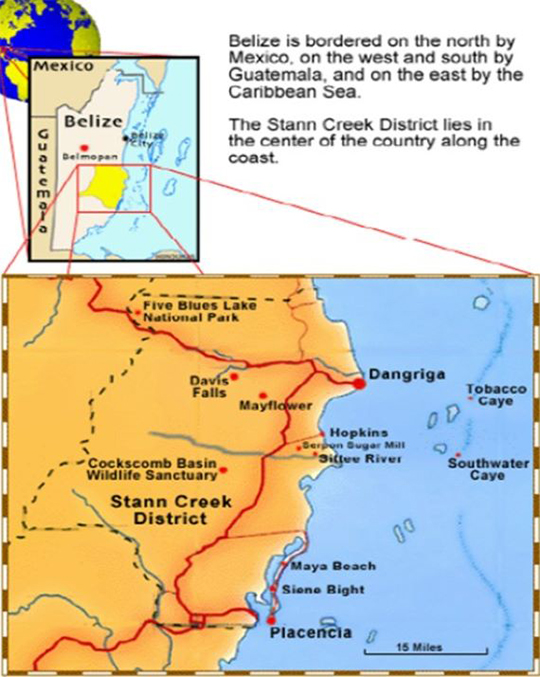
This studio is available to students enrolled in ABPL90170 Landscape Architecture Studio 4.
Studio Description
Broad scale landscape planning is an integrative component of landscape architecture. This studio engages with large landscapes from regional to local. GIS applications are introduced as a tool for exploring ecological and cultural systems across multiple scales to inform planning and development strategies for sustainable provision of ecosystem services.
Using Belize and its surrounding landscapes in general and an identified severely impacted landscape in particular, this studio introduces the conceptual framework for regional landscape assessment and planning; and a working knowledge of the GIS techniques applied to visualise and analyse demographic, ecological, cultural, and socioeconomic data for sustainable landscape planning. Taking a regional perspective in understanding the composition and configuration of human settlements and activities in the landscape, this studio aims to reshape the region’s spatial pattern and form for sustainable tourism practice.
Sustainable tourism is defined by the UN Environment Program and UN World Tourism Organization as “tourism that takes full account of its current and future economic, social and environmental impacts, addressing the needs of visitors, the industry, the environment and host communities.” Students are encouraged to explore studio topics including (but not limited to)
- identifying a region’s physical and cultural tourism resources that influence the region’s metabolic functions;
- conservation of natural environments and biodiversity for eco-tourism;
- reconfiguration of sprawling suburbs into communities of real neighbourhoods and diverse districts for sustainable tourism development;
- linking existing urban centres and towns using green infrastructure to foster a coherent urban region to safeguard the quality of environment and host communities; and
- evaluating impacts of climate change (or CoVID-19) on tourism in Belize
- designing climate change resilient communities and landscapes for sustainable tourism development.
Emphasis will be given to idea generation, conceptual design, and formation of integrative and cohesive landscape strategies based on credible evidence from GIS-based spatial analysis.
Studio Outcomes
Students are required to operate both in group and independently, engaging in research and site analysis to formulate a studio position that will inform the design process and outcomes for your design project. Students will first conduct an in-depth research and site analysis to explore the site's environmental, social, cultural, and economic attributes and the opportunities and constraints they offer. This which will help inform the positioning of your studio project (Assignment 1). Then, students will develop a conceptual or spatial plan (Assignment 2) that proposes reshaping the nation’s development to support sustainable tourism-related activities and spaces. Assignment 2 will be based on the work produced for Assignment 1. Finally, students will prepare a master plan proposals (Assignment 3) for an identified area of high priorities. Again Assignment 3 will be based on Assignments 1 and 2. Weekly design exercises will support the development of these assignments. Students will need to
- identify key theories that are associated with the ethical, cultural, and ecological processes to be specifically translated into landscape physical planning (e.g. landforms, spaces, and spatial patterns);
- employ precedents from within relevant design disciplines that focus on the identified issues and critically engage in the design process;
- clarify insights the design brings to the topic through developing a strong and consistent design outcome that responds to the site and its context;
- provide evidence of multiple design explorations – an iterative approach. Design process is clearly documented; and
- articulate the design through effective design communication.
Studio Leader
Dr Siqing Chen is a senior lecturer in landscape architecture at MSD. Trained in China and the US as an ecologist and landscape architect, Siqing has practiced since 2002 in a range of private and public sector settings in China, US and Australia. Siqing's teaching and research concerns emerging issues of landscape planning, energy landscape, and ecological urbanism. He has published widely on these topics and supervised more than 20 PhD and Landscape Design Thesis in these areas including, most recently, Master of Landscape Architecture Student Cheng Xing’s Design Thesis “Transitioning to renewable energy: An integrated landscape approach” which won the 2019 Landscape Architecture Australia Student Prize.
Readings & References
Booklist
- Forman, R. T. T. Urban Regions: Ecology and Planning beyond the City. 2008, Cambridge University Press.
- Labich, W. The regional conservation partnership handbook. 2015, Redding, CT.
- McHarg, I. L. Design with Nature. 1992, John Wiley, New York.
- Steiner, F. The Living Landscape: An Ecological Approach to Landscape Planning. McGraw Hill.
- Thompson, G., Steiner F. R. (eds), Ecological Design and Planning. 1997, John Wiley.
Government Document
- National Protected Areas Policy and System Plans. http://www.protectedareas.info/upload/document/belizegapanalysispowerpoint.pdf
- National Sustainable Tourism Masterplan For Belize 2030. https://www.dgft.gov.bz/wp-content/uploads/2017/08/National-Sustainable-Tourism-Master-Plan.pdf
Video
- Somewhere on Earth: Belize. https://www.youtube.com/watch?v=ME1tUKEZwE4
Schedule Lecture: Thursdays 12:00-13:00; Studio: Thursdays 13:00-19:00
Need enrolment assistance?
Stop 1 provides enrolment and other support to Bachelor of Design, Bachelor of Environments and Melbourne School of Design students.