Studio 04
Radical Suburbs
Paul Walker
This studio is available to students enrolled in ABPL90169 Design Thesis.
Studio Description
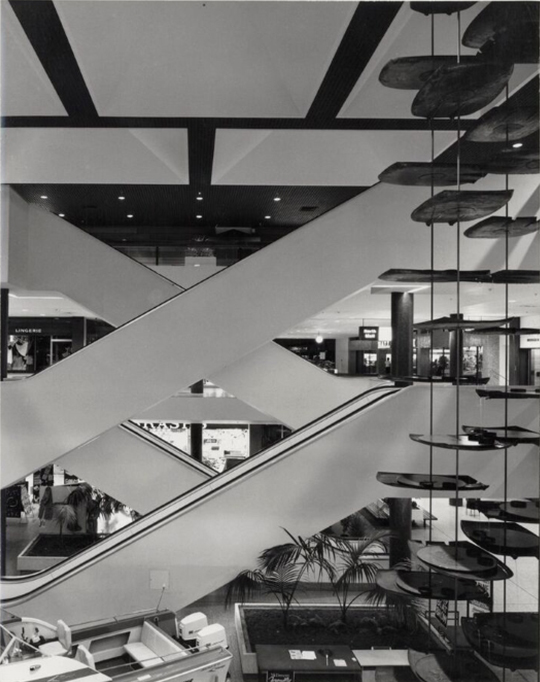
Radical Suburbs takes its title from a recent book Amanda Kolson Hurley which examines suburban communities in American cities which drastically departed from the common view of the suburbs as cultural wastelands and places of conformity. How can we take these lessons from urban history and rethink the architecture of suburbia anew? Can the building types of the suburbs – the single-family house, the suburban business park, the shopping mall – be transformed to be more sustainable and accommodating without suburban environments losing their amenity?
We will focus on the Cheltenham – Southland – Highett corridor in Melbourne’s southeast. This encompasses a major regional shopping centre, two traditional suburban shopping strips, thousands of new apartments in mid-rise developments, a major brownfield site destined for medium/high density housing, and a park that may be the site for a new swimming and leisure centre for the City of Kingston. Cheltenham will also be the southern portal for Melbourne’s suburban rail loop. What architectural opportunities does this offer?
Studio Outcomes
Each student in the studio will select a building design project on which to focus. Projects could include reworking/adding to the Southland Shopping Centre, to introduce public program, better connect to the Southland station, or to make it less introverted; innovative and inclusive medium density housing; community and/or leisure facilities; or completely new programs, potentially associated with the urban reach of the suburban rail loop.
While each project will offer a coherent building proposal, it should also be characterised by a clear strategy addressing the wider, transforming suburban context. This strategy should be informed by research into relevant literature and precedents which should be documented. Precedents will be drawn from architecture and urban design and in each case should include relevant examples from the Melbourne metropolitan area (for instance, central Dandenong) but may also draw from art, cinema, etcetera.
Studio Leader
Paul Walker is a professor of architecture in the Melbourne School of Design. His research is about twentieth century architecture in Australia & NZ, and about museum architecture in colonial and post-colonial contexts. As well as his scholarly work, Walker is a frequent contributor to Architecture Australia. Recent publications include C Townsend and P Walker ‘Public-Private Partnerships and Medium-Density Housing in North Melbourne’, in K Borsi, et al, eds, Housing and the City, Routledge (2022); and J Gatley & P Walker, ‘Modernization and Advocacy’, in Beatriz Colomina, et al, eds, Radical Pedagogies, MIT Press (2022). He is the lead author of John Andrews: architect of uncommon sense, forthcoming from Harvard Design Books.
Readings & References
- Architecture Australia 110: 4 (July/August 2021) issue edited by Rory Hyde devoted to suburbia
- Tom Avermaete & Janina Gosseye, Urban Design in the 20th Century: A History, Zurich: gta Verlag, 2021
- Robin Boyd, The Australian Ugliness, Melbourne: Text, 2002 (first published 1960)
- Robert Bruegmann, Sprawl: a compact history, Chicago: University of Chicago Press, 2005
- Janina Gosseye & Tom Avermaete, eds, Acculturating the shopping centre, London: Routledge, 2019
- Dolores Hayden, Building Suburbia: green fields and urban growth, 1820-2000, New York: Pantheon Books, 2003
- Dolores Hayden, The Grand Domestic Revolution: a history of feminist designs for American homes, neighborhoods, and cities, Cambridge, Mass.: MIT Press: 1981
- Amanda Kolson Hurley, Radical Suburbs: experimental living on the fringes of the American city, Cleveland: Belt Publishing, 2019
- Leandro Medrano, Luiz Recaman & Tom Avermaete, eds, The New Urban Condition, New York: Routledge, 2021
- David Nichols, The Bogan Delusion, Mulgrave: Affirm Press, 2011
- Peter Rowe, Making a Middle Landscape, Cambridge, Mass.: MIT Press, 1991
- Peter Vernon, ‘Shopping Town Australia’, Fabrications 22: 1, 2012
Schedule Tuesdays 12:00-15:00 and Thursdays 12:00-15:00
Off-campus Activities Week 2 and Week 3
Need enrolment assistance?
Stop 1 provides enrolment and other support to Bachelor of Design, Bachelor of Environments and Melbourne School of Design students.