Studio C/05
Create | Curate: (Im)material Narratives
Yui Uchimura
Studio Description
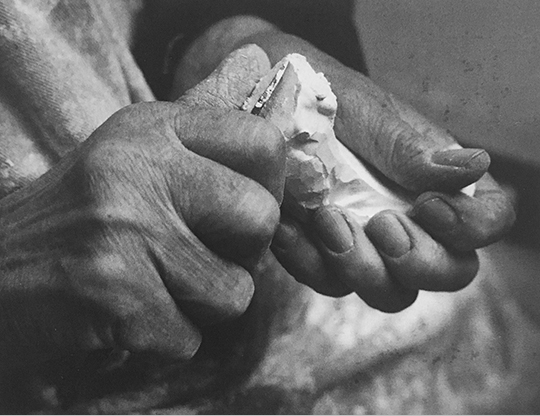
Can craft help to bridge a narrative between an architectural proposal and its local context, revealing a story about place and history or enhancing its cultural and geographical belonging?
Though traditionally, a craft’s origins are intrinsically linked to the local place and people, in colonized contexts, craft processes can often be severed from both its native and immediate environment. How can we seek to unravel its cultural narratives and seek to address the friction which can exist between imported contemporary craft practices and the context in which it is practised? This studio will seek to critically reflect on such discords and attempt to reconnect craft and context through various architectural gestures—programme, formal propositions, materiality, spatial sequencing, landscaping, and ecological response.
Studio Outcomes
The studio will begin with investigations into the geographical, technical, material, and immaterial facets of creation by focusing on various approaches within a selected craft. Students will research historical relationships between craft processes and their ecological environments, considering how crafts can tap into and enhance our understanding of local ecological contexts. These findings, alongside workshops with local craftspeople, will inform the brief for the main project—a multi-occupancy dwelling, and craft workshop explored on a rural site.
The final programme, as defined by each student, should include an element that engages with the community—both human and non-human—adding social and ecological value to the project.
The site is located in South Gippsland, and the studio will undertake onsite fieldwork involving workshops with an artist based on the property. While responding to the site’s pragmatic constraints, students will be encouraged to uncover the hidden narratives embedded in the site that reveal its cultural, social, or ecological histories to be navigated in relation to their chosen craft. These will be complemented by a phenomenological analysis of the site as understood through each student’s own experience.
Studio Leader
Yui Uchimura is a Melbourne-based architect, and one of her primary interests is how a dialogue between design and tangible craft processes can facilitate a more enduring architecture grounded in the local people and environments. Having spent time in Japan studying woodworking alongside other traditional crafts, such as washi papermaking and kintsugi, she continues to learn and engage with various modes of craft practice. She has delivered studio at MSD & MADA, which have explored various phenomenological and analogue themes with a focus on exploring architectural proposals through sensory and tactile mediums, culminating in physical outcomes that experiment with materiality and process.
Readings & References
- Holl, Steven et al. Questions of perception: Phenomenology of Architecture. San Francisco, CA: William Stout, 2006.
- Noë, Alvar. Strange Tools: Art and Human Nature. New York: Hill & Wang, 2015.
- Pallasmaa, Juhani. The Eyes of the Skin: architecture and the senses. Chichester, West Sussex: Wiley, 2012.
- Pallasmaa, Juhani. The Thinking Hand: existential and embodied wisdom in architecture. Chichester, UK: Wiley, 2009.
- Rasmussen, Steen Eiler. Experiencing Architecture. Cambridge: MIT Press, 1964.
- Sennett, Richard. The Craftsman. New Haven: Yale University Press, 2008.
- Soetsu, Yanagi. The Unknown Craftsman. Tokyo: Kodansha International, 1972.
- Pascoe, Bruce. “Considering Landscape.’ In Landscape as Protagonist, edited by XX, 80–86. Melbourne: Molonglo, 2020.
- Zumthor, Peter. Atmospheres. Basel, Switzerland: Birkhäuser, 2018.
- Zumthor, Peter. Thinking Architecture. Basel, Switzerland: Birkhäuser, 2010.
Schedule
Mondays 09:00-12:00 and Thursdays 18:15-21:15 in MSD Room 140
Off-campus Activities
Week 1 (Saturday 4 - Sunday 5 March), Week 3 (Friday 17 - Sunday 19 March), Week 9 (Saturday 6 - Sunday 7 May - optional) / Site in South Gippsland
This studio has a fieldwork component, with two (plus one additional / optional visit in Week 9) overnight camping trips on our site in South Gippsland. Further to standard presentation costs—such as printing and model-making—students will be required to bring their own camping gear such as tents and sleeping bags, as well as share transport and meal costs (estimated at $150 per person).
Need enrolment assistance?
Stop 1 provides enrolment and other support to Bachelor of Design, Bachelor of Environments and Melbourne School of Design students.