Studio C/05
Create | Curate: Crafting Connection
Yui Uchimura
Studio Description
Can craft help to bridge a narrative between an architectural proposal and its local context, revealing a story about place and history or enhancing its cultural and geographical belonging?
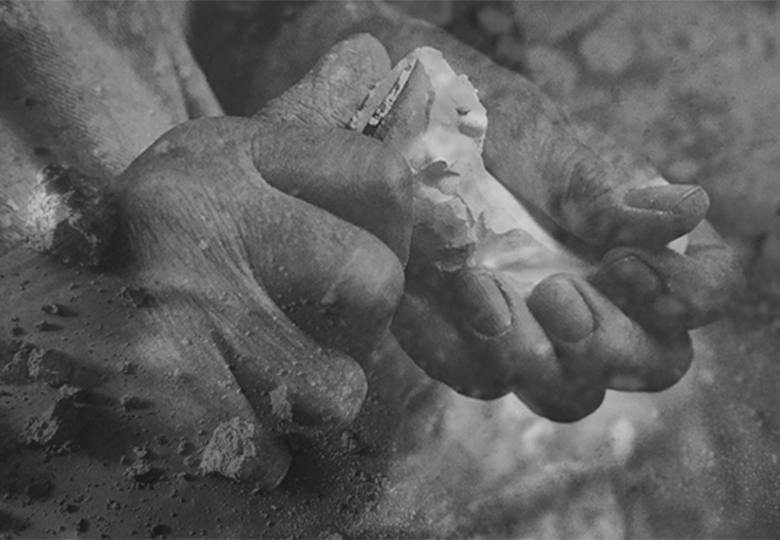
Though traditionally, a craft’s origins are intrinsically linked to the local place and people, in colonized contexts, craft processes can often be severed from both its native and immediate environment. How can we seek to unravel its cultural narratives and seek to address the friction which can exist between imported contemporary craft practices and the context in which it is practised? This studio will seek to critically reflect on such discords and attempt to reconnect craft and context through various architectural gestures—programme, formal propositions, materiality, spatial sequencing, landscaping, and ecological response.
Studio Outcomes
The studio will begin with investigations into the geographical, technical, material, and immaterial facets of creation by focusing on various approaches within a selected craft. Students will research historical relationships between craft processes and their ecological environments, considering how crafts are informed by, and enhance, our understanding of local ecological contexts. These findings, alongside workshops with local craftspeople, will inform the brief for the main project—redefining the traditional typology of combined workshop and dwelling.
The final programme, as defined by each student, should seek to establish both tangible and intangible connections between people, other organisms and the land, bringing social and ecological value to the project.
The site is located in South Gippsland, in Gunaikurnai Country. The region has a recent history of being cleared for timber mills and dairy industries, serving as a backdrop for questions of ecological rehabilitation and cultivating a nuanced dialogue between the architectural and landscape response. The studio will undertake onsite fieldwork; while responding to the site’s pragmatic constraints, students will be encouraged to uncover the hidden narratives embedded in the site that reveal its cultural, social, or ecological histories to be navigated in relation to their chosen craft. These will be complemented by a phenomenological analysis of the site as understood through each student’s own experience.
Studio Leader/s
Yui Uchimura is a Melbourne-based architect, and one of her primary interests is how a dialogue between design and tangible craft processes can facilitate a more enduring architecture grounded in the local people and environments. Having studied traditional crafts in Japan, including woodworking, washi papermaking and kintsugi, she continues to learn and engage with various modes of craft practice. She has delivered design studios at MSD & MADA, which have explored various phenomenological and analogue themes with a focus on exploring architectural proposals through sensory and tactile mediums, culminating in physical outcomes that experiment with materiality and process.
Readings & References
- Cumpston, Zena et al. First Knowledges Plants. Melbourne: Thames & Hudson, 2022.
- Holl, Steven et al. Questions of perception: Phenomenology of Architecture. San Francisco, CA: William Stout, 2006.
- Noë, Alvar. Strange Tools: Art and Human Nature. New York: Hill & Wang, 2015.
- Pallasmaa, Juhani. The Eyes of the Skin: architecture and the senses. Chichester, West Sussex: Wiley, 2012.
- Pallasmaa, Juhani. The Thinking Hand: existential and embodied wisdom in architecture. Chichester, UK: Wiley, 2009.
- Rasmussen, Steen Eiler. Experiencing Architecture. Cambridge: MIT Press, 1964.
- Sennett, Richard. The Craftsman. New Haven: Yale University Press, 2008.
- Soetsu, Yanagi. The Unknown Craftsman. Tokyo: Kodansha International, 1972.
- Pascoe, Bruce. “Considering Landscape.’ In Landscape as Protagonist, 80–86. Melbourne: Molonglo, 2020.
- Zumthor, Peter. Atmospheres. Basel, Switzerland: Birkhäuser, 2018.
- Zumthor, Peter. Thinking Architecture. Basel, Switzerland: Birkhäuser, 2010.
Schedule Monday 12pm - 3pm, MSD Room 142 and Monday 6:15pm - 9:15pm, MSD Room 215
Need enrolment assistance?
Stop 1 provides enrolment and other support to Bachelor of Design, Bachelor of Environments and Melbourne School of Design students.