Studio E/04
Create | Curate: Spatial Gastronomies
Yui Uchimura
Studio Description
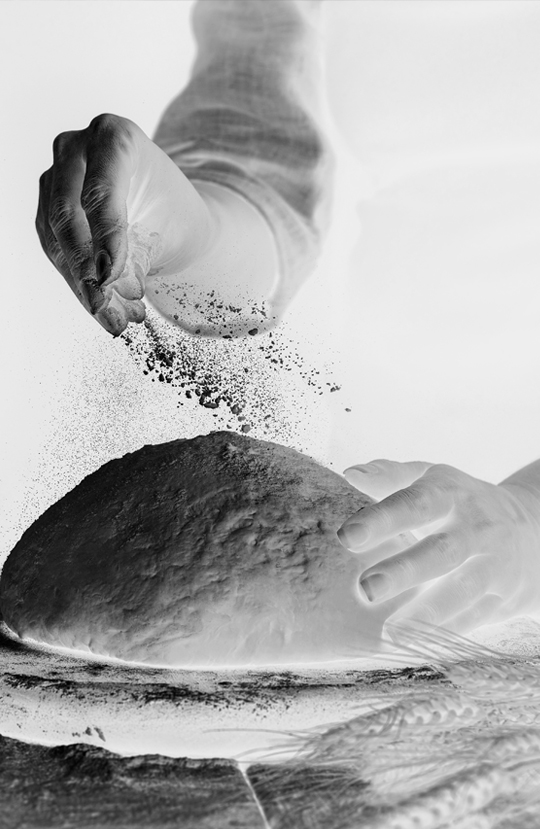
Create | Curate: Spatial Gastronomies explores the parallel themes of food and material cultures through a multi-sensorial lens of place. The studio asks whether architecture and material experiences can enhance the culinary narrative, revealing the geographical origins and the culinary artistry behind the food we eat.
Students will interrogate the selected gastronomy’s programmatic requirements, investigating how ingredients can be managed from production through to preparation and consumption, tackling challenges of consumption and waste. Equally, the material narratives around the origins of various gastronomies and the artistry of their culinary processes will be unpacked, with further investigations into how these can be sensitively rooted into the unique ecological context in which they are practised.
The studio attempts to redefine traditional notions of dining through the design of an intimate, home-based culinary venue located in a peri-rural context; domestic comforts will be carefully infused with a series of immersive dining experiences—carefully modest or finely curated—fostering a deeper connection between individuals, cultures and the geographical narratives of the selected gastronomies.
Studio Outcomes
Students will develop skills in enactive research, material experimentation, physical modelling balanced with critical positioning, to execute a unique return brief based on their chosen ‘gastronomy.’
As in the art of preparing good food and innovative dishes, the students can expect to be immersed in analogue methods that become an enactive tool to explore new possibilities in materiality and architectural design thinking. Minor studio projects will facilitate an introduction to the machine workshop and other maker-space facilities.
In conjunction with a rigour for analogue experimentation and making, the studio will demand intensive contextual, historical, programmatic and theoretical research upon which students will develop a critical position on how their selected gastronomy can be spatially executed in a meaningful manner—deeply rooted in the local geographical and socio-cultural context.
The studio encourages design outcomes and modes of representation that engages the senses, and broadens the boundaries for how we perceive and understand architectural design.
Studio Leader
Yui Uchimura is a Melbourne-based architect, and one of her primary interests is how a dialogue between design and tangible craft processes can facilitate a more enduring architecture grounded in the local people and environments. Having spent time in Japan studying woodworking alongside other traditional crafts, such as washi papermaking and kintsugi, she continues to learn and engage with various modes of craft practice. She has delivered design studios at MSD & MADA—which have explored various phenomenological and analogue themes with a focus on exploring architectural proposals through sensory and tactile mediums—culminating in physical outcomes that experiment with materiality and process.
Readings & References
- Amica Material Cultures. Material Reform. London: Mack, 2022.
- Cumpston, Zena et al. First Knowledges Plants. Melbourne: Thames & Hudson, 2022.
- Holl, Steven et al. Questions of perception: Phenomenology of Architecture. San Francisco, CA: William Stout, 2006.
- Martin-McAuliffe, Samantha L. Food and Architecture at the Table. London: Bloomsbury Publishing, 2020.
- Noë, Alvar. Strange Tools: Art and Human Nature. New York: Hill & Wang, 2015.
- Pallasmaa, Juhani. The Eyes of the Skin: architecture and the senses. Chichester, West Sussex: Wiley, 2012.
- Pallasmaa, Juhani. The Thinking Hand: existential and embodied wisdom in architecture. Chichester, UK: Wiley, 2009.
- Parham, Susan. Food and Urbanism: The Convivial City and a Sustainable Future. London: Bloomsbury Academic, 2015.
- Pascoe, Bruce. “Considering Landscape.’ In Landscape as Protagonist, 80–86. Melbourne: Molonglo, 2020.
- Pascoe, Bruce. Dark Emu. London: Scribe Publications, 2018.
- Rasmussen, Steen Eiler. Experiencing Architecture. Cambridge: MIT Press, 1964.
- Schwartz, Chad. Introducing Architectural Tectonics: Exploring the Intersection of Design and Construction. New York: Routledge, Taylor & Francis Group, 2017.
- Zola, Nelly. Koorie Plants, Koorie People: Traditional Aboriginal Food, Fibre and Healing Plants of Victoria. Melbourne: Koorie Heritage Trust, 1992.
- Zumthor, Peter. Atmospheres. Basel, Switzerland: Birkhäuser, 2018.
- Zumthor, Peter. Thinking Architecture. Basel, Switzerland: Birkhäuser, 2010.
Schedule Thursdays 12:00-15:00 and 18:15-21:15 in MSD Room 142
Need enrolment assistance?
Stop 1 provides enrolment and other support to Bachelor of Design, Bachelor of Environments and Melbourne School of Design students.