Studio E/07
INFILL HOUSING
Lisa Garner
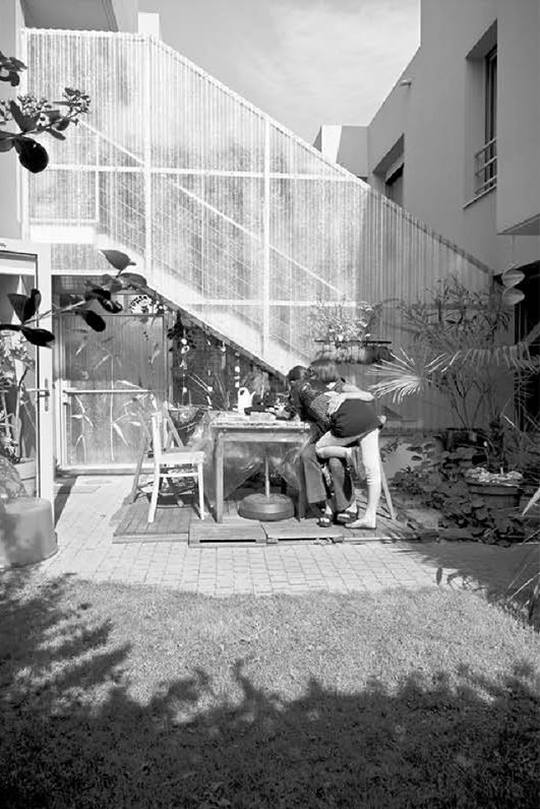
Studio Description
Despite the pandemic slowdown, Melbourne's population is projected to double by 2050.
Housing supply has failed to keep pace. The traditional approach of building our city upwards, or outwards, is putting strain both on the lives of residents as well as the natural environment it presides in.
In this studio, students will develop housing typologies and neighbourhood-scale strategies within Melbourne’s pre-established, Middle-ring suburbs to address our cities housing needs more sustainably - providing liveable and sustainable housing in the locations where it is needed most.
By challenging ‘fear-based’ planning controls and ‘lot-by-lot’ approach to densification, the studio will explore urban typologies that can provide more nuanced urban design responses to the complex task of building housing and shaping the spaces around us.
Amidst the current challenges faced by the construction industry, we will examine how and why the rising costs of inflation, materials, and labour are creating new challenges for the design industry and consider ways to build more and better housing.
Students will work on a selected street and precinct in Maribyrnong City Council, with the goal of transforming an aging housing stock into a liveable and sustainable community through incremental densification.
The studio will feature guest lectures and regular design feedback from industry experts from organisations such as Housing Choices, Property Collectives, Nightingale Housing, and local planners from Maribyrnong City Council.
Studio Outcomes
The studio is aimed at students looking to hone their multi-residential design skills to tackle real-world challenges and reflect on the future of Melbourne's housing landscape.
The deliverables and learning outcomes will be centred around two scales: building/typology and neighbourhood/street.
At the building scale, students will delve into themes such as design efficiency, economy, resourcefulness, and innovative construction methods - informed by both local and global examples.
At the neighbourhood scale, students will critically examine how the design of streetscapes, landscapes, and public realm can be reimagined to better cater to human and environmental needs, as density increases. Initiatives will be explored to open up new spatial possibilities - including the sharing of resources, spaces, and services.
The final outputs will be adaptable design typologies that meet a specific brief and demonstrate new strategies and innovations at both the building and neighbourhood scales.
Throughout the semester the communication and representation of this work will focus on rigorous drawings as well imagery. Physical models will form a part of the design process as well as final representation. Final outputs will consist of 2D drawings, physical models (group and individual) as well visualizations.
Studio Leader
Lisa Garner co-founded the architecture practice LIAN following a successful entry to the Victorian Government’s ‘Future Homes’ competition in 2020.
She is currently involved in the delivery of the first demonstration project of this initiative, delivering 12 new social housing units in Melbourne’s western suburbs alongside a new development for Nightingale Housing. Lisa’s interests in improving the liveability and amenity of multi-residential design combines her experience of architectural practice and research across Melbourne and Berlin, where she has worked on award-winning projects across all scales of residential development. LIAN continues to engage with the thematic of housing through projects spanning from architecture, planning and research.
Readings & References
Research Articles / Papers
- Newton, P., Murray, S., Wakefield, R., Murphy, C., Khor, L., and Morgan, T. (2011) Towards a new development model for housing regeneration in greyfield residential precincts, AHURI Final Report No. 171, Australian Housing and Urban Research Institute Limited, Melbourne, https://www.ahuri.edu.au/research/final-reports/171.
- Monash Art Design & Architecture. (n.d.). Infill Opportunities: Design Research Report [PDF].https://www.monash.edu/__data/assets/pdf_file/0004/2992711/Infill_Opportunities_-_Design_Research_Report_-_FINAL2.pdf
Books
- Ebner, P., Herrmann, E., & Roellbacher, R. (2009). Typology+: Innovative Residential Architecture.
- Firley, E., & Stahl, C. (2010). The Urban housing handbook
- Stretton, H., McKay, I., Mant, J., & Boyd, R. (1971). Living & Partly Living: Housing in Australia.
- Atelier Bow Wow (2010). Behaviorology
- Holleran, M. (2022). Yes to the City: Millennials and the Fight for Affordable Housing.
Websites
- Future Homes: https://www.planning.vic.gov.au/policy-and-strategy/future-homes
- 20 Minute Neighbourhoods: https://www.planning.vic.gov.au/policy-and-strategy/planning-for-melbourne/plan-melbourne/20-minute-neighbourhood/all-about-20-minute-neighbourhood
- A New Normal: https://www.normalise.it/the-projects
News Articles
- T. Razaghi. (2022, July 19). The house prices that are still rising: How inflation is blowing out building costs. Sydney Morning Herald. Retrieved from https://www.smh.com.au/property/news/the-house-prices-that-are-still-rising-how-inflation-is-blowing-out-building-costs-20220714-p5b1pi.html
Schedule Mondays and Thursdays 15:15-18:15 in MSD Room 138
Need enrolment assistance?
Stop 1 provides enrolment and other support to Bachelor of Design, Bachelor of Environments and Melbourne School of Design students.