Studio E/09
Augmented Spaces
Melanie Modafferi
Studio Description
The climate emergency and subsequent shift in collective consciousness prompts us to think about architecture in the context of an unprecedented world. Both environmental degradation and rapid technological advancements are forces that architecture must reckon with in an attempt to escape obsolescence. Augmented spaces asks students to design for the future using relevant practices centred around environmental preservation and life cycle assessment.
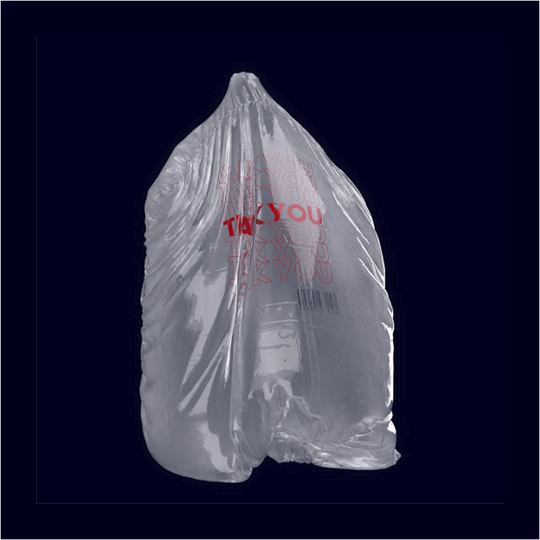
To help illustrate this, students are asked to design an experimental gallery space showcasing artefacts from the ‘obsolete world’ i.e. a piece of coal, a halogen light bulb, a single-use plastic bag etc. The gallery will be set in an optimistic future where carbon/GHG intensive practices are no longer the norm. Students will look at the entire life cycle of their gallery and investigate areas in the process with potential for embodied energy mitigation i.e. materiality, transport, construction, maintenance/repair, end-of-life processes and recovery/re-use.
Material innovation (i.e. recycled, biogenic etc.), tectonics of said materials and end-of-life repurposing strategies are of particular interest to this studio. Similarly, responding appropriately to the site/harnessing it’s passive potential will play a large role in the gallery’s operational energy output and should also be considered i.e. heating/cooling, lighting and ventilation.
The resulting building should be inclusive of all bodies and will be sited in an optimistic future within a fast-paced urban context in Melbourne’s CBD.
Studio Outcomes
Augmented spaces aims to develop creative thinking practices around sustainability whilst contributing to the dialogue around the built environment’s role in the climate crisis. This is made tangible through the design of an experimental gallery space that explores sustainable practices with a particular focus on material innovation and tectonics. Studio deliverables should include drawings and renditions of the proposal that help to clearly communicate their gallery of artefacts.
Studio Leader
Melanie comes from a broad design background and has worked at a number of award-winning practices on typologies ranging from high-end residential, retail, hospitality, commercial, public, education and conservation works. Outside of architecture Melanie has worked as a freelance 3D artist/animator.
Melanie’s core design philosophies look to fun and play in design, inclusivity, multidisciplinarity and sustainable design practices. She is interested in pursuing atypical and whimsical architectural outcomes, and values spaces that are considerate and sensitive to the unique needs and desires of diverse communities. She also has an interest in the crossing over of architecture into other design avenues namely art, installation design, graphics, music and multimedia.
Readings & References
- (2020a) On why our Renaissance needs to be a perfect circle, even if our politicians disagree. Available at: https://thefifthestate.com.au/columns/news-from-the-front-desk/on-why-our-renaissance-needs-to-be-a-perfect-circle-even-if-our-politicians-disagree/ (Accessed: 28 May 2023).
- (2020b) Architects Declare. Available at: https://
au.architectsdeclare.com/resources (Accessed: 28 May 2023). - (2022) YouTube. YouTube. Available at: https://www.youtube. com/watch?v=YqXrW5I2Wvk (Accessed: 28 May 2023).
- (No date). Available at: https://worldgbc.org/article/towards-zero-carbon-building/ (Accessed: 28 May 2023).
- Barber, D.A. (2019) ‘Climate-Sensitive Architecture as a Blueprint’, RCC Perspectives , No. 2, ENERGIZING THE SPACES OF EVERYDAY LIFE: Learning from the Past for a Sustainable Future, pp. 77–86. doi:https://www.jstor.org/stable/10.2307/26631564.
- Carlisle, S. et al. (2021) ‘2021 Carbon Leadership Forum Material Baselines’, Material Baseline Report V2, pp. 1–15.
- Del Campo, M. and Leach, N. (2022) ‘Can Machines Hallucinate Architecture? AI as Design Method’, in Special Issue: Machine Hallucinations: Architecture and Artificial Intelligence. 3rd edn. John Wiley & Sons Ltd.
- Hurlimann, A., Warren-Myers, G. and Bush, J. (2022) Our buildings are driving us closer to ‘climate hell’ – how do we get back on course to net zero? Available at: https://theconversation.com/amp/our-buildings-are-driving-us-closer-to-climate-hell-how-do-we-get-back-on-course-to-net-zero-194166 (Accessed: 28 May 2023).
- Impact estimator for buildings tutorials (no date) Life Cycle Assessment Software RSS. Available at: https://calculatelca. com/resources/watch-tutorials/impact-estimator-for-buildings-tutorials/ (Accessed: 02 June 2023).
- Ketchell, M. (ed.) (2019) We create 20m tons of construction industry waste each year. Here’s how to stop it going to landfill. Available at: https://theconversation.com/we-create-20m-tons-of-construction-industry-waste-each-year-heres-how-to-stop-it-going-to-landfill-114602 (Accessed: 28 May 2023).
- Lawson, B. (2006) ‘Embodied Energy of Building Materials’, Environment Design Guide , Pro 2: Embodied Energy of Building Materials [Preprint]. doi:https://www.jstor.org/stable/10.2307/26148351.
Leach, N. (2023) ‘Architecture in the Age of Artificial Intelligence’, https://www.youtube.com/watch?v=YqXrW5I2Wvk, 28 May. - Lewis, M. et al. (no date) ‘Part II: Measuring Embodied Carbon’, AIA-CLF EMBODIED CARBON TOOLKIT FOR ARCHITECTS, pp. 1–11.
- Lin, A. (2022) Simona Castricum and the art of ‘queering’ space, Assemble Papers. Available at: https://assemblepapers.com. au/2021/08/27/sinking-in/ (Accessed: 04 June 2023).
Maclean, M. (2020) Queer(ing) Space - Potentials of the In-between. thesis. Carleton University . - Strimpel, O. (2022) ‘Geology Bites - Episode: Phil Renforth on carbon sequestration’.
- Sustainable Construction Products (no date) OCO Technology. Available at: https://oco.co.uk/sustainable-construction-products/ (Accessed: 04 June 2023).
Schedule Mondays and Thursdays 18:15-21:15 in MSD Room 138
Need enrolment assistance?
Stop 1 provides enrolment and other support to Bachelor of Design, Bachelor of Environments and Melbourne School of Design students.